Why I Stopped Asking “Why Are You Acting Like This” and What I Ask Instead
I used to ask the question like it was a life raft. “Why are you acting like this?” Sometimes I asked it through clenched teeth in the kitchen while I tried to get dinner going. Sometimes it came out in the car when we were late and someone had suddenly decided shoes were optional. Sometimes…
I used to ask the question like it was a life raft.
“Why are you acting like this?”
Sometimes I asked it through clenched teeth in the kitchen while I tried to get dinner going. Sometimes it came out in the car when we were late and someone had suddenly decided shoes were optional. Sometimes I said it at bedtime when the day had been long, my patience was thinner than I wanted to admit, and Miles was bouncing on the mattress like he was fueled by invisible batteries.
It was my go-to line because it felt logical. If I could understand the why, I could fix the behavior. If I could locate the cause, I could solve it quickly. I honestly thought I was being curious.
But I started noticing something that made me uncomfortable.
Every time I asked that question, it did not open the conversation. It shut it down.
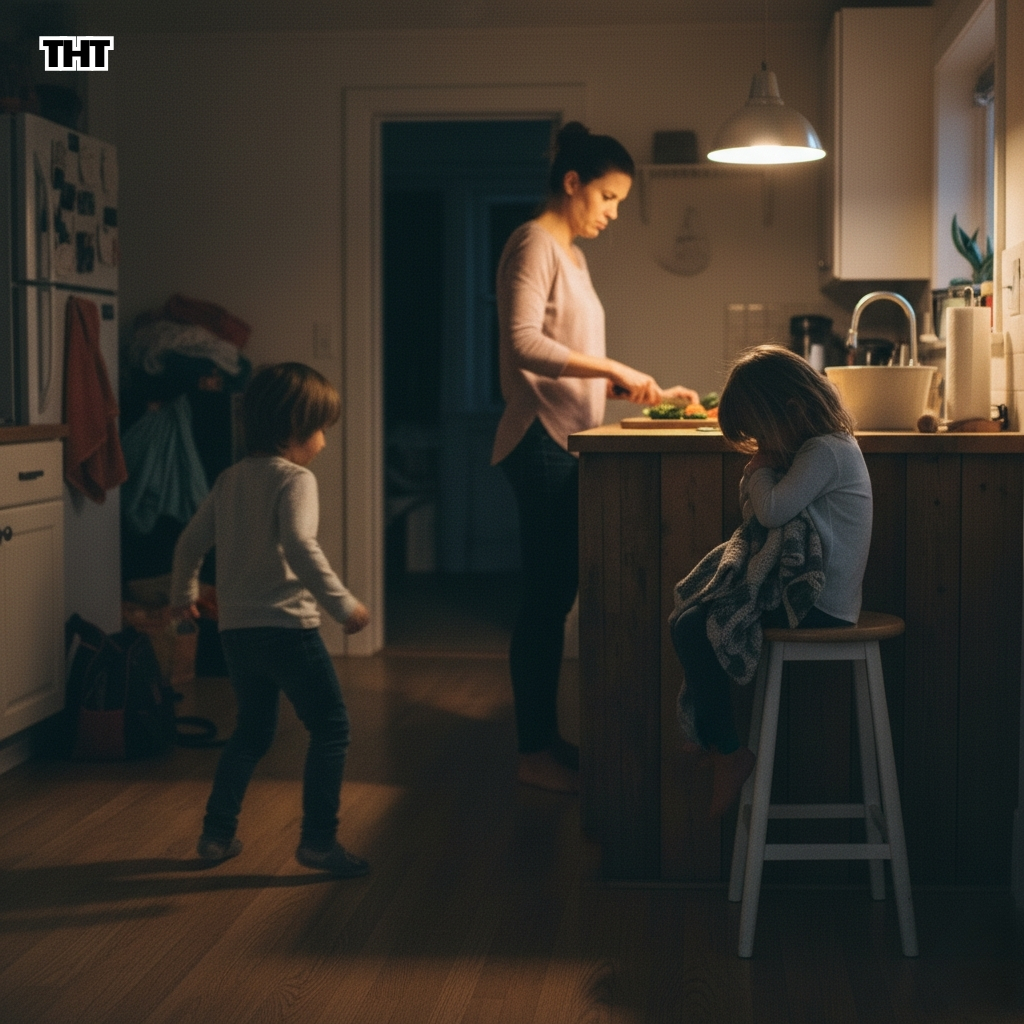
Nora would get quiet and defensive, her face going blank in that way that meant she was protecting herself. Miles would get louder, or sillier, or more defiant, as if he needed to cover up the feelings he could not explain. Even when I said it calmly, it landed like an accusation. It sounded like, “You are a problem and I want you to justify yourself.”
And if I am being honest, that was sometimes what I meant, even if I did not want to admit it.
The shift away from that question did not happen because I became a more enlightened parent overnight. It happened because I was tired. I was tired of escalating situations that did not need to become big. I was tired of hearing my own voice sound sharp. I was tired of watching my kids struggle and realizing I was making it harder by asking them to explain a feeling they did not yet have words for.
So I stopped asking it. Not perfectly, not instantly, but intentionally. And in its place, I started asking different questions that changed the tone of our house in a way I did not expect.
The Day It Clicked for Me
The moment I remember most clearly happened in the late afternoon, the strange in-between time when everyone is hungry and tired but dinner is still a full hour away. The sky outside was darkening earlier than it should have, because Portland does that in winter, and the living room was lit by a soft yellow lamp that made everything look cozy even though we were all slightly unraveling.
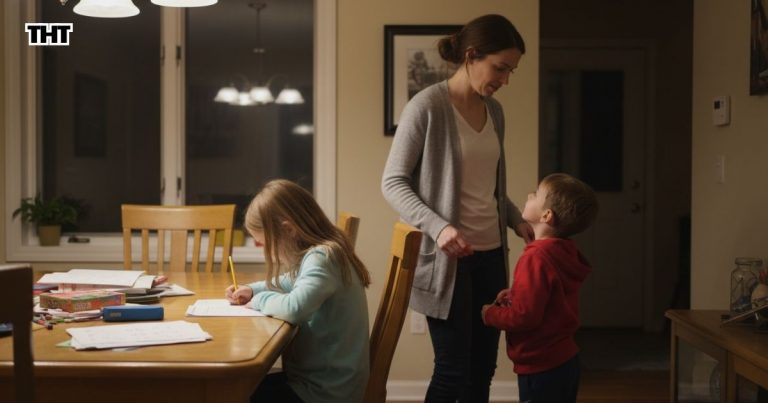
Nora was at the table drawing, which is her comfort zone. When Nora feels off, she often retreats into her sketchbook. Miles was building something out of blocks on the rug, talking to himself in a steady stream of commentary that was half storyline and half sound effects. Juniper was curled up near the heater, as usual, her nose tucked under her paw.
I was trying to answer an email on my phone while also doing that mental math parents do. Dinner plan, homework, bath, tomorrow’s schedule, the fact that we were out of clean leggings again somehow.

Miles asked for a snack. I said yes, and I handed him apple slices. He took one bite and then suddenly flung the plate onto the rug like the apple slices had insulted him personally.
“I HATE THESE,” he yelled.
Nora jumped and snapped, “Miles! Stop!”
Miles screamed louder, because that is what he does when he feels cornered. I felt my own irritation spike because I had just cleaned that rug. I could see apple juice spreading into the fibers.
And out of habit, the words rose up in my throat.
“Why are you acting like this?”
I almost said it. I could feel it on my tongue.
Then I caught a look on Nora’s face. It was not just annoyance. It was embarrassment. She was bracing for the chaos to grow, bracing for me to get angry, bracing for Miles to spiral.
In that split second, I realized something important.
Miles was not acting like this because he wanted to ruin my afternoon. He was acting like this because he was overwhelmed and hungry and six, and he could not manage the feeling that had hit him like a wave. If I asked him why, he would not be able to answer. The only thing he would hear was that I thought he was doing something wrong, and then he would defend himself with more noise.
So instead of asking why, I went for the simplest question I could manage.
“Hey,” I said, lowering my voice, “what’s going on in your body right now?”
Miles blinked at me like I had spoken another language.
I got closer and tried again, gentler.
“Are you hungry hungry, or tired hungry, or upset hungry?”
He paused long enough to breathe.
“Tired hungry,” he whispered, which honestly felt like a miracle.
Nora looked up from her drawing, surprised. The room shifted. Miles did not magically become calm, but he softened. The fight drained out of him just enough for us to move forward.
That was when it clicked for me.
Asking why was demanding an explanation. Asking what was offering a path.
Why “Why” Backfires, Even When You Mean Well
Here is what I have learned, mostly the hard way.
When kids are dysregulated, they cannot access the part of their brain that explains things logically. They are in survival mode, not story mode. When I asked, “Why are you acting like this,” I was essentially asking them to climb a ladder they could not reach. Then I would get frustrated when they could not do it, and they would get more upset because they felt misunderstood.
With Nora, the question made her feel judged. She is sensitive, and she takes tone personally even when I am careful. She would interpret my question as, “Your feelings are inconvenient.”
With Miles, it made him defensive. He would hear it as, “You are in trouble,” and then his whole body would gear up to fight back, even if I was trying to stay calm.
And there is another layer to it that I had to face.
When I asked why, I was often trying to move the behavior away quickly. I wanted the scene to stop. I wanted the noise to end. I wanted the mess to be cleaned up. I wanted my own nervous system to feel safe again. That is human, but it is also something kids can sense.
They can tell when your question is not really curiosity, but control dressed up as curiosity.
So I stopped using it as my default. I started using different language that still set boundaries, still addressed the behavior, but did not make my child feel like they had to defend their feelings.

What I Ask Instead
I want to be clear. This is not about becoming a parent who never gets annoyed. I still get annoyed. I still have moments where I have to pause and reset my tone. The difference is that now I have a small set of questions that keep me from turning a hard moment into a power struggle.
These questions are not magic, but they are reliable. They help my kids feel understood, which makes it easier for them to cooperate. They also help me stay steady, which is honestly half the battle.
1) “Do you need help, space, or a reset?”
This one is my favorite because it gives my kids choices without giving them control of the whole situation.
When Nora is overwhelmed, she usually chooses space, but she likes knowing I am available.
When Miles is melting down, he often chooses help, even if he says it grumpily, because he wants connection but does not know how to ask for it.
A reset is our family code word for a quick calming routine. Sometimes it is a drink of water, sometimes it is deep breaths, sometimes it is a two-minute timer where everyone tidies one small thing and shifts the energy.
2) “What happened right before this?”
This question is a sneaky way to get to the “why” without making it feel like an interrogation.
It shifts us from blame to sequence. It helps kids connect the dots.
Nora can usually answer it clearly. She will say things like, “I was doing fine until I thought about tomorrow’s presentation,” or “I got upset when Miles touched my stuff.”
Miles often needs help with it, so I offer options. “Was it when I said no? Was it when your tower fell? Was it when your brother walked in?”
It turns into detective work instead of a courtroom.
3) “Are you having a hard time, or giving me a hard time?”
I learned this phrase from another parent years ago, and it has stuck because it frames behavior as communication.
I say it gently, not sarcastically. The tone matters more than the words.
Miles will sometimes shout, “I’M HAVING A HARD TIME,” which is oddly helpful because it gives us a starting point.
Nora will usually roll her eyes and then admit, quietly, “Hard time.”
4) “What do you need me to understand?”
This one works especially well with older kids, but Nora is already the type of kid who likes being asked thoughtful questions.
When she feels misunderstood, she does not want a solution right away. She wants to be seen.
This question gives her that without me having to guess.
5) “What’s the plan for making it right?”
This is the boundary question, the one that comes after the feelings are acknowledged.
Feelings are allowed. Hurtful behavior still has to be repaired.
If Miles throws something, we talk about what happened, we clean it up together, and then I ask, “What’s the plan for making it right?”
Sometimes his plan is terrible at first, like “I’ll never do it again,” which is not a plan. So I guide him. “Okay, what can you do now? Do you need to apologize? Do you need to help fix the mess? Do you need to practice asking differently?”
This question is how we keep accountability without shame.
The Part I Messed Up, So You Don’t Have To
Here’s the part I messed up, so you don’t have to.
When I first tried to stop asking “why,” I replaced it with a bunch of fancy-sounding questions that were way too many words for a child in a meltdown.
I would say things like, “Can you tell me what’s underneath this feeling?” while Miles was screaming on the floor.
He would look at me like I had lost my mind, and honestly, in that moment, I kind of had.
I learned quickly that in the heat of the moment, simple is everything. Fewer words. Softer tone. Short sentences that do not sound like a lecture.
I also learned that I needed to practice the new questions when I was calm, because in a stressful moment I will always default to old habits if I am not prepared.
So I wrote a few of the new questions on a sticky note and put it inside a cabinet where I could see it while making dinner. It felt silly, but it helped. It reminded me to slow down, and it gave me language when my brain wanted to go into autopilot.
A Real Example: The Homework Spiral
A couple of weeks after the apple slice incident, we had a homework moment with Nora that would normally have ended in tears.
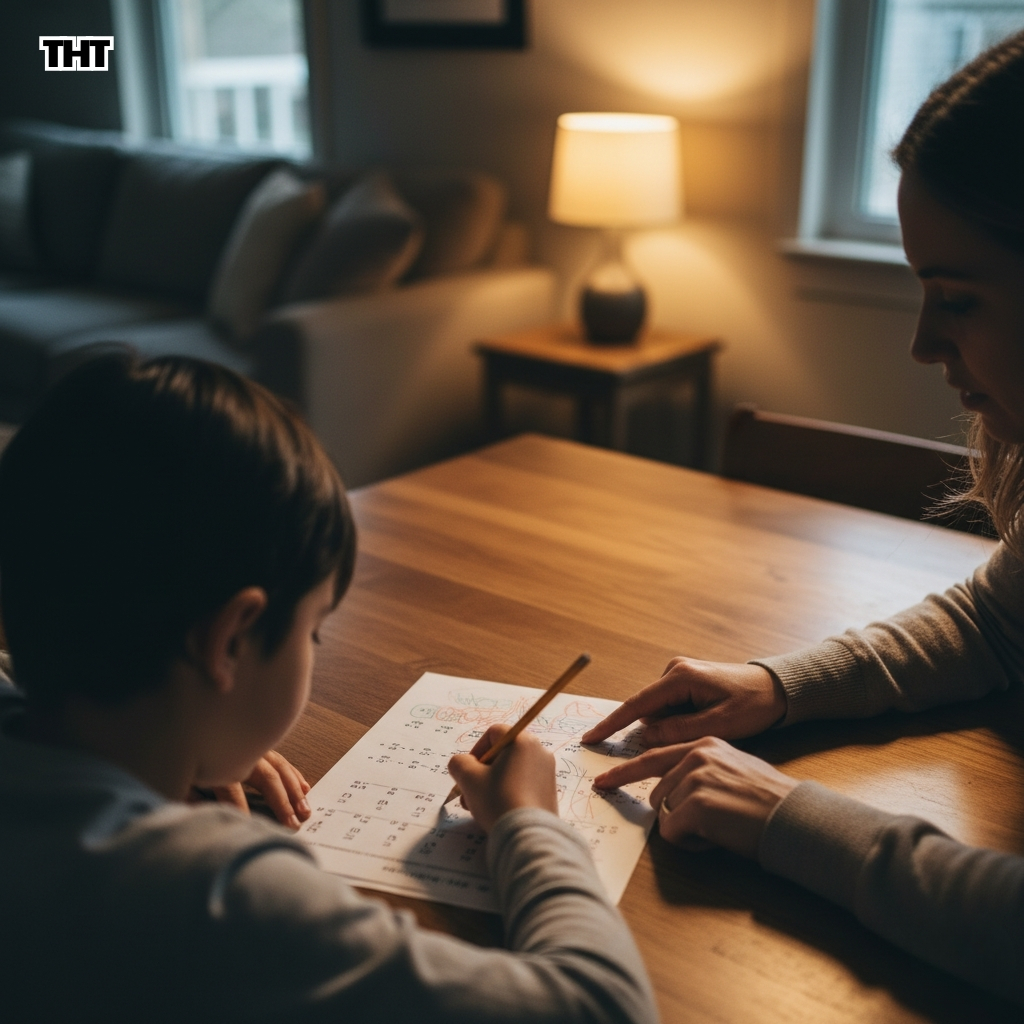
She had a worksheet that involved math word problems. She is smart, but she gets anxious when she feels like she should understand something quickly and does not. I could see her getting tense, erasing and rewriting numbers, breathing faster, shoulders creeping up.
I sat down beside her and asked the question I would have asked before.
Not out loud, but in my mind.
Why are you acting like this? It’s just homework.
Then I remembered. It is never just homework. It is her fear of being wrong. It is her perfectionism. It is the pressure she puts on herself.
So instead, I asked, “Do you need help, space, or a reset?”
She stared at the page and whispered, “Help, but not the kind where you tell me the answer.”
That sentence told me everything. She wanted support without being rescued. She wanted to feel capable.
So I asked, “What part is confusing?”
She pointed to the wording. We read it together, slowly, and I asked her to explain what she thought it was asking. We rephrased it in simpler language. She solved it herself.
Afterward, she looked up and said, “Thank you for not being mad.”
That hit me right in the chest, because I had not thought I was mad before. I had thought I was just trying to get through the task. But what she had felt was pressure. What she had needed was steadiness.
The new questions gave her that.
A Real Example: The Bedtime Chaos
With Miles, the change looked different.
Bedtime used to be a nightly power struggle because his body does not switch off easily. He would bounce, make silly noises, ask a hundred questions, and then collapse into tears when I finally got firm.
One night, after his third trip out of bed, I almost asked, “Why are you acting like this?”
Instead, I stood in the hallway and said, “Do you need help, space, or a reset?”
He frowned, confused, then said, “Reset.”
I asked him what kind, and he said, “The heavy blanket.”
So we did that. I tucked him in with his heavier blanket and put my hand on his back for a minute, slow pressure that calms his nervous system. I whispered, “Your body is having a hard time settling. I’m here.”
He fell asleep faster than usual.
That is when I realized something else.
Sometimes behavior that looks like defiance is actually dysregulation. Sometimes it is a child who needs help getting their body back under control, not a child who needs to be interrogated.

The Practical Hack That Helped Me Stick With It
Here’s a simple hack that made this change easier for me.
I chose three questions and practiced them until they felt natural.
Not ten questions, not a whole script, just three.
- “Do you need help, space, or a reset?”
- “What happened right before this?”
- “What’s the plan for making it right?”
Those three cover most situations in our house. The first one connects. The second one finds the trigger. The third one restores accountability.
When I feel myself about to ask “why,” I pick one of the three instead. It keeps me from spiraling into a lecture, and it keeps the moment focused.
What Changed in Our Home
The biggest change was not that my kids suddenly behaved better all the time. They are still kids. They still have big feelings. They still argue and melt down and push boundaries.
The biggest change was that hard moments became shorter and softer.
Nora started opening up sooner, because she felt less judged. Miles started calming down faster, because he felt less attacked. I started feeling more confident, because I had a path forward that did not rely on me staying perfectly calm all the time.
And maybe the most important thing is this.
When I stopped asking “why are you acting like this,” I stopped treating my kids like problems to solve. I started treating them like people who were struggling, learning, and growing, right in front of me.
That shift made me kinder, not in a vague sentimental way, but in a practical way that shows up on a Wednesday night when everyone is tired and dinner is late.
Final Thoughts
If you ask “why are you acting like this” sometimes, you are not a bad parent. You are a human parent. That question often comes out when you are overwhelmed and you want the moment to stop. I get it.
But if you want a small change that can make hard moments feel less explosive, try swapping “why” for “what” or “do you need” or “what happened right before this.” Try asking a question that your child can actually answer in the moment they are in.
Kids do not need us to be perfect. They need us to be steady enough to guide them back, and gentle enough to help them name what is happening inside them, little by little, until they can do it themselves.
And if you are in the middle of a loud moment right now, and your own nervous system is buzzing, here is the simplest place to start.
Take one breath. Lower your voice. Then ask, “Do you need help, space, or a reset?”
It might not fix everything. But it will open a door, and sometimes that door is all you need.