The Night Nora Burned the Pancakes and Learned How to Try Again
The day Nora burned the pancakes, I was already running on the kind of tired that makes you misplace your phone while it is in your hand. It had been one of those weekdays where every task felt simple until you tried to do it, and then suddenly you were juggling five invisible plates while…
The day Nora burned the pancakes, I was already running on the kind of tired that makes you misplace your phone while it is in your hand. It had been one of those weekdays where every task felt simple until you tried to do it, and then suddenly you were juggling five invisible plates while someone asked you for a snack you had not even bought yet.
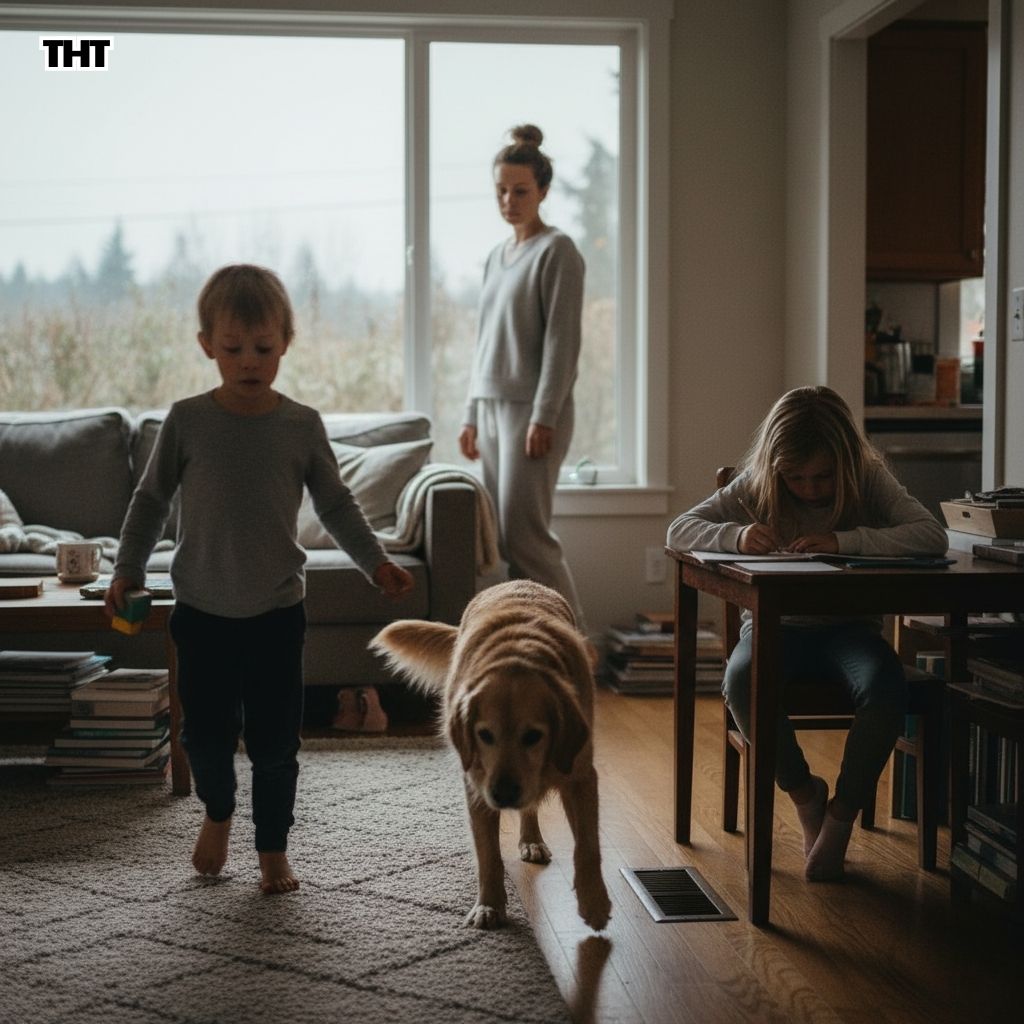
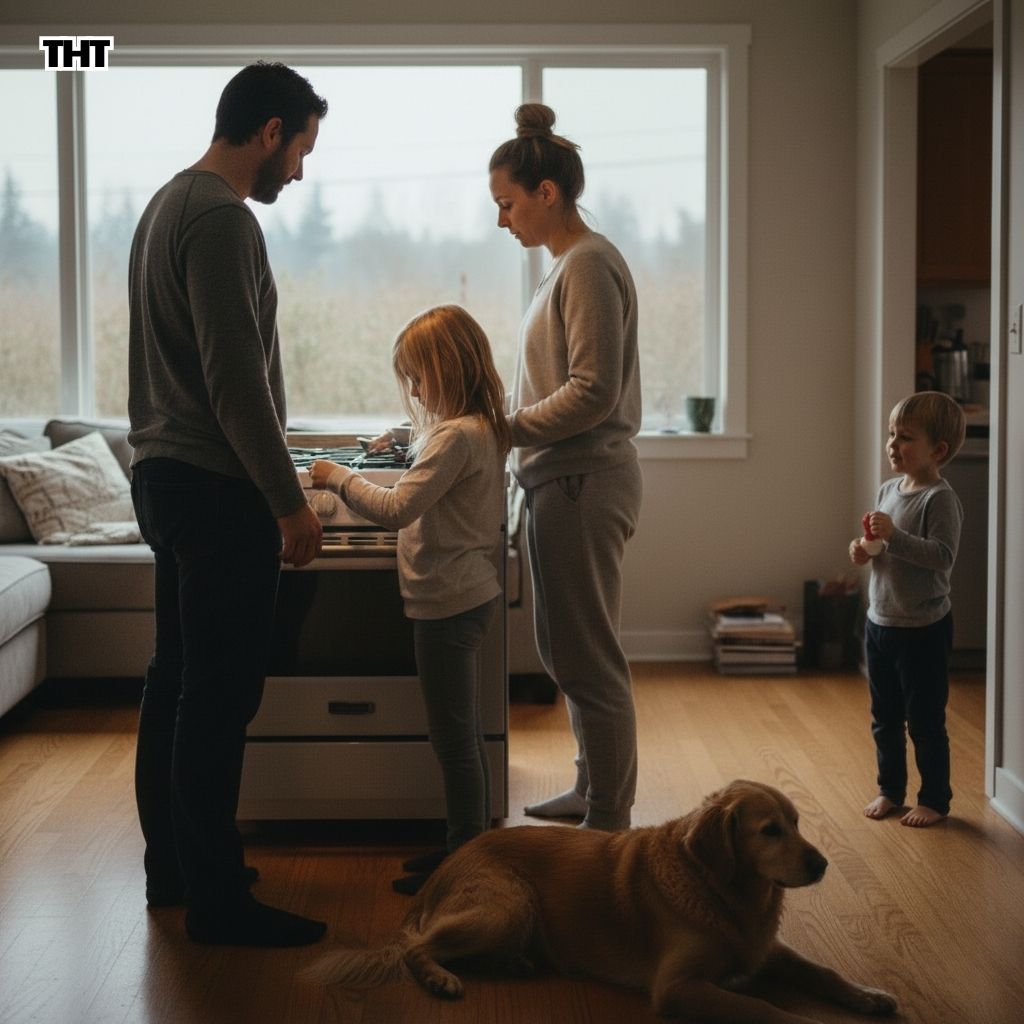
Chris was still at work, Miles was orbiting the living room like a small, energetic satellite, and Juniper, our elderly rescue dog, was doing her usual slow patrol from the heat vent to the rug and back again. Outside, Portland looked like Portland in winter, which means everything was gray and damp and softly lit, like the whole city had been wrapped in a wet blanket. The kind of evening where you want something warm, something familiar, and something that makes the kitchen smell like comfort.
That was why I suggested breakfast-for-dinner.
It was not a grand plan. It was not a “family cooking night” with matching aprons and a perfectly cleaned counter. It was me saying, “Let’s do pancakes,” because pancakes have a way of making a regular evening feel like a small celebration, even if you are eating them with mismatched forks.
Nora volunteered immediately, which should have been my first clue that something important was about to happen.
“I want to make them,” she said, already standing up straighter.
Nora is nine, and she is at that age where competence matters deeply. She wants to do things well. She wants to feel capable. She also wants to be sure nobody is quietly thinking she is messing up, which is a tender kind of pressure she puts on herself even when nobody asked her to.
I said yes because I have been trying to say yes more often to the things that build real confidence, not just the kind that comes from being told “good job,” but the kind that comes from doing something real and surviving the mistakes.
Miles heard yes and ran into the kitchen like it was his job.
“Can I crack the eggs?” he shouted.
“Maybe you can crack one,” I said, because I am brave but not reckless.
Juniper followed us, of course, because where there is food, there is hope.
The Pancake Plan That Was Supposed to Be Simple
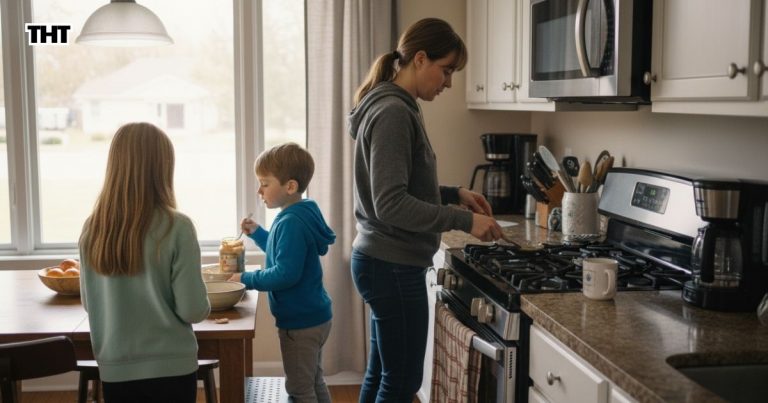
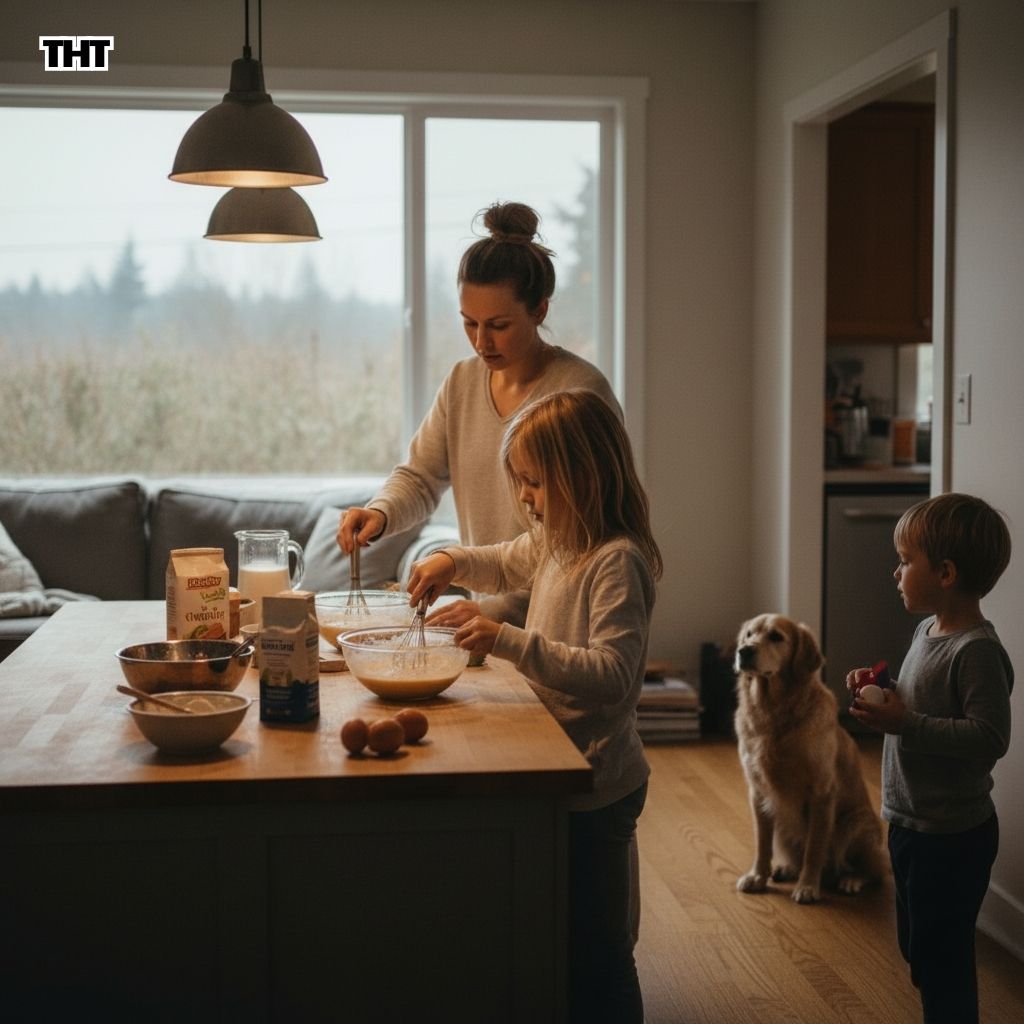
I set up the station the way I always do when I want cooking with kids to go well.
Bowl in the middle.
Ingredients lined up like a little parade.
Measuring cups within reach.
A paper towel ready for inevitable spills.
I could have made the batter myself in five minutes, flipped pancakes quickly, and moved us into dinner with minimal fuss. That would have been the efficient choice. It also would have been the choice that skipped the whole reason I wanted pancakes in the first place, which was not actually pancakes.
It was togetherness. It was warmth. It was the chance to be in the same room doing one thing.
So I handed Nora the measuring cup and let her take the lead.
We measured flour. We added baking powder. Nora insisted on leveling the flour precisely with the back of a butter knife, because that is who she is. Miles tried to lick a spoon with dry batter on it and then made a face like he had been betrayed.
Chris texted that he was leaving work, and I could feel the evening settling into place, like a puzzle finally clicking.
Nora whisked the batter carefully. She poured in milk slowly, watching the texture. She asked questions the way kids do when they are trying to do something right.
“Is it supposed to be thick?”
“Should there be lumps?”
“How hot should the pan be?”
I answered her honestly, which is to say, imperfectly. Because pancakes are not precise. Pancakes are mostly feel. Pancakes are a little bit science and a little bit guessing.
I said, “Medium heat, and we can adjust. Lumps are okay. Thick is good, but we can add more milk if it feels too stiff.”
Nora nodded like she was logging the information into her brain, and I could see she was taking it seriously. It was sweet. It was also slightly dangerous, because serious kids tend to take mistakes seriously too.
The Moment the Pancakes Burned
The first pancake is always a sacrifice. That is a rule of the universe. The first pancake sticks, or spreads too thin, or ends up pale on one side and overly browned on the other. It is the pancake that teaches you what the batter and the pan are actually doing.
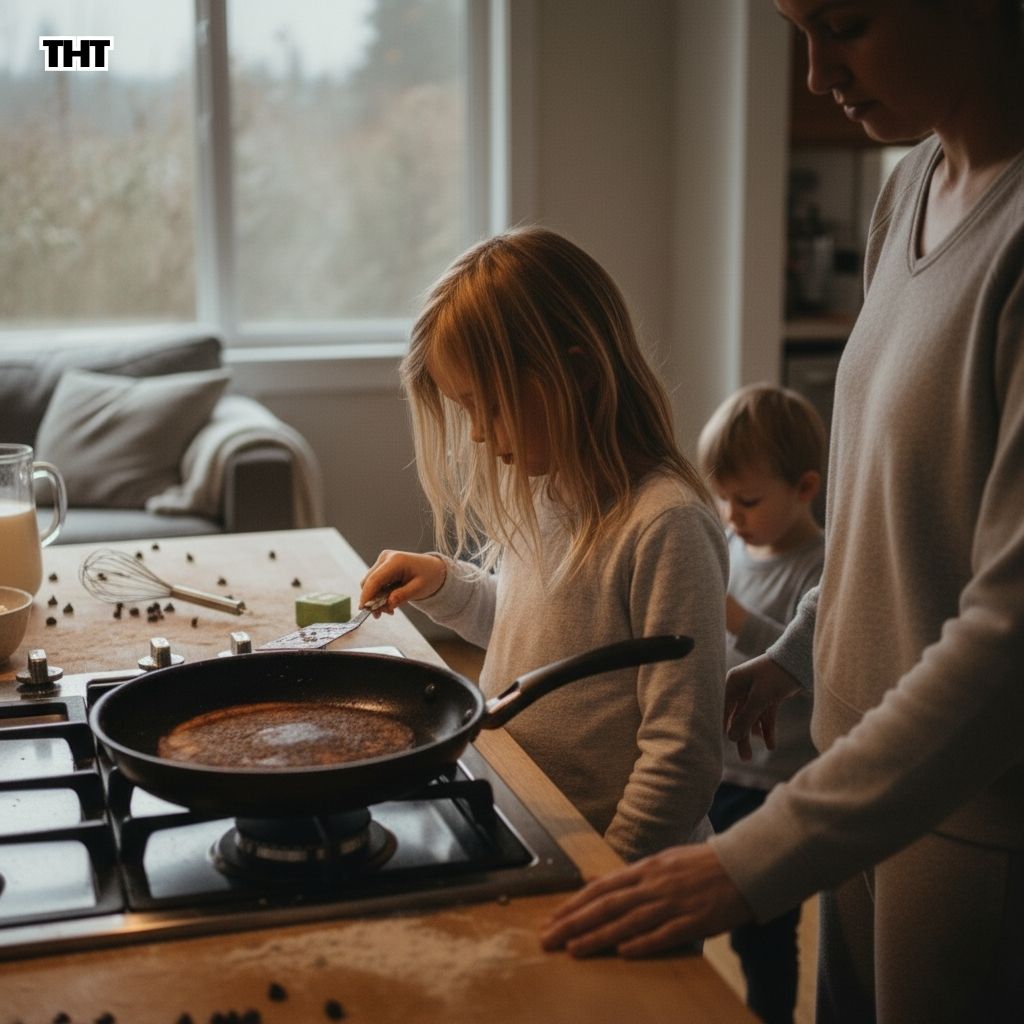
Nora poured batter into the pan with slow concentration. She watched it spread. She leaned in to see the bubbles form. She waited, which is not easy for a kid, especially a kid who wants to prove she can do it.
Then, while she was watching the pancake, Miles started pulling at her sleeve.
“Can I flip it? Can I flip it? Can I flip it?”
Nora hissed, “No, you’ll ruin it.”
Miles shouted back, “You’re not the boss!”
I stepped in, because I could see the fork in the road. We could either let a pancake turn into a sibling argument, or we could redirect before it escalated.
“Miles,” I said, “your job is plates and forks. Set the table.”
He groaned like I had assigned him to dig a trench.
While I redirected Miles, Nora kept watching the pancake, but now she was watching it while her nervous system was buzzing. She was trying to focus and also trying not to cry and also trying to keep her brother from taking over. The pan was still heating, because I had left it for a minute, and the pancake kept cooking.
The smell hit first.
That faint, sharp, bitter smell that is not “golden brown” but “too far.”
Nora sniffed and her eyes widened.
She lifted the pancake with the spatula and saw it. Dark brown. Almost black along the edges.
She flipped it anyway, like maybe the other side would redeem it.
It did not.
Now the pancake was officially burned, and Nora’s face crumpled with instant disappointment, like she had failed a test she did not know she was taking.
“I ruined it,” she said quietly.
And there it was. The moment.
Not the pancake. The story underneath it.
The Tiny Truth About Kids and Mistakes
Kids do not experience mistakes the way adults do. Adults burn a pancake and think, annoying, and then move on. Kids burn a pancake and sometimes think, I’m bad at this. I shouldn’t have tried. Everyone will remember this.
Especially kids like Nora, who carry their standards around like a heavy backpack. She wants to do things right on the first try. She wants to be sure the adults in her life see her as capable. She does not want to inconvenience anyone.
So when she burned that pancake, she did not see a cooking error. She saw a personal failure.
I could have fixed it with a joke. I could have said, “It’s just a pancake,” and laughed it off. I could have tossed it in the trash and moved on quickly.
But I have learned that “just” is a word that can accidentally dismiss what kids feel. “Just a pancake” might be true, but it would have landed like I was telling her her feelings did not matter.
So I tried something else.
I said, “Oh, that’s a learning pancake.”
Nora looked at me like I was trying to spin reality.
“It’s burned,” she said, voice tight.
“It is,” I agreed. “And you still did something important. You tried.”
She swallowed hard. I could see her trying not to cry, and I could see the part of her that wanted to quit right then, because quitting would protect her from doing it wrong again.
Miles, of course, chose that moment to be six.
“Ew,” he said. “That’s gross.”
Nora’s eyes flashed, and her lip started trembling.
Chris walked in right then, keys in hand, and took in the scene with his calm IT-guy energy, like he was reading error messages and deciding what to troubleshoot first.
“What happened?” he asked.
Miles said loudly, “Nora burned it!”
Nora’s shoulders slumped.
Chris walked to the stove, glanced at the pancake, and said, with complete seriousness, “Ah. The sacrificial pancake.”
Nora looked up.
“It’s real,” Chris continued, “the first pancake teaches you what the pan is doing.”
He said it so matter-of-factly that it gave Nora a way to understand the mistake without making it about her competence. It was not Nora’s failure. It was the pancake’s job.
I silently thanked my husband for being a calm, practical person who can normalize things without making a big speech.
Here’s the Part I Messed Up, So You Don’t Have To
Here’s the part I messed up, so you don’t have to.
My first instinct was to take over.
I wanted to gently slide Nora out of the way and flip the next pancake myself, because I could make it right quickly, and we were hungry, and I did not want her to feel bad.
But taking over would have taught the wrong lesson.
It would have taught her, When you mess up, an adult will step in and rescue the situation, and you should probably stop trying.
So instead, I did the harder thing.
I stayed beside her, and I let her stay in charge.
I asked, “Do you want to try again with me right here, or do you want me to do the next one and you watch?”
Nora hesitated, then said, “I want to try again.”
That sentence mattered more than the pancake ever could.
How We Turned It Into a “Try Again” Moment
We did not make it into a lecture about resilience. We kept it small and practical.
I said, “Okay, let’s troubleshoot like scientists.”
Chris smiled because he loves a troubleshooting moment.
We lowered the heat slightly. Nora adjusted the stove knob carefully like she was disarming something.
I asked Nora what she noticed before it burned.
“The smell,” she said. “And the bubbles were getting really big.”
“Good,” I said. “That means you noticed the signs. Next time, we flip when we see those signs sooner.”
I also gave her one simple rule, because kids do better with clear cues than with vague encouragement.
“Flip when the edges look set and you see bubbles that don’t pop right away,” I told her.
Nora nodded again. She poured the batter in.
This time, Miles tried to intervene, because he cannot resist being in the middle of an event.
“Can I flip it now?”
Nora started to tense, but I caught it and stepped in with a boundary that did not shame him.
“Miles,” I said, “your job is the pancake cheer squad. You can watch and you can say ‘nice flip.’”
He laughed, because that is a ridiculous job, and ridiculous jobs are sometimes the only ones a six-year-old will accept without a fight.
Nora watched the pancake closely. She waited. She breathed. She flipped it, and it landed perfectly.
Golden.
Not pale, not burned, just golden.
Nora’s face brightened in a way that was almost shy, like she did not want to celebrate too early.
Chris said, “That’s a pro flip.”
Miles shouted, “NICE FLIP!” like he was at a sports game.
Nora laughed, and I saw it, the shift that happens when a kid realizes they can make a mistake and still succeed afterward.
That is the moment resilience is built. Not in the speech. In the experience.
The Quiet Lesson Nora Took With Her
We made a whole stack after that. Some were perfect. Some were a little dark. Some were oddly shaped, because kids pour batter like they are painting.
At one point, Nora accidentally splattered batter onto the stove. She started to apologize, but I stopped her gently.
“Spills are part of cooking,” I said. “We clean them up. That’s it.”
She nodded, and she did not spiral into shame. That was another win, even if it looked small.
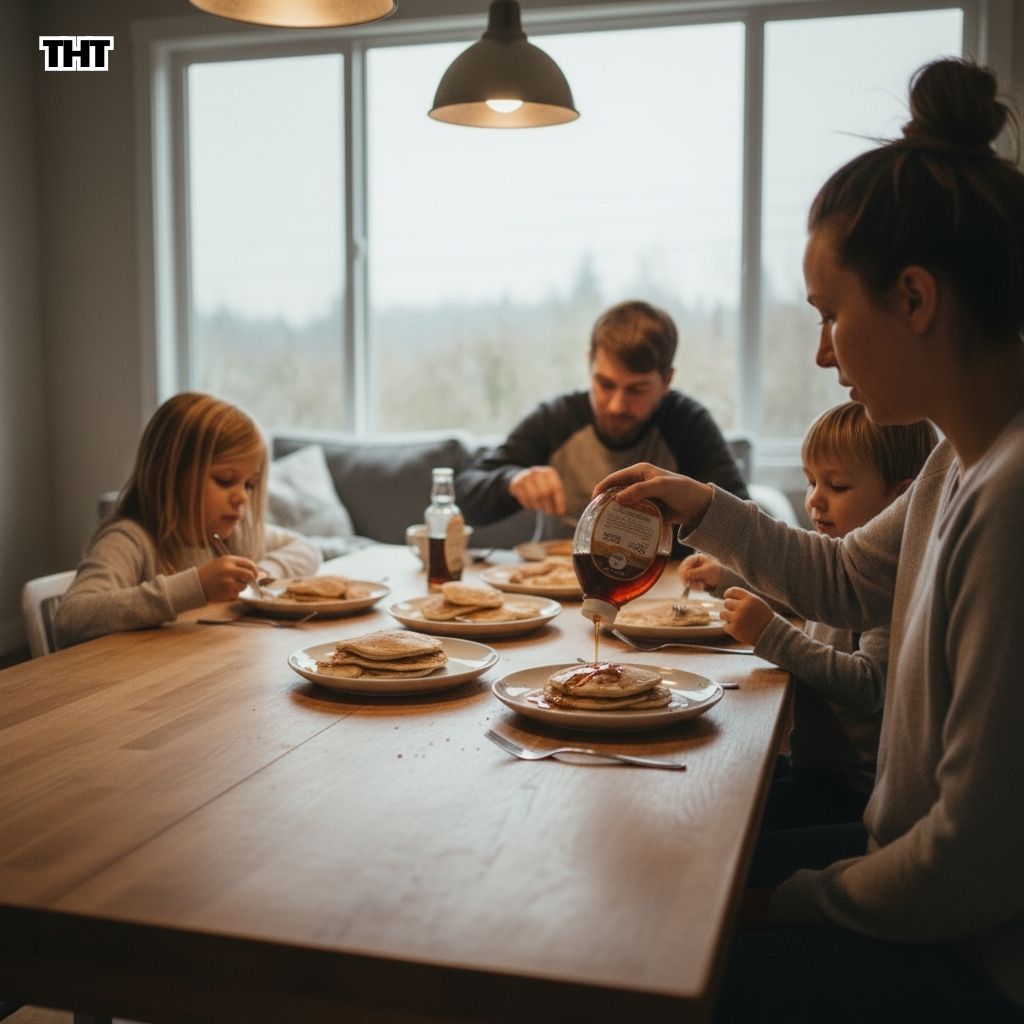
We sat down to eat. Nora insisted everyone take at least one pancake from her batch.
Miles drowned his in syrup and then asked for more, which is his version of respect.
Chris ate quietly, then said, “You know what I like about this? You didn’t quit.”
Nora looked down at her plate, then said, “I almost did.”
I asked, “What made you keep going?”
Nora paused, thinking carefully, then said, “Because I wanted to do it right.”
That answer was honest, but it also showed me something I wanted to guide gently. Doing it right is great. Doing it again is even better.
So I said, “I’m proud you tried again. Next time, even if it’s not perfect, trying again is the whole point.”
Nora nodded, and I could tell she was storing that sentence somewhere.
Why This Matters More Than Pancakes
People talk about resilience like it is a personality trait, like some kids have it and some kids don’t. But what I see in our home is that resilience is built through repetition, through small moments where kids are allowed to struggle and then supported as they move forward.
Pancakes were the perfect vehicle for this lesson because the stakes were low. Nobody’s safety depended on perfect pancakes. Nobody’s grade depended on it. The worst-case scenario was a burned pancake and a bruised ego.
That makes it a safe place to practice the skill that will matter when the stakes are higher.
When Nora faces a hard math problem and wants to cry.
When a friendship feels complicated and she wants to withdraw.
When a school project doesn’t go the way she hoped.
When she makes a mistake and feels embarrassed.
In those moments, I want her nervous system to remember pancakes. I want her to remember that mistakes are data, not identity. I want her to remember the feeling of trying again and getting it right enough.
A Simple “Try Again” Script We Use Now
After that night, we started using a small script that helps, especially when emotions rise fast.
We say, “What did you notice? What can you change? Want to try again?”
It works because it keeps the focus on observation and adjustment instead of judgment.
It works because it gives kids a path.
And it works because it makes “try again” feel normal, not like a special motivational moment that only happens when you fail in a big way.
Sometimes we even say it jokingly now.
If Miles drops a LEGO structure, he’ll say, “Okay. What did I notice? Gravity.”
If Nora smudges a drawing, she’ll take a breath and say, “Try again.”
Those moments make me feel hopeful, because it means the lesson is sinking into the everyday, which is where I want it.
Final Thoughts
That night, we ate pancakes that tasted like vanilla and butter and relief. We laughed at the burned one sitting on a plate like a tiny charcoal frisbee, and Nora let it be funny instead of humiliating. The kitchen was messy, the stove needed wiping, and nobody cared, because something more important had happened.
Nora learned, in a way that her body will remember, that mistakes do not mean stop. They mean adjust.
I learned, again, that my job is not to prevent every failure. My job is to stay close enough to guide her through it without taking it away.
And when I tucked Nora into bed later, she said, very casually, as if it was not a big deal at all, “Next time I’m making pancakes, I’ll do the heat lower.”
Then she rolled over and pulled her blanket up, calm and certain, like a kid who knows she can try again.
I stood in the doorway for a second longer than I needed to, listening to the quiet, thinking about how a burned pancake had turned into a life skill.
Not because the pancake mattered, but because she did.