What Happened When I Shared My Own Mistake With My Kids
I used to believe that being a “good parent” meant being the steady one at all times, the one who didn’t lose their cool, didn’t forget things, didn’t mess up in ways the kids could see. Somewhere along the way, I picked up this silent rule that my mistakes should be handled privately, like they…
I used to believe that being a “good parent” meant being the steady one at all times, the one who didn’t lose their cool, didn’t forget things, didn’t mess up in ways the kids could see. Somewhere along the way, I picked up this silent rule that my mistakes should be handled privately, like they were messy laundry I could fold and hide before anyone noticed.
The problem with that rule is that children live in your house.
Children notice everything.
They notice the tightness in your voice when you’re trying to sound calm but you’re not. They notice the way you slam a cabinet even if you don’t slam it hard. They notice the pause after you realize you forgot something. They notice your eyes, your breathing, the little changes in your energy that you assume are invisible.
So my kids already knew I messed up sometimes.
They just weren’t hearing me say it.
And that turned out to matter more than I expected.
The Mistake That Started It
This happened on a Thursday, the kind of day that felt like it had too many tabs open in my brain. Nora had an after-school activity. Miles had a different pickup time. Chris was running a little late because an IT emergency had turned into an IT saga. Juniper needed her slow walk, which isn’t negotiable in her mind because she’s convinced she’s the CEO of our household.
I was doing my usual parent math: timing, snacks, backpacks, water bottles, permission slips, the fact that dinner still needed to exist as a concept. I was also trying to be cheerful, because if I sound stressed, the entire house starts acting like we’re preparing for a hurricane.
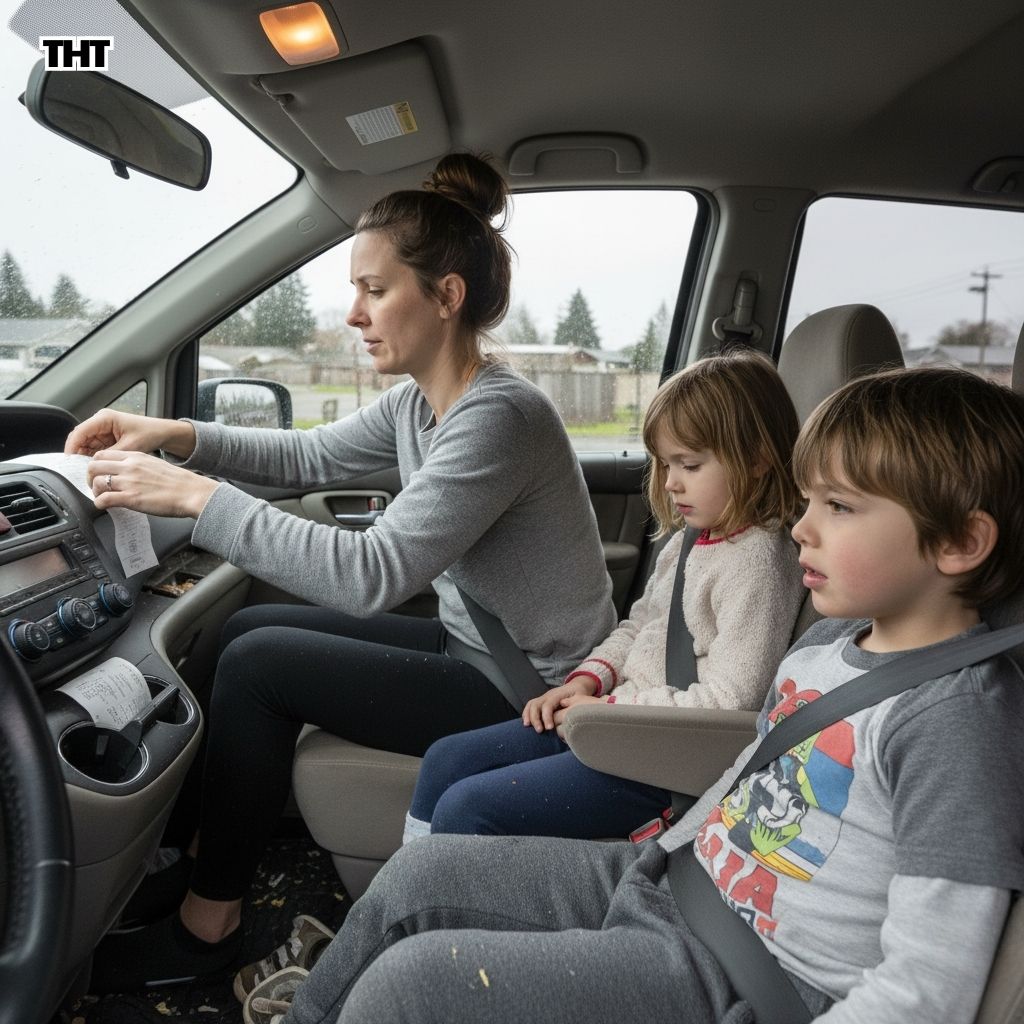
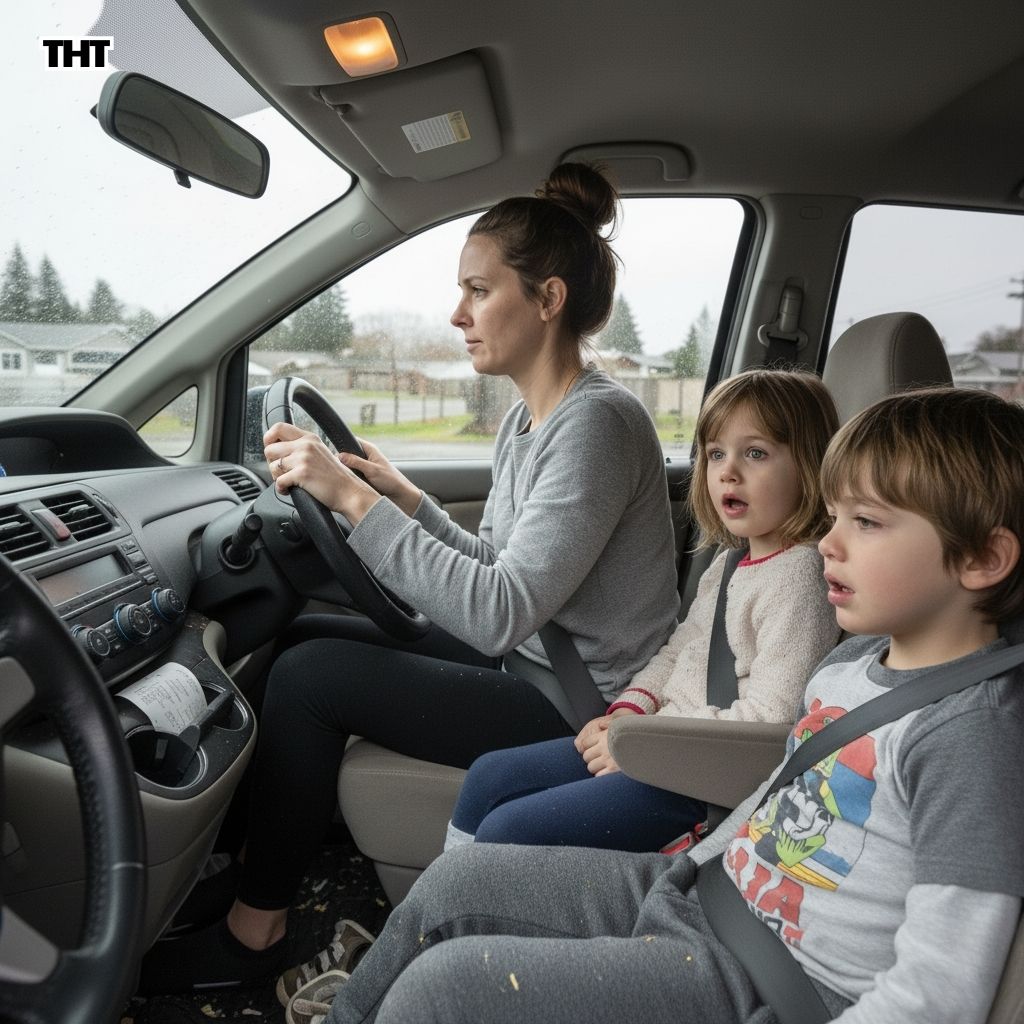
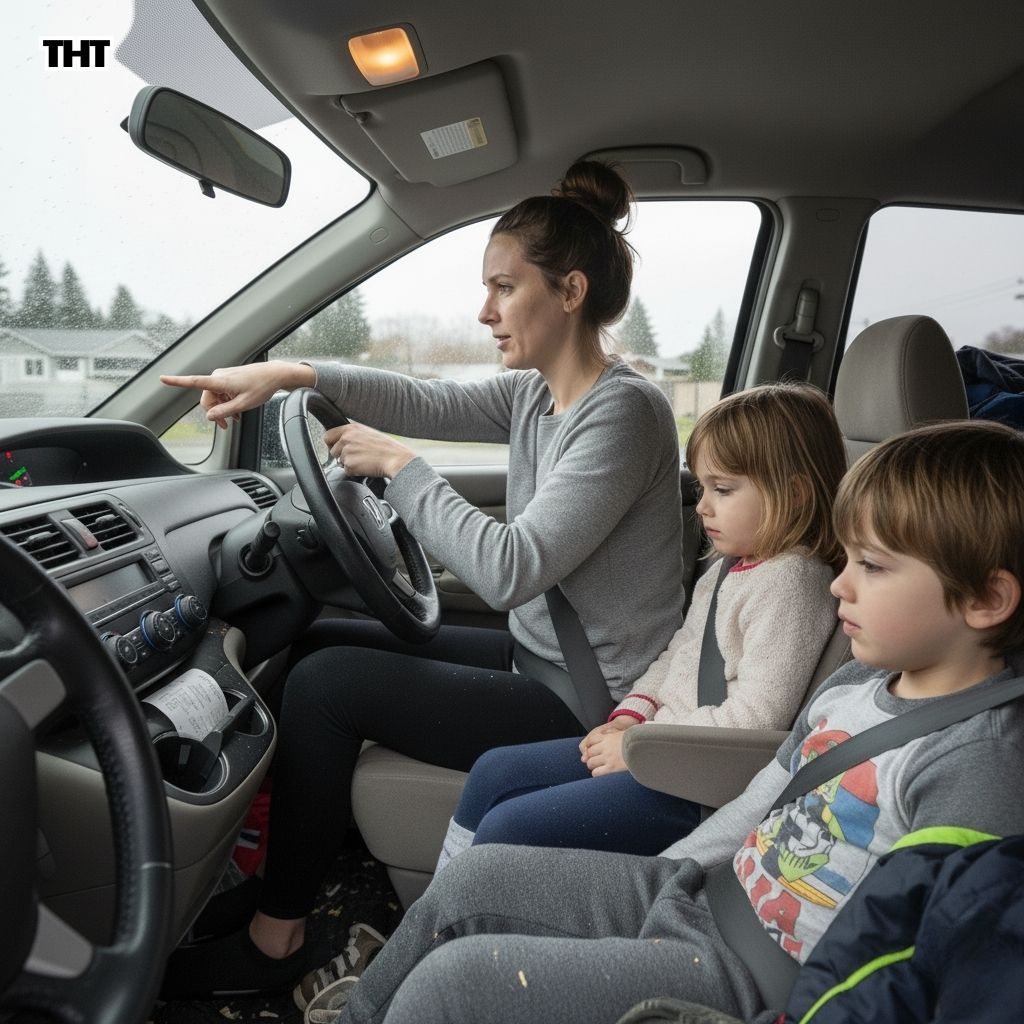
We got into the car, and I did the thing I always do. I reached into the center console for the little bag of emergency snacks I keep for exactly this kind of day.
Empty.
No crackers. No granola bar. Not even a sad little fruit snack.
Just a handful of crumbs and a receipt from a gas station that I do not remember visiting.
Miles immediately asked, “Do we have snacks?”
I said, “Not today.”
Which was true, but it was not the whole truth, and Miles is not a kid who accepts partial truths when snacks are involved.
His eyes widened like I had said, “We no longer believe in food.”
“What do you mean not today?” he demanded.
Nora, who is older and more contained, didn’t demand anything, but she got quiet, and quiet Nora is her own kind of alarm bell. Quiet Nora usually means she’s worried about something, or she’s already calculating how this will go, or she’s bracing for her brother to escalate.
And sure enough, Miles escalated.
He started whining, then complaining, then arguing, then crying, then loudly insisting that this was the worst day of his life. He threw in a dramatic sigh for good measure. His body was tense, and I could feel the backseat vibrating with six-year-old outrage.
My own stress rose, because I hate being late, and I hate being in conflict, and I hate realizing I messed up in a way that affects my kids. I could feel the urge to defend myself.
We have food at home. You’ll be fine. It’s not a big deal. Stop whining.
All of those sentences lined up in my head like little soldiers ready to march out of my mouth.
Instead, I did something I hadn’t done much before.
I said, “You’re right. I messed up.”
Miles stopped crying mid-breath.
Nora looked up from her seat like she had just heard a plot twist.
I kept going before my old habits could take over.
“I usually pack snacks,” I said, “and I forgot. That’s on me. I’m sorry.”
The car got very quiet, which is a rare event in our family, and also mildly suspicious. Silence usually means something is about to break.
But this time, something didn’t break.
Something softened.
What I Expected to Happen
When I admitted I forgot the snacks, part of me expected chaos. I expected my kids to pounce on the mistake like tiny lawyers.
So you admit it! You’re wrong! You always forget! You’re the worst snack provider!
I expected it to reduce my authority. I expected it to encourage more whining. I expected them to use it against me forever, like it would become a family legend.
“Remember when Mom forgot snacks in 2026?”
I thought it would make me look weak.
That was my fear talking.
That was my ego.
What actually happened was very different.
What Actually Happened
Miles sniffed and said, “So… you forgot?”
“Yes,” I said. “I forgot.”
He considered this, then said, in a voice that sounded more curious than angry, “Why?”
I almost laughed, because of course he asked why. Miles lives in a constant investigation. His whole childhood is basically one long interrogation of reality.
I said, “Because I was thinking about a bunch of things at once, and I didn’t do my usual snack check.”
Nora said quietly, “That happens to me when I’m doing homework and I rush.”
I glanced at her in the rearview mirror and saw her face relax just a little.
Miles asked, “Can you fix it?”
That question is so Chris-coded that I almost smiled. In our house, “Can you fix it?” is basically a love language, especially with Chris’s calm IT brain floating around.
I said, “Yes. Here’s the plan. We’re going to do pick-up first. Then we’ll go home and have a snack right away. And next time, I’m going to put snacks in the car as soon as we get home today.”
Miles nodded, and then he said, “Okay.”
Not thrilled, not magical, but okay.
And that was the moment I realized something important.
When I apologized, I wasn’t giving up authority.
I was modeling repair.
I was showing them a path out of the hard moment.
The Part I Messed Up, So You Don’t Have To
Here’s the part I messed up, so you don’t have to.
In the past, when I made mistakes, I tried to cover them with explanations, and explanations can sound like excuses to kids, even if you don’t mean them that way. I would say things like, “Well I’ve been really busy,” or “You don’t understand how much I have to do,” and the message that landed was, Your feelings don’t matter because I’m stressed.
Kids don’t hear intention. They hear tone and impact.
That day, I did not over-explain. I did not justify. I simply admitted the mistake, apologized, and offered a fix.
That’s the sweet spot.
Not dramatic. Not self-pitying. Not a ten-minute monologue about how hard parenting is.
Just honest and steady.
Why Sharing My Mistake Changed the Mood
There’s a strange thing that happens when you admit you’re wrong in front of your kids.
It removes the invisible battle.
When I tried to act like I hadn’t messed up, the kids felt the mismatch. They felt my stress, they felt my defensiveness, and they responded with their own intensity. It turned into a power struggle.
When I admitted the mistake, the energy shifted from conflict to problem-solving.
It became, “Okay, this happened. Now what?”
That shift is huge in a family.
It teaches kids that mistakes are not emergencies. They are moments that can be repaired.
And it teaches them that honesty is safe inside your home.
The Bigger Mistake I Shared (The One That Made Me Nervous)
A few days after Snackgate 2026, I ended up sharing a bigger mistake, and this is the one that really tested me.
It was bedtime. Miles was dragging out the routine like a tiny lawyer filing appeals.
One more hug.
One more sip of water.
One more question about whether sharks sleep.
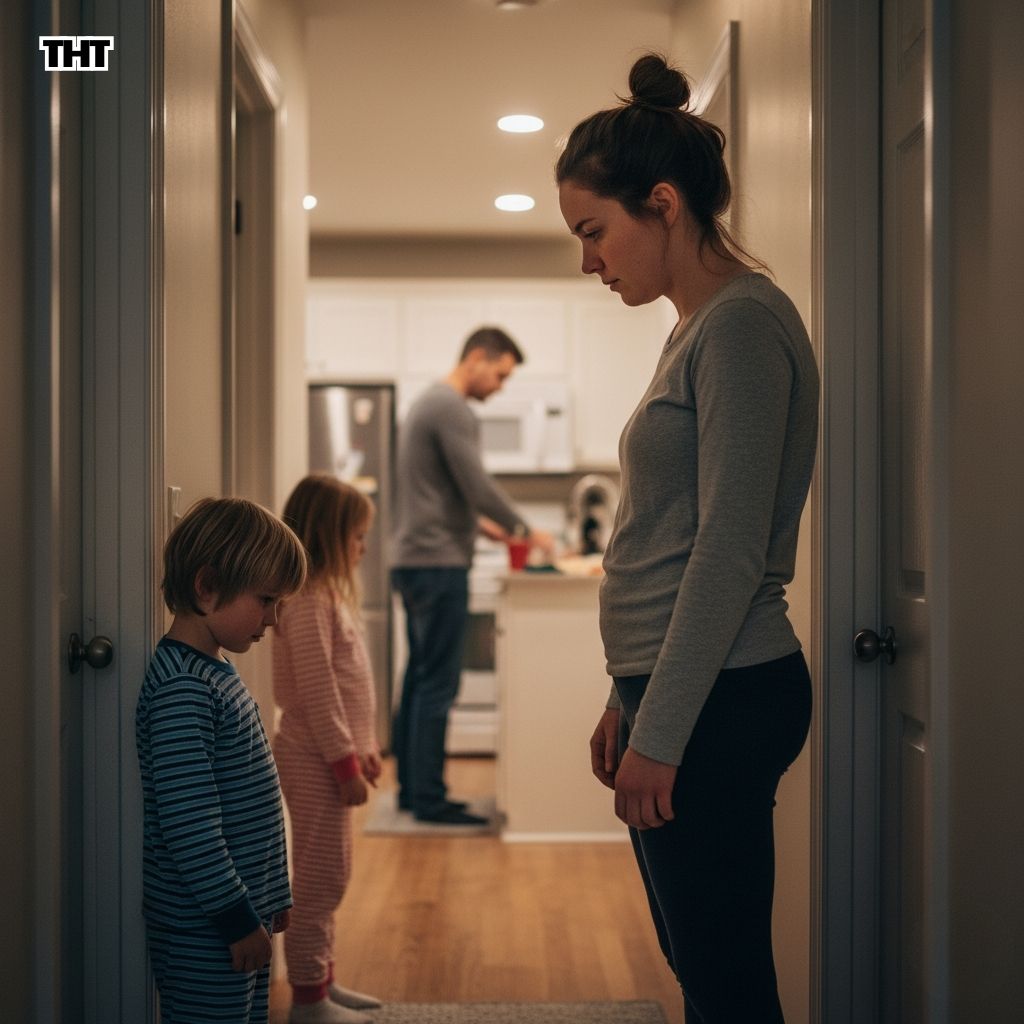
Nora was already in her room, quiet, reading. Chris was tidying the kitchen. I was tired. Not regular tired. The kind of tired where your patience feels like a phone battery at 1 percent.
Miles came out of his room again, and I snapped.
Not screaming, not scary, but sharp.
“Miles. Go. To. Bed.”
He froze, eyes wide.
I could see his lower lip wobble. The wobble is always the moment I regret everything, because it’s the moment I realize my tone landed harder than I intended.
He whispered, “You’re mad at me.”
And my instinct was to say, “No I’m not,” because parents love to deny obvious emotions as if kids can’t see them in our faces.
But I didn’t.
I took a breath and said, “I am frustrated. And I used a harsh voice. That was my mistake. I’m sorry.”
Miles stared at me like I had just turned into a different person.
Nora appeared in the hallway, drawn by the sound like a cat hearing a can open. She watched quietly.
Chris paused in the kitchen, listening, but not stepping in, which is one of the things I appreciate about him. He lets me handle my repair without making it awkward.
I crouched down to Miles’ level and said, “You didn’t do anything bad by having questions. You’re a kid. My job is to keep bedtime moving, and I got impatient. I’m going to try again.”
Then I did something that felt cheesy but worked.
I said, “Can I redo that?”
Miles nodded.
I softened my voice and said, “Buddy, it’s bedtime. I love you. I’m going to tuck you in now.”
Miles exhaled like his whole body had been holding its breath.
In his room, as I pulled the blanket up, he whispered, “Thanks for saying sorry.”
Nora, later, said to me quietly, “I like when you redo it instead of just acting like it didn’t happen.”
That sentence stayed with me.
Because she was right.
Kids don’t need a parent who never messes up.
They need a parent who repairs.
What Changed in My Kids After I Started Doing This
The shift wasn’t instant, but it was noticeable.
Nora became less afraid of being wrong
Nora is sensitive and thoughtful, and she can get stuck in “what if I mess up” loops. When she saw me admit mistakes calmly, she started doing something new.
She started saying things like, “I messed up, can I try again?”
Not in a dramatic way. In a normal way.
One night she spilled water on her drawing and started to panic. Usually she would spiral into frustration, blaming herself, rushing, trying to fix it perfectly. Instead, she took a breath and said, “Okay. I’m upset. But I can redo it.”
I didn’t make a big deal about it. I just sat near her while she found a new sheet of paper and started again.
The confidence wasn’t loud. It was quiet. It was real.
Miles started calming down faster
Miles has big feelings. He is intense. He gets stubborn. He can turn “no” into a full negotiation season.
When I started admitting my own mistakes, he argued less during repairs. It was like the honesty disarmed him. He didn’t need to fight as hard to be understood.
He also started copying the language, which was both adorable and mildly hilarious.
One day he knocked over a block tower, looked at the mess, and said, “That was my mistake. I will fix it.”
Like he was writing an email to his boss.
Another time he yelled at Nora, then paused and said, “Wait. That was too loud. I’m sorry.”
Not perfect, not constant, but enough to tell me the lesson was landing.
The Practical Hack That Made It Easier
Here’s a practical hack that helped me keep doing this without overthinking it.
I use a simple three-part repair:
- Name the mistake.
- Apologize.
- Say what you’ll do next time.
That’s it.
“I snapped. I’m sorry. Next time I’m going to take a breath first.”
“I forgot the snacks. I’m sorry. I’m putting extras in the car when we get home.”
“I interrupted you. I’m sorry. Go ahead and finish.”
This keeps the apology from turning into a long explanation, and it also teaches kids that apologies include change, not just words.
What This Taught Me About Authority
I used to think authority meant being right all the time.
Now I think authority means being trustworthy.
When I admit mistakes, my kids trust me more, not less. They believe me when I set boundaries because they’ve seen me own my part. They take feedback better because it doesn’t feel like I’m pretending to be flawless.
And honestly, I feel calmer too.
It is exhausting to defend yourself all day. It is exhausting to pretend you didn’t mess up when you did. Repair is easier than performance.
Final Thoughts
Sharing my own mistake with my kids didn’t make them disrespect me. It didn’t turn them into tiny tyrants who celebrate my failures. It did something quieter and better.
It made our home feel safer.
It taught my kids that mistakes are normal and repair is powerful. It gave them language for what to do when they mess up, which they will, because they are human. It gave Nora permission to try again without shame. It gave Miles a path back from big feelings without needing to win.
And it gave me a reminder I didn’t know I needed.
Parenting is not a performance. It’s a relationship.
So now, when I mess up, I try to say it out loud, not with drama, not with guilt, but with honesty.
“I made a mistake. I’m sorry. I’m going to try again.”
If your kids learn that one sentence from watching you, they’ll carry it into friendships, school, work, and every relationship they build. They’ll learn that you don’t have to be perfect to be loved, and you don’t have to be defensive to be respected.
You just have to be willing to come back and try again.
And sometimes, you have to remember to restock the snack bag, because apparently I am raising two children and a dog who all believe snacks are a basic human right.