How Planning a Small Trip Together Taught More Than the Trip Itself
The trip was small enough that I almost didn’t call it a “trip” at first, because there was no airport, no hotel, no dramatic itinerary taped to the fridge. It was just a Saturday plan to drive less than an hour, walk a gentle trail, eat lunch somewhere casual, and come home before anyone’s mood…
The trip was small enough that I almost didn’t call it a “trip” at first, because there was no airport, no hotel, no dramatic itinerary taped to the fridge. It was just a Saturday plan to drive less than an hour, walk a gentle trail, eat lunch somewhere casual, and come home before anyone’s mood collapsed into that familiar late-afternoon crankiness. Still, what surprised me was how much the planning changed us, especially because I’d always treated planning like my private job, the thing I did quietly in the background so the day could run smoothly and the kids could simply show up and enjoy it.
That week had been the kind where everything felt slightly too tight, like we were all living inside a schedule that didn’t leave enough breathing room. Nora had been carrying more “what if” worries than usual, the kind that show up in the corners of the morning and the pauses between conversations. Miles was in one of his high-energy phases, bouncing from idea to idea and occasionally melting down over limits that, to him, felt personal. Chris was calm as always, but his work was busy, and I could feel the household drifting toward that pattern where I do the emotional planning and he does the technical fixing, and the kids just react to whatever the day gives them.
I didn’t want a big getaway. I wanted a reset that felt achievable, something that didn’t require perfection or a suitcase, and something that could become ours in a simple way.
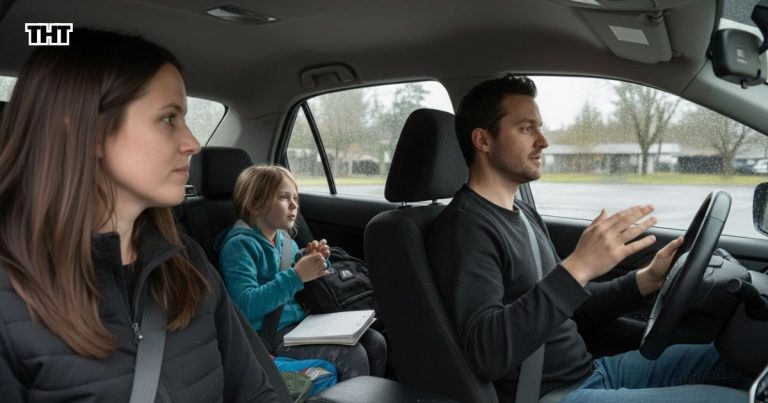
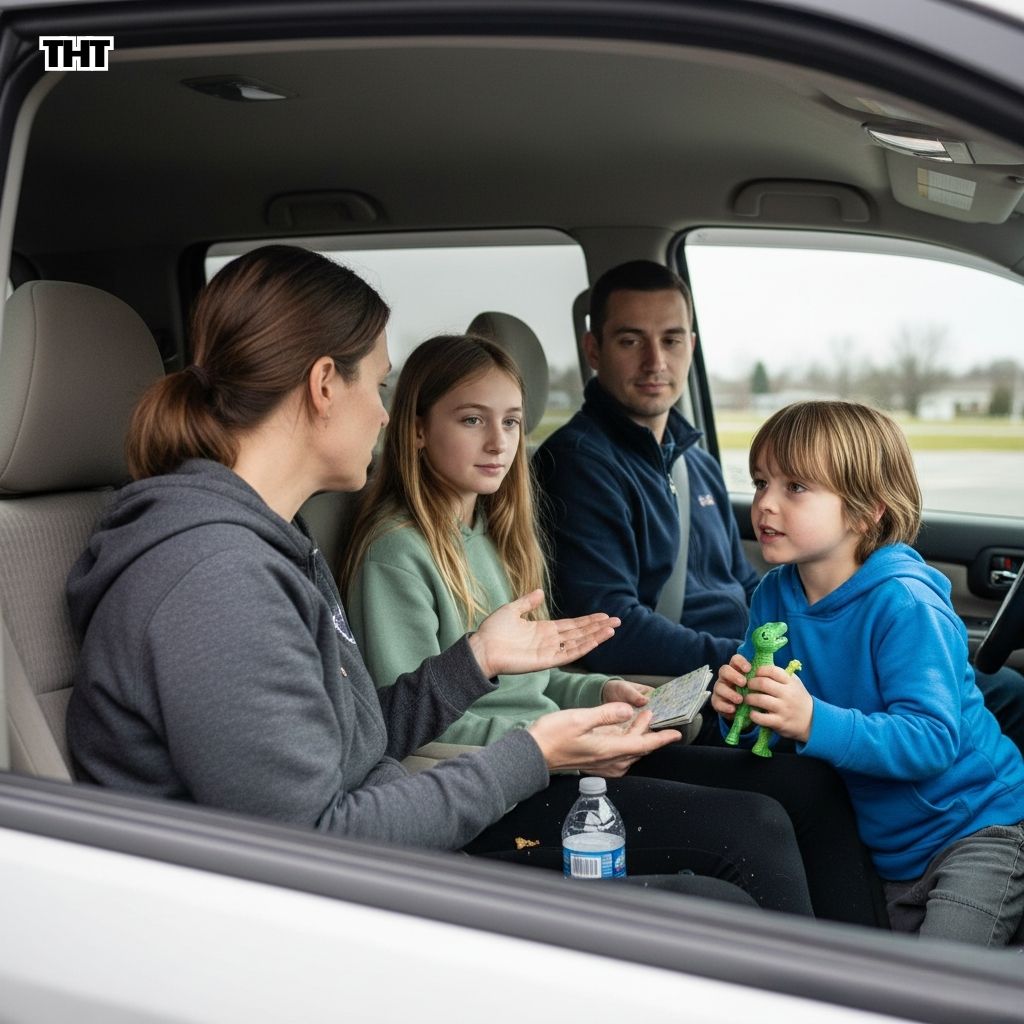
So in the car after school pickup, during that little window when everyone is contained and nobody can dramatically escape to their room, I said, “What if we plan a tiny trip for Saturday, and we plan it together?”
Nora looked up immediately, interested in the structure of it. Miles asked, without missing a beat, if the trip included snacks, which is his standard measure of quality. Chris glanced at me and said, “Define tiny,” which is his polite way of asking how many variables he’s about to troubleshoot.
I told them it would be close, simple, and flexible, and then I made one decision that ended up being the most important one of all: I didn’t show up with a finished plan. I showed up with an invitation.
The Planning: Small Roles, Real Ownership
At home, “family meeting” at the table can turn into chaos fast, because the table in our house is not a place of calm reflection. It’s a place where someone taps a fork, someone spills water, and someone has a strong emotional reaction to chicken being “too chicken-y.” The car, however, has become our accidental best room, mostly because everyone is facing forward and the tension can’t bounce around as easily, which is oddly soothing.
I said, “Everyone gets to pick something, and everyone has to give something up too, because we’re keeping it simple.”
Nora sat up straighter like she’d been assigned a school project. Miles looked suspicious at the words “give something up,” as if I’d just said “no fun allowed.” Chris nodded slowly, already appreciating the idea of limited scope.
We split it into three categories, because kids do well with containers.
First, what we would do.
Second, what we would eat.
Third, what we would bring.
Then I added the limits, because limits are what keep a small plan from becoming a stressful one. We had a time limit, so we weren’t out all day. We had a “stuff” limit, so we wouldn’t pack like we were leaving civilization. And we had a “flexibility rule,” which meant if something didn’t go perfectly, we didn’t treat it like a failure, we treated it like a normal life adjustment.
Nora immediately started asking the questions that anxiety makes a child ask, not because she’s trying to control people, but because control makes her feel safe. She wanted to know what time we’d leave, how long the trail would be, whether the parking lot was big, and what we’d do if it rained. In the past, I would have tried to reassure her quickly with, “It’ll be fine,” but I’ve learned that vague reassurance is like tossing a blanket over a buzzing brain, because it doesn’t actually answer the worry underneath.
So we made the plan practical.
Chris said, “If it rains, we bring jackets.”
I said, “If the trail is crowded, we slow down and keep it easy.”
And instead of me carrying all the answers alone, I gave Nora a role that matched her strength without feeding her perfectionism.
“Nora, you’re our map helper,” I told her. “You can check the route and tell us when we’re close, and you can also be in charge of the ‘what’s the backup plan’ list.”
Her face softened instantly, not because the world became predictable, but because she had a job that made her feel capable inside the uncertainty.
Miles’ part was harder, because planning requires choosing, and choosing means hearing “not that” sometimes, which he experiences as a personal tragedy. He wanted to bring a dinosaur, a superhero cape, two cars, a set of tools, and enough snacks to survive a three-day expedition into the wild. He also suggested bringing a very large Lego build, which I respected purely for the ambition.
I said, “You can pick two items to bring, and you can pick three snacks, and the snacks have to include one that’s good for your body.”
He stared at me like I had presented an unsolvable puzzle.
“Two?” he asked, genuinely distressed.
“Two,” I repeated, calmly, because my job in that moment was not to give in, but also not to turn it into a power struggle that would poison the whole trip before it even began.
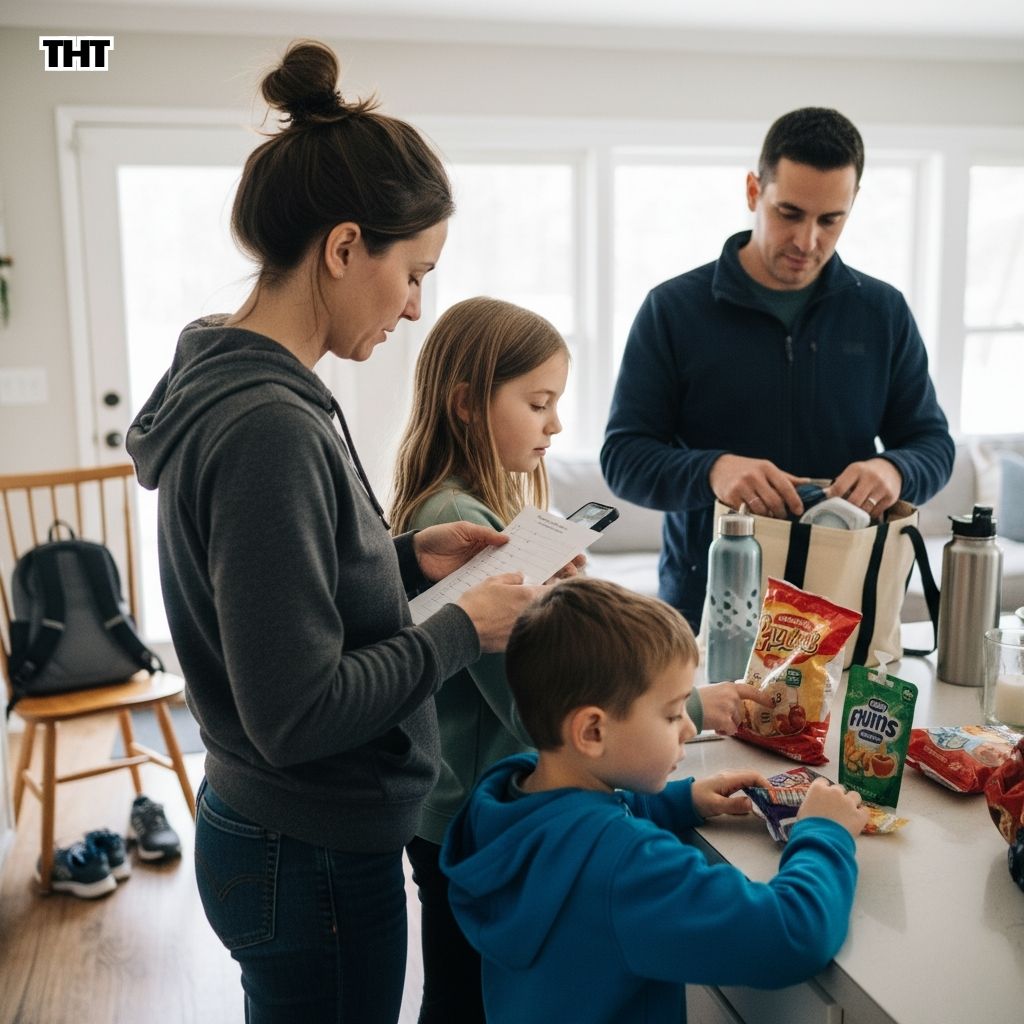
He grumbled and negotiated and offered a series of creative loopholes, including the idea that the dinosaur could count as clothing if he held it close enough to his chest. Eventually, after much sighing, he chose the dinosaur and his small screwdriver set, and for snacks he chose pretzels, applesauce pouches, and one fun treat that Nora reluctantly approved as “fine,” even though she made it clear she would not personally eat it.
What I noticed, as he made those choices, was that he wasn’t just deciding what he wanted. He was practicing how to live with limits without falling apart, which is a skill I want him to have far more than I want a perfectly packed bag.
Chris, meanwhile, took on the role he naturally takes without turning it into a control thing. He suggested leaving at a time that avoided traffic, reminded us to pack water, and made sure we had a basic backup plan, because he likes knowing the solution exists even if we never need it.
And I felt something shift, quietly, in my own chest.
Planning wasn’t a burden I carried alone this time. It was a shared ritual, and the shared part was what made it lighter.
The Day Of: Imperfect, Muddy, and Exactly Ours
Saturday arrived with the kind of weather that can’t make up its mind, which in Portland is basically our official season. We were late leaving, because we are always late leaving, and there is no version of reality where everyone is ready at the same time without someone needing one last bathroom trip or one last missing shoe search. I could feel the old impatience rise in me, the voice that wants the day to run smoothly, but the difference was that the plan wasn’t just mine, so I wasn’t the only one trying to “make it work.”
Nora checked the time and said, “We’re still okay,” like she was reassuring herself as much as she was reassuring me. Miles announced he was hungry ten minutes after we left the driveway, which felt impressively fast even for him, and then he proudly declared, “This is why I picked snacks,” as if he had personally secured our survival.
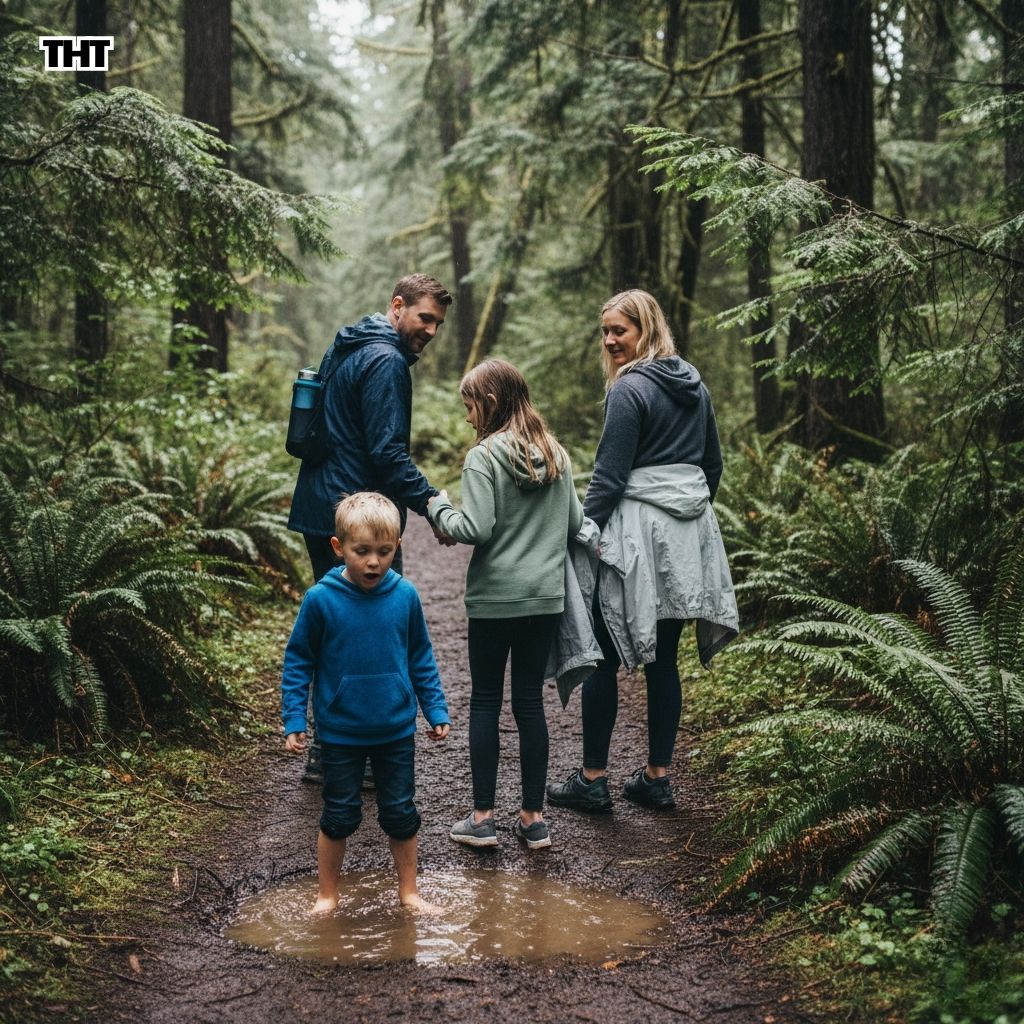
When we got to the trail, the ground was softer than expected, and within minutes Miles stepped directly into a puddle that was large enough to be a puddle with intentions. Nora got tense and asked if it was safe, because she’s cautious and because she hates slipping, and the question wasn’t just about the mud, it was about her desire for predictability.
Chris said, “We’ll go slower,” and held her hand for a moment without making a big deal of it. I watched Nora’s shoulders drop, and I realized again that anxious kids don’t always need more information, they need steady presence and a clear next step.
A little farther in, we missed a turn, and for a second I felt that spike of irritation I always feel when I’m navigating with kids in the back seat and everything feels louder than necessary. Nora leaned forward, checked the map like she’d been assigned, and said calmly, “We’re close. It’s the next right.”
No panic, no frustration, no shame, just competence, which was the exact thing I wanted her to feel.
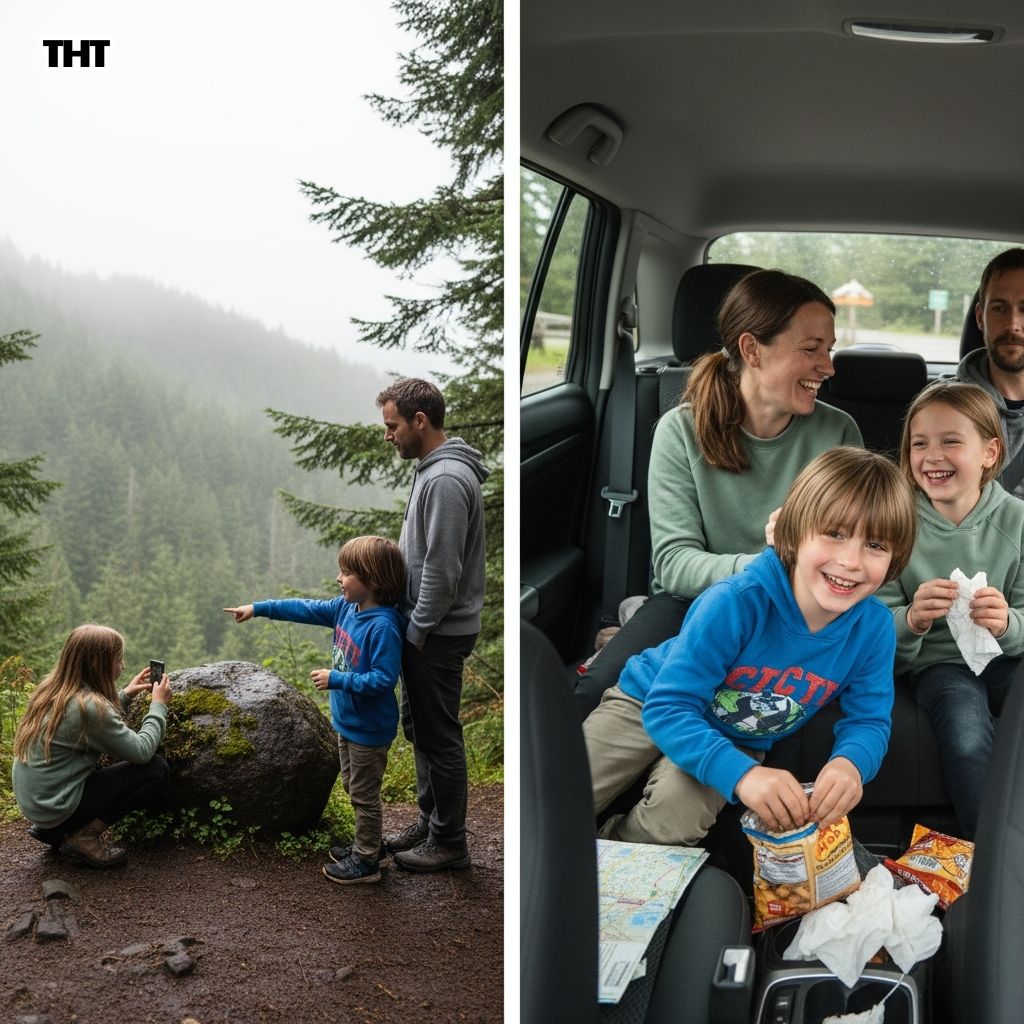
At the viewpoint, where the trees opened up and the air smelled like damp earth and fir, we stood together in a quiet little cluster. The scenery wasn’t dramatic in a postcard way, but it was beautiful in the way that matters most, because it made us all stop moving for a minute. Nora took pictures of tiny plants like she was collecting evidence that the world is still gentle. Miles asked a long series of questions about rocks and insisted one of them looked like a sleeping dinosaur, which might have been true if you squinted and had the imagination of a six-year-old. Chris pointed out a bird and actually stayed still long enough to watch it, which is how I know he felt the reset too.
Later, we ate lunch in the car because one of the kids suddenly hated the idea of sitting at the picnic table, and instead of turning it into a conflict about “we planned this,” we just adapted. We ate, we laughed, we wiped sticky hands with too few napkins, and we let it be imperfect.
The Real Lesson: The Planning Was the Connection
On the drive home, the kids were tired in the good way, the kind of tired that makes their voices softer. Nora said, “I liked planning it,” and she sounded surprised by her own confession, as if she’d expected planning to feel stressful but it felt steady instead.
Miles said, “I liked choosing what we bring,” which is not something I expected him to say, because he usually wants to bring everything he loves, but then he added, thoughtfully, “If we brought all my stuff, it would be heavy and annoying.”
He said “annoying” like he’d discovered the concept and found it deeply inconvenient.
Chris said, “It went smoother than I expected,” which is basically a standing ovation coming from him, and then he added, “Because we didn’t try to do too much.”
Nora looked out the window for a moment and said, “It felt easier because we knew what we were doing.”
That sentence was the whole point.
Planning didn’t prevent every problem, but it lowered the fear of the unknown. It gave Nora structure without feeding her need for perfection. It gave Miles a safe place to practice limits before his feelings were already tired. It gave Chris and me a chance to share the mental load instead of silently splitting into roles that can start to feel lonely over time.
And it gave us something that didn’t show up on any itinerary: the feeling that we were a team.
Here’s the Part I Messed Up, So You Don’t Have To
There was a moment during planning when I caught myself trying to steer too much, because my brain loves efficiency and my nervous system loves control. I wanted to correct the snack choices, correct the timing, correct the packing list, and shape the day into something that looked like a “good family day” from the outside.
But if I had done that, it wouldn’t have been our day. It would have been my day that everyone else followed.
So I backed off and let the plan be simple, and sometimes slightly imperfect, and that is what made it sustainable.
If you try this, the best advice I can offer is to make the trip small enough that it can survive messiness, and then invite your kids into the planning in a real way, with roles that are meaningful and limits that are clear. The goal isn’t to plan the perfect day. The goal is to practice being together while the day unfolds.
Final Thoughts
The destination was nice, but it wasn’t the magic. The magic was in the planning, because planning together turned our week into something we could hold, not just endure. It taught Nora that preparedness can be steady without becoming rigid. It taught Miles that choosing less can make the experience lighter. It reminded Chris and me that family life runs better when the mental load is shared openly, not quietly absorbed by one person.
We came home with muddy shoes, a few new photos, and a half-eaten snack bag, but the real thing we brought home was quieter than that. We brought home the memory of working as a team before we even left the driveway, and that kind of shared experience sticks, not because it was grand, but because it was ours.