How I Handled a Public Meltdown Without Leaving or Giving In
I used to think there were only two options when your child melts down in public: you either leave immediately, dragging a furious small person out of the store like you’re evacuating a burning building, or you give in to whatever demand is happening because you can feel thirty invisible eyes judging your parenting choices…
I used to think there were only two options when your child melts down in public: you either leave immediately, dragging a furious small person out of the store like you’re evacuating a burning building, or you give in to whatever demand is happening because you can feel thirty invisible eyes judging your parenting choices in real time. The truth is that I have done both of those things at different points, usually on days when I was already tired, already rushed, and already trying to hold a normal life together while pretending I wasn’t a human being with a nervous system of my own.
The day this story happened, I was determined not to do either. Not because I was trying to be brave or prove something, but because I’d started to notice that leaving in a panic taught Miles that his big feelings had the power to reroute the entire day, while giving in taught him that escalation was an effective strategy. Neither one helped him learn how to come back to himself, and neither one helped me feel like the parent I wanted to be, which is steady, kind, and firm, even when things get loud.
We were in a store on a Saturday afternoon, and I had been overly optimistic about how “quick” the trip would be, which is a consistent character flaw of mine. Nora was with us, moving quietly beside the cart, and Chris had offered to stay home to catch up on work, so it was me, two kids, and a list that included boring things like detergent and lightbulbs, which is exactly the kind of list that makes a six-year-old feel personally offended.
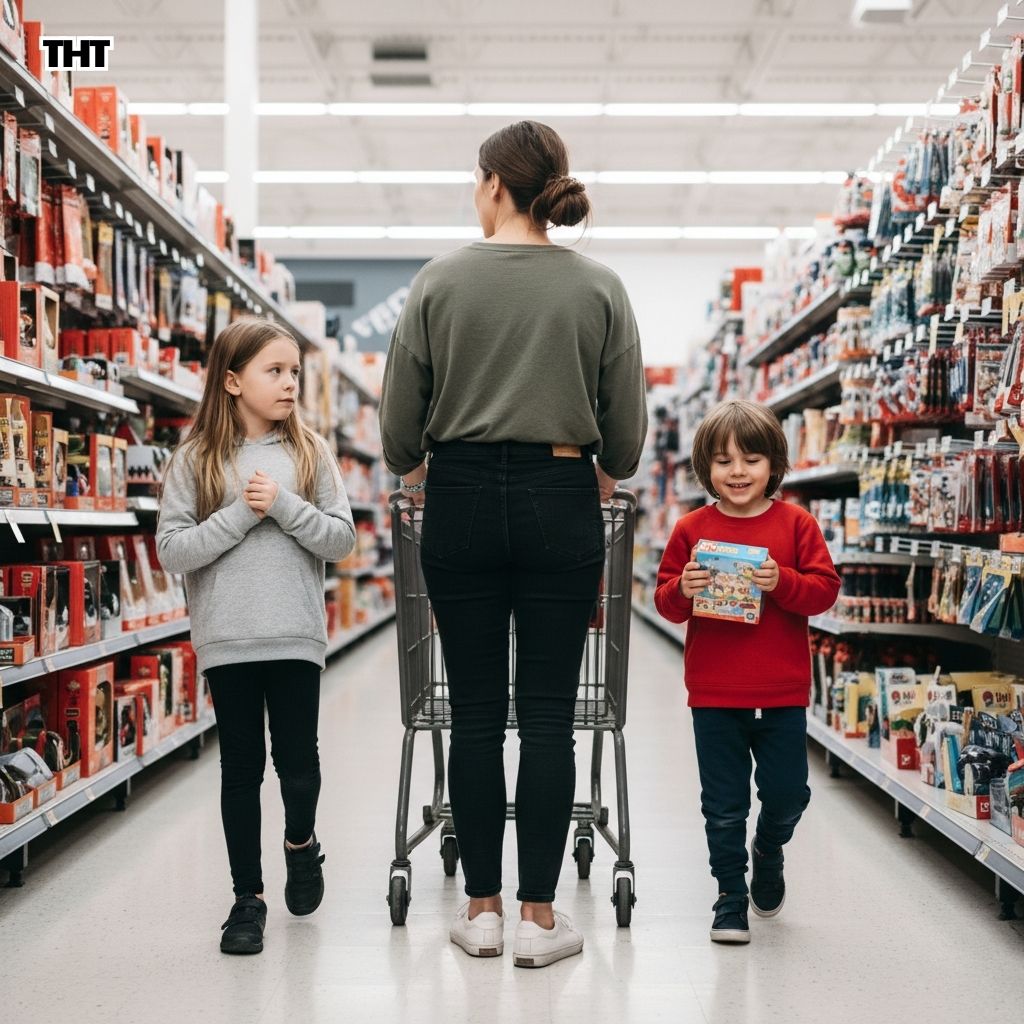
Miles had been fine at first, chatty and energetic, asking questions about everything we passed, and then we reached the aisle with the small seasonal items, the bright, shiny, carefully placed temptations that stores position at kid-eye level like they are running a psychological experiment on parents. He spotted a cheap toy, the kind that will be played with for seven minutes and then live under the couch until the end of time, and he grabbed it like he had discovered treasure.
“I want this,” he said, already smiling, already imagining the joy.
I glanced at it and felt the familiar internal calculation begin, not just about money, but about what message I wanted to send. We weren’t there for toys. We had a plan. We had a budget. We also had a child who gets big feelings when he hears no, and I could feel the moment balancing on the edge.
“Not today,” I said, keeping my voice calm. “We’re getting the things on the list.”
Miles’ smile disappeared so fast it was almost impressive.
“But it’s only five dollars,” he argued, because children have an intuitive understanding that lowering the price makes the desire sound more reasonable.
“We’re not buying toys today,” I repeated, and I tried to keep it neutral, because I’ve learned the hard way that the emotional temperature of my voice often matters more than the words.
Miles’ face tightened, and his breathing got faster. I could see the meltdown building, not like a sudden explosion, but like a storm gathering. He started making the sound that is half protest and half panic, the sound that means his brain has moved out of logic and into something more primitive.
Nora looked up at me, eyes wide, because she hates public attention and she could already feel it coming.
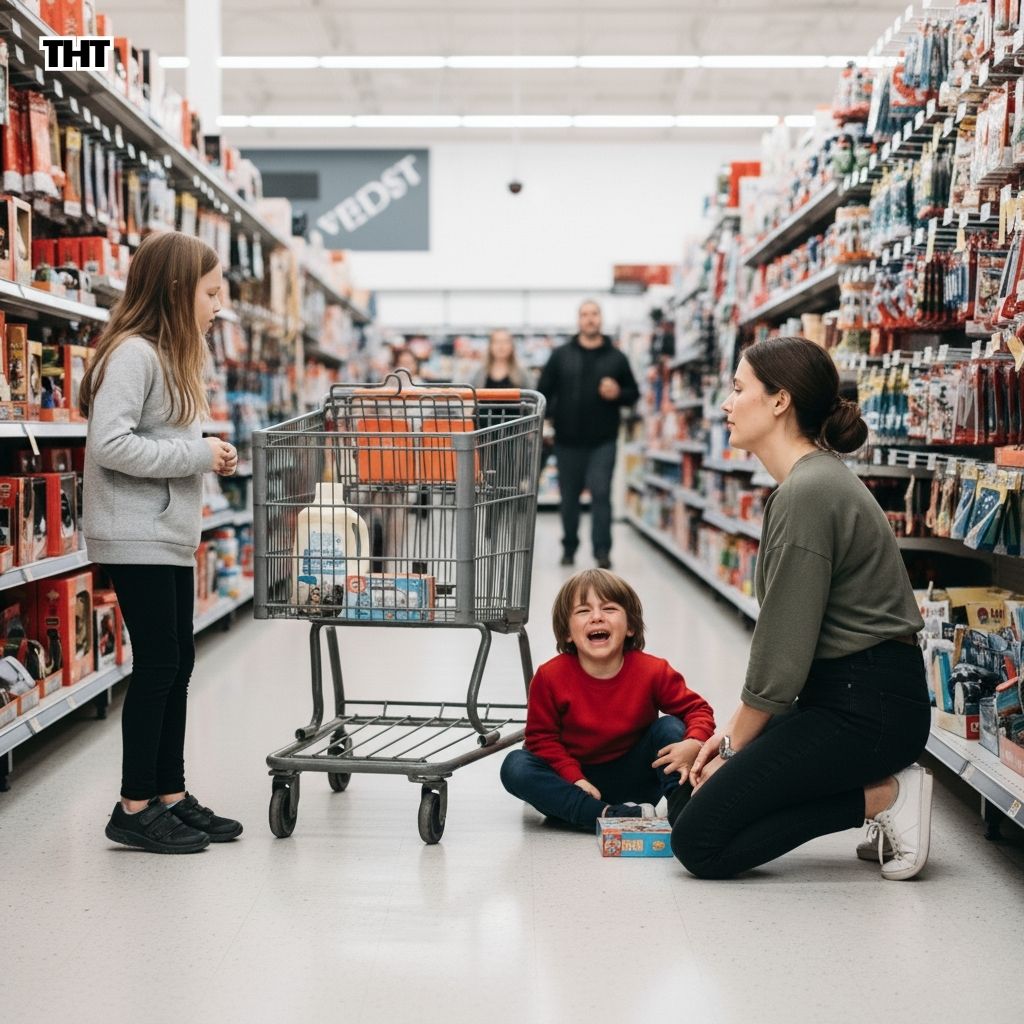
Miles dropped to the floor.
And then it began.
He screamed. He kicked his feet. He yelled that I was mean. He yelled that I never let him have anything, which was an especially bold claim considering the Lego bins at home. He yelled that he hated this store, hated this day, hated everything, which is the kind of sweeping statement kids make when they’re overwhelmed and don’t have the words for the real feeling underneath.
The aisle suddenly felt too bright. I felt my own heat rise, that instinctive stress response that tells you to make it stop fast, because public meltdowns trigger something primal in parents. Your body interprets it as danger, even if your mind knows it’s just a child in distress. I could sense other shoppers nearby, not necessarily judging, but aware, and that awareness alone can make you want to disappear.
I didn’t leave. I also didn’t buy the toy.
Instead, I did what I now think of as the third option, the one that feels slower and harder in the moment but teaches something that lasts longer than the meltdown itself.
Step One: I Positioned Myself Like a Calm Anchor
The first thing I did was get low and close, not in his face, but near him, so he could feel that I was staying. I didn’t hover over him like a tower of authority, and I didn’t walk away like he was alone in it. I planted myself beside the cart, one knee down, my body turned slightly sideways so I wasn’t staring him down, because direct face-to-face can feel like a challenge to a dysregulated kid.
I kept my voice low, almost boring.
“I hear you,” I said. “You really wanted the toy.”
He screamed louder, which is normal, because validation doesn’t instantly erase feelings. It just lets the feelings stop fighting for recognition.
Nora stood by the cart, stiff and uncomfortable, and I gave her a small job without making it dramatic.
“Nora, can you hold the list and check what’s next?” I asked.
She nodded, relieved to have something to do besides stand there with her embarrassment. Giving her a role also reduced the sense that we were all trapped in Miles’ emotional storm, which helped her nervous system stay steadier.
Step Two: I Named the Boundary Like It Was a Fact, Not a Debate
When kids melt down, they often try to reopen the negotiation, because negotiation feels like control, and control feels like safety. If I started explaining too much, or arguing, or defending myself, I would accidentally turn the boundary into a discussion, and discussions feel like opportunities.
So I said the boundary once, plainly.
“We are not buying the toy today.”
No lecture. No long reasoning. No “because I said so,” but also no loopholes.
Miles screamed, “But I want it!”
“I know,” I said. “And it’s still a no.”
That line became my refrain, and I stuck to it because consistency is what makes a boundary feel real.
Step Three: I Offered a Regulating Choice That Didn’t Change the Outcome
This is the part that used to confuse me, because I worried that offering choices would feel like giving in. But there’s a difference between giving in on the decision and giving your child a small amount of control over how they move through the moment.
So I gave him two choices that both kept the boundary intact.
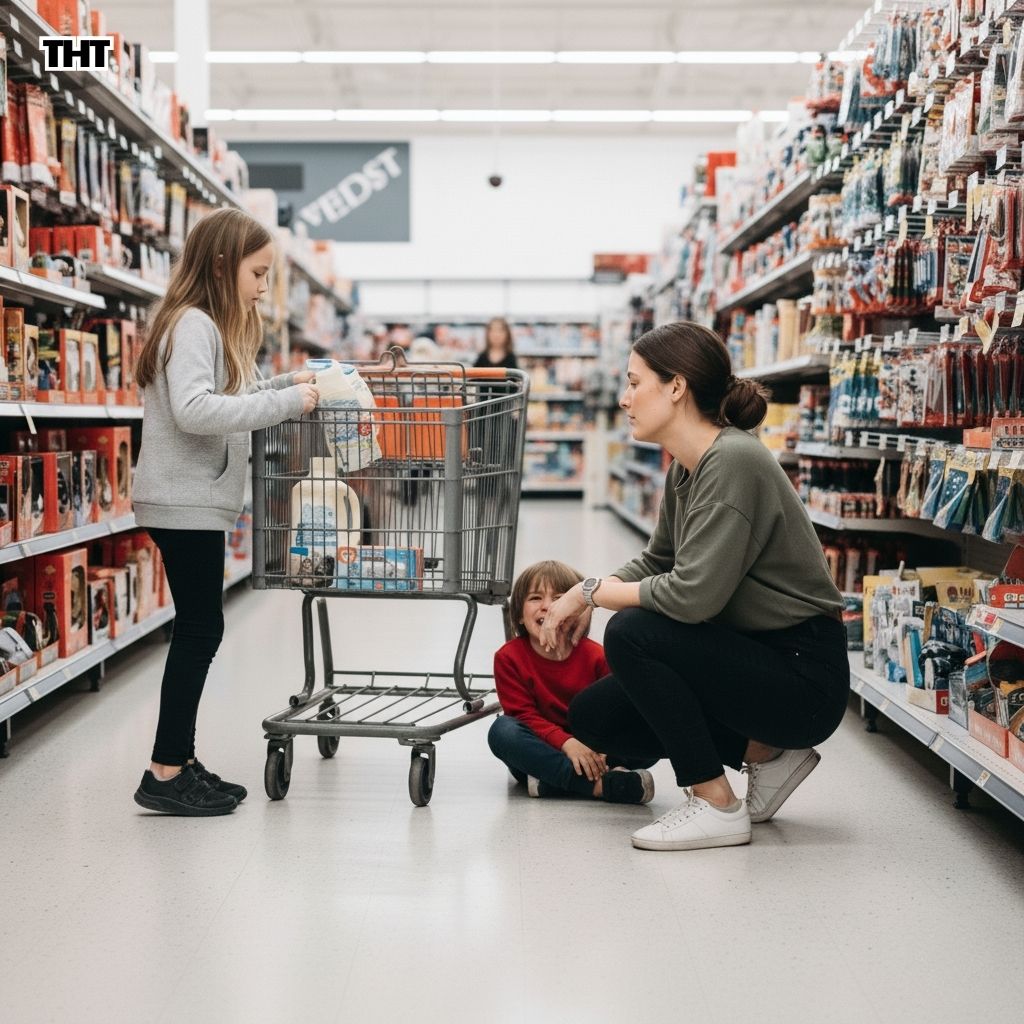
“You can sit with me while your body calms down,” I said, “or you can hold my hand and we can keep shopping.”
He screamed again, because at that moment his body was in charge, not his thinking brain. I waited. I kept breathing slowly, because my calm matters more than my words in these moments.
I didn’t say, “Stop crying.” I didn’t say, “You’re embarrassing me.” I didn’t threaten consequences. I stayed steady.
After a minute that felt like an hour, he paused just long enough to breathe.
I repeated the choice, still calm.
“Sit with me, or hold my hand and walk.”
He cried, “I can’t!”
“That’s okay,” I said. “I’ll wait.”
Waiting is a superpower in parenting, and it’s one I had to learn the hard way, because waiting feels like doing nothing, but it’s not nothing. It’s giving the child space to regulate without adding pressure.
Step Four: I Protected Nora Without Making Miles the Villain
Nora was getting tense, and I could see her scanning the aisle like she wanted to disappear into a shelf of laundry pods. She’s sensitive, and she’s also old enough to feel the social weight of a scene.
I leaned toward her and said quietly, “You’re okay. This is just a hard moment. You’re not responsible for it.”
Then I gave her another small task.
“Can you choose the detergent we usually get and put it in the cart?”
She did it immediately, grateful for something concrete, and that small action gave her nervous system a place to land.
In the past, I might have snapped at Miles to stop because his sister was embarrassed, and that would have turned Nora’s discomfort into a weapon against him, which I don’t want. I want them to feel like they’re on the same team, not like one kid’s feelings are allowed and the other kid’s feelings are a problem.
Step Five: I Let the Meltdown Be Loud Without Making It Bigger
This was the hardest part for me internally, because my body wanted to end it fast. But I kept reminding myself of something I’ve learned with Miles over and over again: when I try to rush him out of a meltdown, it often intensifies, because he feels pushed when he’s already overwhelmed.
So I let it run its course while I stayed present.
I kept my voice low. I kept my words minimal. I didn’t match his volume. I didn’t bargain. I didn’t shame.
I also didn’t perform calm. I didn’t try to look perfect for strangers. I focused on my kid.
A woman walked past and gave me a sympathetic look. A man pretended not to notice, which is honestly sometimes the kindest thing. Nobody said anything cruel. Most people in public spaces have either lived this or witnessed it, and the ones who haven’t are probably too busy choosing cereal to care.
In my head, I repeated a mantra that helped me stay grounded.
He’s having a hard time, not giving me a hard time.
That line doesn’t excuse behavior, but it keeps me from taking it personally.
The Moment It Turned
After several minutes, Miles’ screams softened into sobs. His body stopped kicking. He looked exhausted, like the storm had burned through its fuel.
This is usually the moment when kids are able to reconnect, but it’s also the moment where parents often lecture, because you finally have their attention. I used to do that. I used to explain what they did wrong, why it wasn’t okay, and how embarrassing it was.
It never helped.
So I didn’t lecture.
I offered connection first.
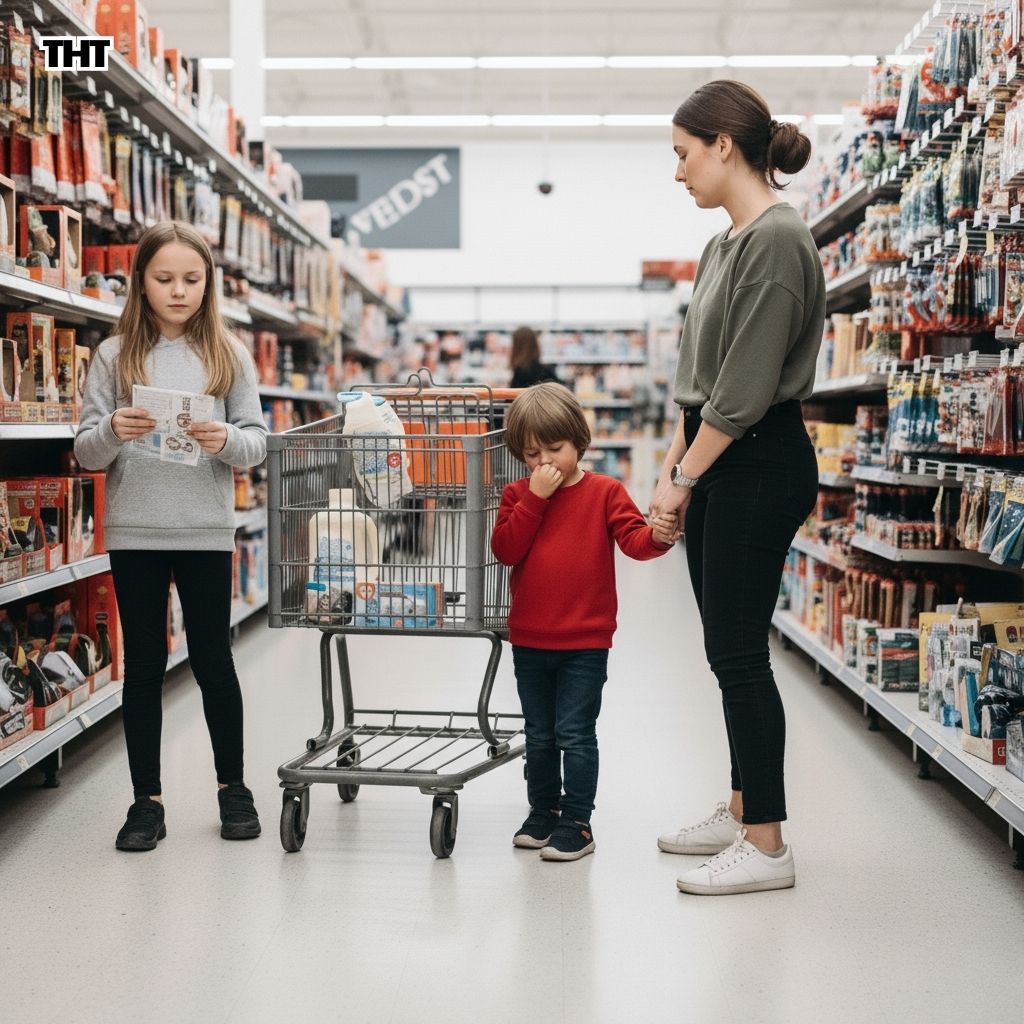
“I’m here,” I said. “Do you want a hug, or do you want to hold my hand?”
He didn’t speak. He crawled closer and leaned into me. His face was wet, his hair was messy, and he looked like a kid who had survived something big inside his body.
I held him for a moment and kept my voice calm.
“We’re still not buying the toy,” I said gently, because I wanted the boundary to remain solid even in the comforting moment. “And we can still have a good day.”
He sniffed and nodded.
Then he whispered, “Can we get it next time?”
This is where people think the temptation is to say yes just to stop the pain, but I’ve learned that promises can become future meltdowns if you can’t keep them, and I don’t want to create a new bargaining system.
So I said, “We can put it on your birthday list, or you can earn it with chores, but not today.”
That gave him a path forward without changing the boundary.
What I Learned About My Own Nervous System
The big lesson from that day wasn’t just about Miles. It was about me, and the way my body reacts to public pressure.
I realized that a lot of my impulse to leave or give in was not actually about what was best for my child. It was about my own discomfort, my fear of being judged, my desire to make the noise stop.
Once I admitted that to myself, I could choose differently.
I could choose to stay.
I could choose to hold the boundary.
I could choose to help my kid regulate, even if it took longer than I wanted.
That choice felt like growth, not because it was perfect, but because it was aligned with the parent I want to be.
Here’s the Part I Messed Up, So You Don’t Have To
Here’s the part I messed up, so you don’t have to.
Earlier in our parenting years, I used to talk too much during meltdowns. I would explain, reason, justify, and plead, and all it did was pour words into a brain that couldn’t process them. It also made the boundary feel negotiable, because the more you talk, the more it sounds like a debate.
That day, I kept it simple, and it worked better.
If you’re trying this, the biggest tip I have is to treat the boundary like a fact, and treat your calm like the real intervention. Your child doesn’t need a perfect script. They need a steady adult.
Final Thoughts
Handling a public meltdown without leaving or giving in doesn’t mean you stand there proudly while your child screams and you pretend it doesn’t affect you. It affects you. It’s loud. It’s intense. It triggers your own stress response. You will probably sweat.
But what that day taught me is that there is a third way, and it looks like staying close, keeping the boundary firm, offering regulating choices, protecting siblings without blaming the meltdowner, and waiting long enough for your child’s body to come back online.
Miles didn’t learn “I can always get what I want if I scream,” and he also didn’t learn “my feelings make my parent abandon me.” He learned something harder but healthier.
He learned that big feelings can happen in public, that I will stay with him through them, and that the answer can still be no.
And I learned that I can handle the discomfort of other people seeing my child struggle, because my job isn’t to perform parenting. My job is to parent, and sometimes parenting looks like kneeling in an aisle of detergent, breathing slowly, and staying steady until a small boy remembers how to come back to himself.