How Fixing a Broken Chair Together Changed the Way My Son Handles Frustration
The chair wasn’t an heirloom. It wasn’t expensive. It wasn’t even particularly comfortable. It was one of those basic dining chairs that somehow survives years of spilled juice, homework sessions, and the occasional dramatic lean-back that makes every parent say, “Please do not test gravity right now.” And then, one random Tuesday, gravity won. Miles…
The chair wasn’t an heirloom. It wasn’t expensive. It wasn’t even particularly comfortable. It was one of those basic dining chairs that somehow survives years of spilled juice, homework sessions, and the occasional dramatic lean-back that makes every parent say, “Please do not test gravity right now.”
And then, one random Tuesday, gravity won.
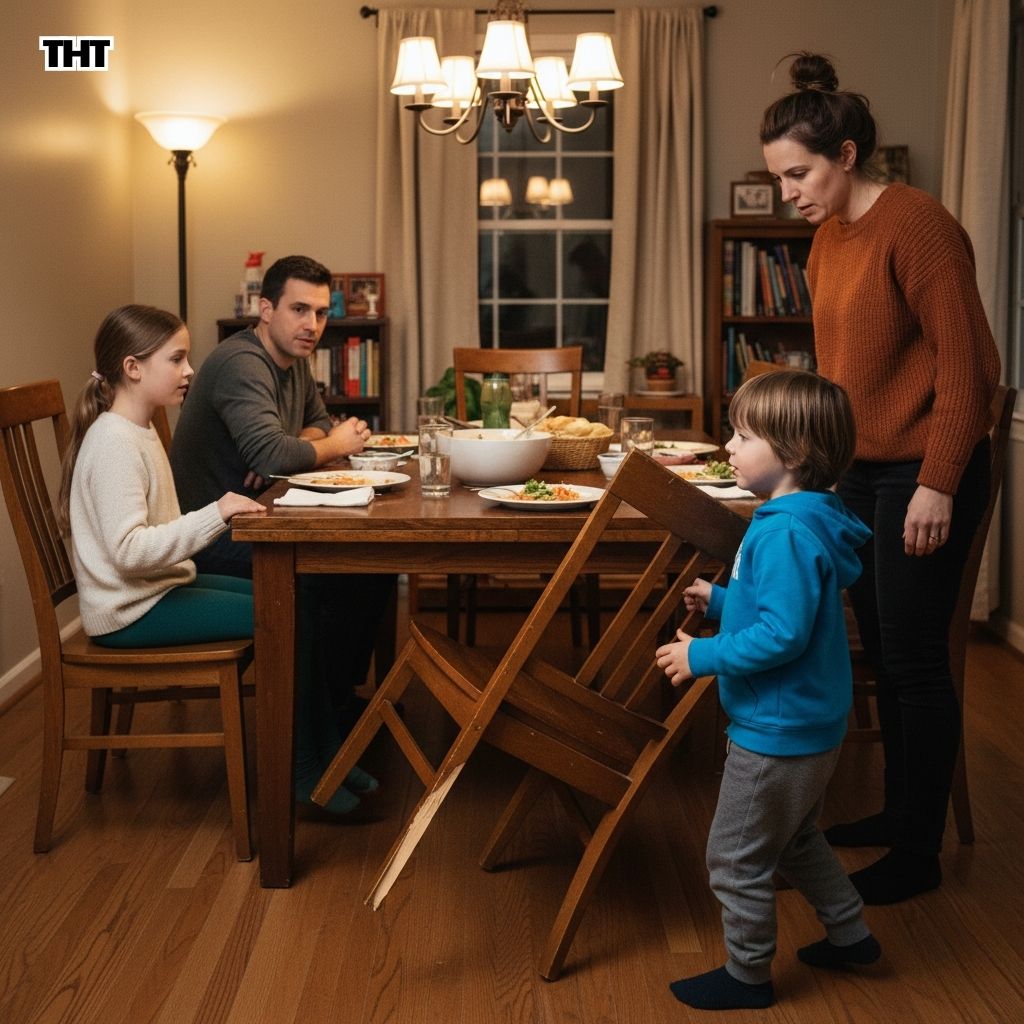
Miles tilted back in the chair during dinner, laughing at something Nora said, and I heard that unmistakable crack that immediately turns your brain from “what are we eating tomorrow?” to “how much is this going to cost?” The chair lurched, one leg shifted at a strange angle, and Miles landed on his feet with a startled yelp, looking genuinely offended by the idea that furniture could betray him.
He stared at the chair like it had done this on purpose.
Nora, who is nine and has a sharp sense of justice when it comes to rules, said, “I told you not to lean back.”
Miles snapped, “I wasn’t even leaning that much.”
Chris looked at the chair with the quiet focus he usually reserves for broken cabinets and Wi-Fi issues, and I felt that familiar parent impulse to handle it quickly, send Miles to wash his hands, and get the whole incident out of the way before it turned into a scene.
But something about the way Miles’ face tightened made me pause.
He wasn’t just startled. He was embarrassed, and embarrassment is the secret fuel behind so many six-year-old explosions. When kids feel embarrassed, frustration jumps in to protect them, because anger feels stronger than shame, and Miles is a kid who wants to feel strong.
He crossed his arms and said, “This chair is stupid.”
It was the kind of statement that sounds silly until you realize it’s his nervous system trying to find something to blame so he doesn’t have to sit with that uncomfortable feeling of messing up.
Chris said calmly, “Nobody’s hurt. That’s what matters. We can fix it.”
Miles groaned, loud and dramatic. “I hate fixing things.”
And that’s when I realized we had a choice in front of us.
We could treat this like a quick adult job and move on, or we could treat it like a moment to teach Miles what to do with frustration when something breaks, especially when he played a role in the breaking.
Because the truth about kids like Miles is that they aren’t lacking intelligence or empathy. They’re lacking practice. They don’t yet have a lot of lived experiences where they break something, feel the heat of frustration and embarrassment, and then move through it into repair without melting down or shutting down.
So I said, “Okay. We’re going to fix it together, and you’re going to be my helper.”
Miles’ eyebrows shot up. “Me?”
“Yes,” I said. “Not as a punishment. As a skill.”
He did not look convinced. He looked like a person who had just been assigned a job he didn’t apply for.
The First Frustration: The Chair Didn’t Cooperate and Neither Did Miles
We brought the chair into the kitchen, because that’s our unofficial workshop area, which is funny considering our kitchen is also where everything else happens, from art projects to science experiments to me standing over the sink trying to remember what day it is.
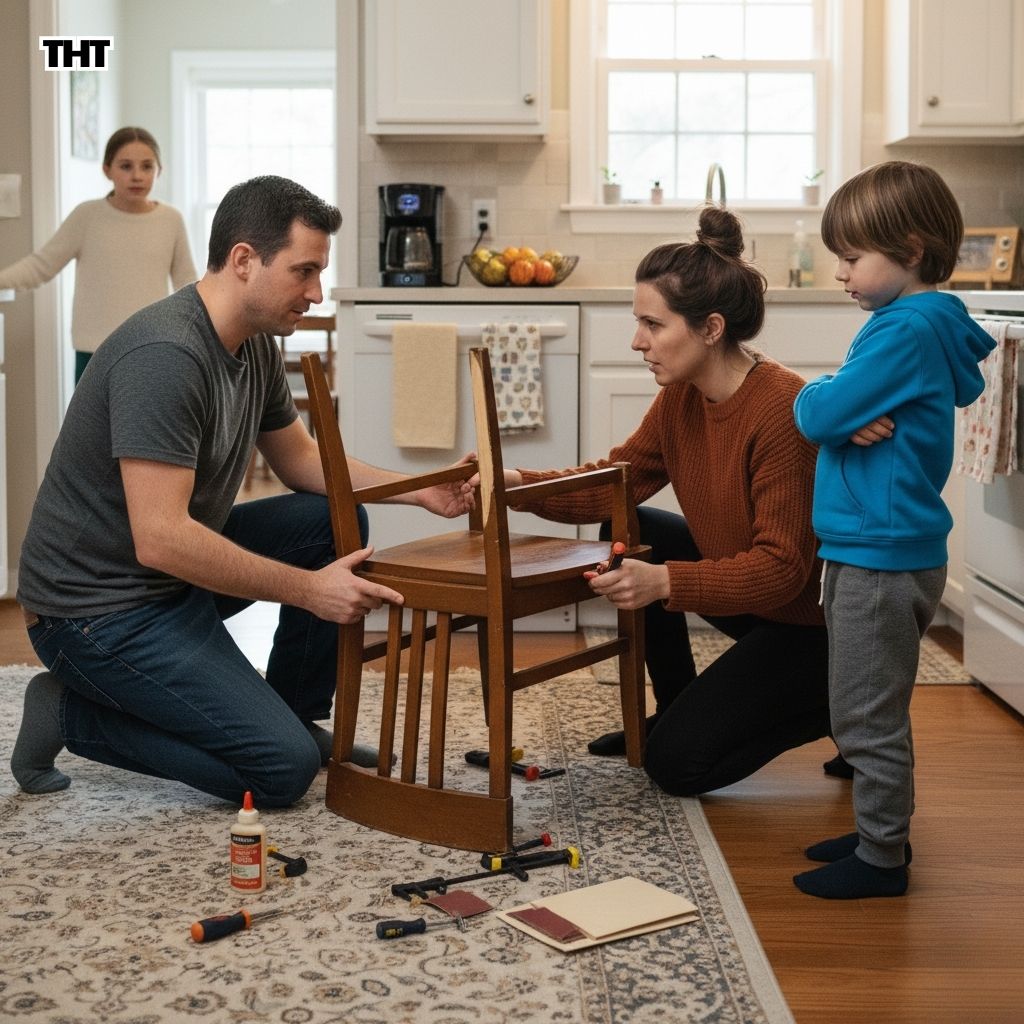
Chris gathered a few simple tools. Nothing fancy. Wood glue, clamps, a screwdriver, and a small piece of sandpaper that looked harmless but could apparently become a weapon if Miles got bored.
Miles hovered close, but his body language screamed resistance. His shoulders were tight. His mouth was set in that stubborn line that means he’s already bracing for failure.
I said, “Your job is to watch what we do and hand us things when we ask. If you need a break, you can say it. But we’re doing it, even if it takes a while.”
He sighed dramatically, because he believes sighing is a valid form of protest.
Chris turned the chair upside down and examined the leg. “Looks like the joint loosened,” he said, in the same calm tone he uses when he’s diagnosing a computer issue, which is probably why he’s good at not escalating with kids. He doesn’t treat problems like moral failures. He treats them like problems.
Miles said, “It’s broken forever.”
Chris said, “It’s broken right now. Not forever.”
That small shift in language matters more than people realize. “Forever” is a trap word for frustrated kids. It turns a fixable moment into a hopeless one. Chris didn’t argue with Miles’ feeling. He just reframed the situation into something solvable.
Miles crossed his arms tighter. “I still hate it.”
I said, “You can hate it and still do it.”
That line is one I’ve had to learn myself, because I also like to pretend I can’t do things I don’t enjoy.
We loosened the screws, pulled the leg away carefully, and that’s when Miles’ frustration spiked.
The wood didn’t come apart neatly. It splintered slightly, and Miles made a sound like the chair had personally insulted him.
“See?” he snapped. “It’s worse now!”
His voice got louder, and I could feel that familiar build, the quick rise from annoyance to big feelings. He started moving his hands too fast, reaching for things without thinking, which is often his first sign that he’s leaving the thinking zone and entering the emotional zone.
Chris didn’t raise his voice. He simply said, “Hands down for a second.”
Miles glared.
Chris stayed calm. “We go slow so we don’t make it worse. That’s part of fixing.”
Miles threw his hands into the air, a full performance. “I can’t do it!”
And that was the moment I decided to do something different from what my instincts usually want.
My instincts want to say, “Yes you can, stop being dramatic,” because in my head I’m thinking, it’s a chair, buddy. But that kind of response doesn’t help Miles learn to regulate. It just teaches him that his frustration is inconvenient.
So instead, I said, “You’re getting frustrated because it isn’t working the way you wanted. That’s normal. What does your body need right now so we can keep going?”
Miles stared at me like I had asked him to explain quantum physics.
Nora, who had wandered in to watch, whispered, “He needs to calm down.”
Miles snapped, “I am calm!”
Classic.
I said, “Okay. Let’s do a quick reset. Two slow breaths. Then you hand me the glue.”
Miles didn’t want to breathe, because breathing feels like giving in, but he did one breath because I did it with him and made it a little silly, like we were smelling imaginary cookies.
The tension in his shoulders eased just a fraction.
Then he handed me the glue.
And we kept going.
The Repair: Where Frustration Turned Into Focus
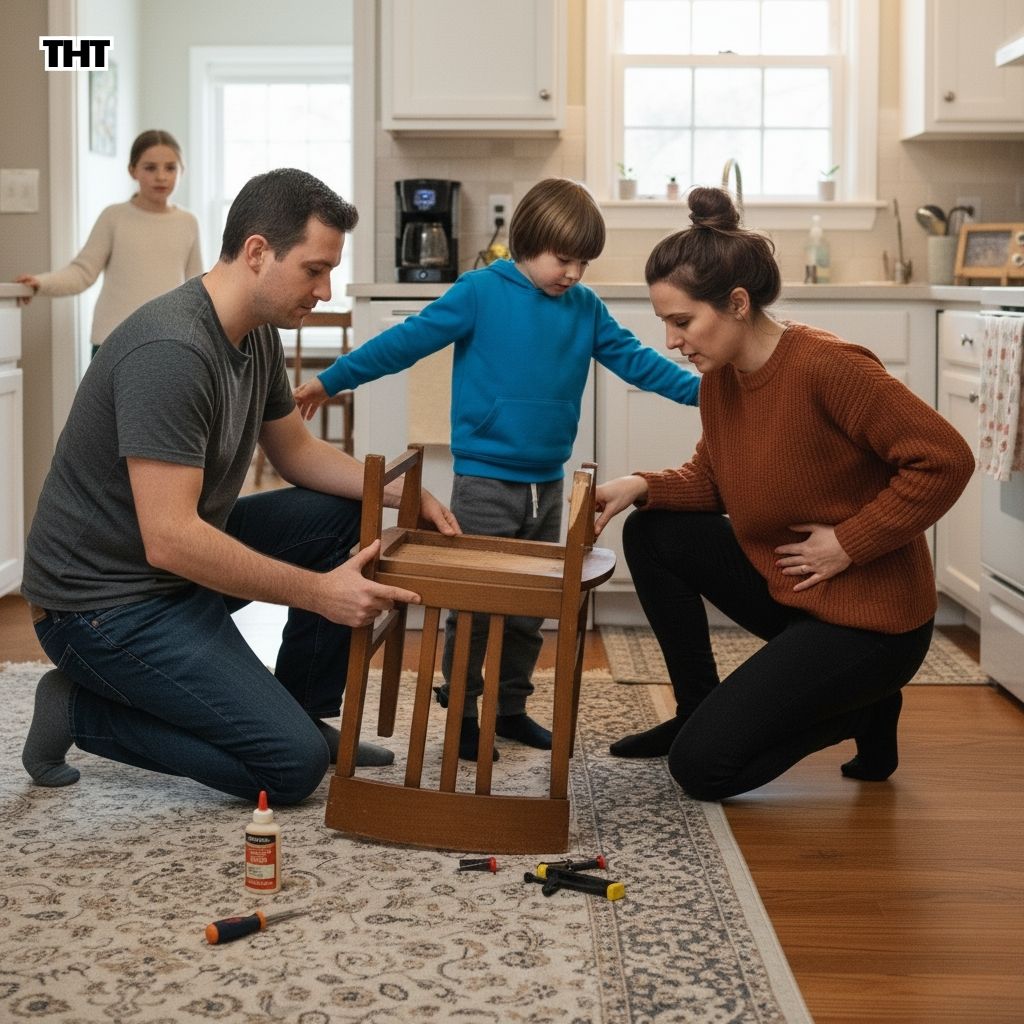
We sanded the rough edge, because the splintering meant the joint wouldn’t sit smoothly. Chris showed Miles how to sand in one direction instead of aggressively scrubbing like he was trying to erase the chair from existence.
Miles tried it, got impatient, sanded too hard, and then stopped abruptly.
“It’s not working,” he said.
Chris pointed to the wood and said, “Look again. It’s smoother already.”
Miles leaned in. He looked carefully.
He had to admit it was smoother, which I could see was hard for him, because frustration makes kids blind to progress. They want instant results. If it’s not fixed immediately, they believe nothing is happening.
He said, reluctantly, “A little.”
Chris nodded. “That’s how fixing goes. Little changes.”
Then we applied wood glue, pressed the joint together, and used clamps to hold it in place while it dried. Miles watched closely.
“How long?” he asked.
“An hour,” Chris said. “Maybe more.”
Miles groaned like we’d sentenced him to a lifetime of waiting.
I said, “While we wait, you can do something else. But we’re coming back to finish it.”
This part mattered too, because Miles hates unfinished tasks. He gets restless. He starts to spiral because the resolution feels too far away. Giving him a clear “we will return” helped him hold the waiting.
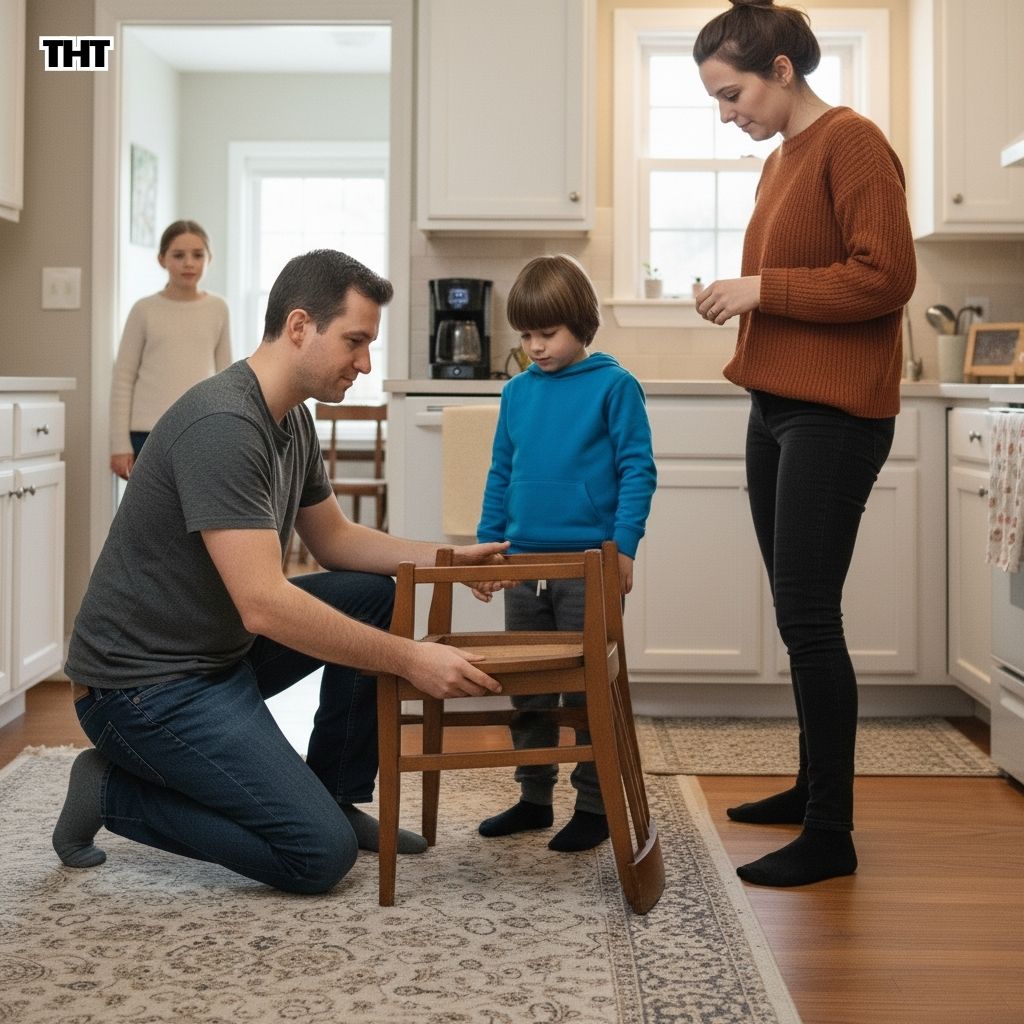
When we came back, the glue had set. We tightened the screws. We tested the chair gently. It held.
Chris sat on it carefully, just enough to check stability, and nodded. “Good.”
Miles stared at the chair like he was meeting it again for the first time.
“You fixed it,” he said to Chris.
Chris corrected him softly. “We fixed it.”
Miles looked at his hands, then back at the chair. His face changed.
It wasn’t a huge grin. It was something quieter and deeper.
Pride.
Not the “I won a prize” pride. The “I stayed with something hard and it got better” pride.
The Moment That Changed How He Handles Frustration
Two days later, I saw the real proof that the chair fix had done something inside him.
Miles was building one of his complicated block structures, the kind that requires focus and patience, and it collapsed, which is a normal part of building but feels like betrayal when you’re six.
He made a frustrated sound and started to kick the blocks aside, his body gearing up for a meltdown.
Then he stopped.
He stared at the pile.
He took a breath, and it wasn’t a dramatic mindful breath. It was a quick, functional breath, like he was grabbing a tool.
Then he said, almost to himself, “Okay. We can fix it. We go slow.”
I looked over at Chris, who had heard it too, and Chris gave me that small smile that says, this is the work.
Miles rebuilt it, not calmly like a zen master, but with enough steadiness that the frustration didn’t take over. He still grumbled, but he didn’t explode. He didn’t quit. He didn’t declare it broken forever.
He moved into repair.
And I realized what the chair had given him.
It gave him a memory of himself succeeding after getting frustrated.
That’s what kids need, more than lectures, more than consequences, more than us telling them “you can do hard things.” They need evidence. They need a lived experience of getting stuck and then getting unstuck.
Here’s the Part I Messed Up, So You Don’t Have To
I’ll tell you honestly, my first impulse was to fix the chair without involving Miles, because it would have been faster and quieter, and sometimes speed feels like sanity in a busy house.
But if I had done that, Miles would have been left with only the story of the mistake, not the story of the repair. He would have remembered the crack, the embarrassment, the “I hate this,” and then an adult would have taken the problem away.
Instead, by keeping him in the process, we gave him a different storyline.
You can mess up. You can feel frustrated. You can still stay and repair.
If you try this, the key is to keep the task small enough to be manageable and to treat your child as a helper, not a culprit. The goal isn’t to make them feel guilty. The goal is to give them practice moving from frustration to focus.
Final Thoughts
Fixing a broken chair together didn’t magically turn Miles into a patient child who never gets upset, because that is not who he is and it’s not who I want him to be. I want him to feel his feelings and learn how to handle them without getting swallowed.
What changed is that now, when something goes wrong, he’s more likely to reach for repair instead of panic. He’s more likely to pause before he explodes. He’s more likely to accept that progress can be slow and still real.
And every time I see him take that little breath and say, “We can fix it,” I think about that chair again, the cheap, wobbly dining chair that finally broke at exactly the right time, because it gave my son a chance to learn something that will matter far beyond furniture.
It taught him that frustration isn’t the end of the story.
It’s the moment before you decide what kind of person you want to be next.