The Day We Missed the Bus and Learned How to Stay Calm Under Pressure
The morning we missed the bus started the way most parenting disasters start: with me feeling vaguely confident for no good reason. I remember thinking, as I poured cereal, that we were on track. Lunches were packed. Shoes were where shoes were supposed to be. Chris had already done his quiet, practical sweep of the…
The morning we missed the bus started the way most parenting disasters start: with me feeling vaguely confident for no good reason.
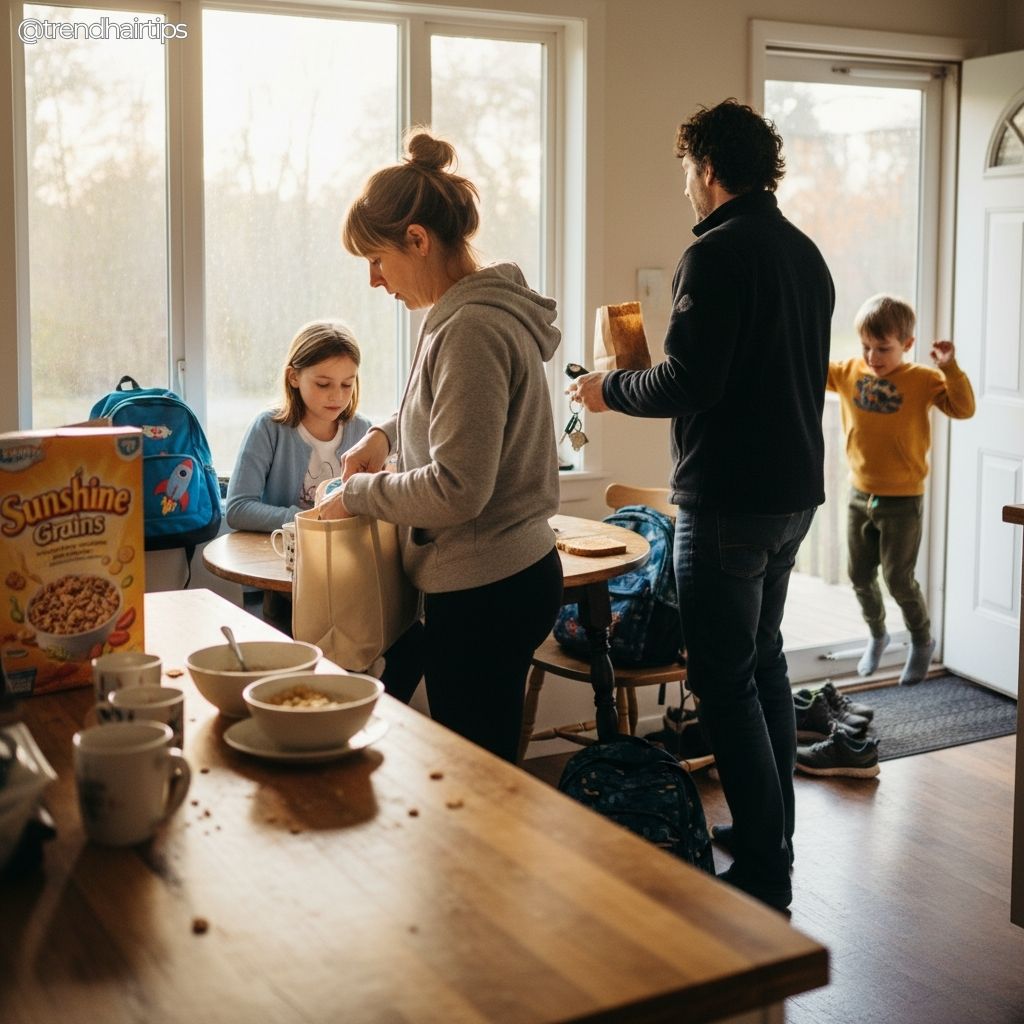
I remember thinking, as I poured cereal, that we were on track. Lunches were packed. Shoes were where shoes were supposed to be. Chris had already done his quiet, practical sweep of the house, checking for missing folders and rogue water bottles. Nora was dressed and sitting on the couch with her backpack on like a tiny responsible adult. Miles was… present. Which, for a six-year-old, is already a category worth celebrating.
So yes, I felt optimistic.
That was my first mistake.
Because optimism in the morning is basically an invitation for the universe to say, “Oh really?”
It started small. It always starts small.
Miles suddenly remembered he needed “the special pencil.” Nora realized her permission slip wasn’t in the front pocket where it lived yesterday. The dog decided this was the perfect time to demand attention. Chris’s phone buzzed with a work message that required exactly one minute of his brain, and in a house like ours, one minute is the difference between making the bus and sprinting down the street yelling polite threats into the wind.

I can’t even blame the kids entirely. The truth is, the bus stop is not far, but morning time is stretchy, and it warps around children. Five minutes can behave like a full hour, and an hour can vanish in a blink. You think you have time until you don’t.
We left the house with that “almost on time” energy, which is a very specific flavor of stress. It’s not panic yet, but it’s close. It’s the kind of energy where your keys feel heavier and your voice gets shorter without you meaning it to.
Nora walked quickly, quiet, already sensing tension and trying not to add to it. Miles skipped, then stopped, then skipped again, because urgency means nothing to a kid who believes the world will wait.
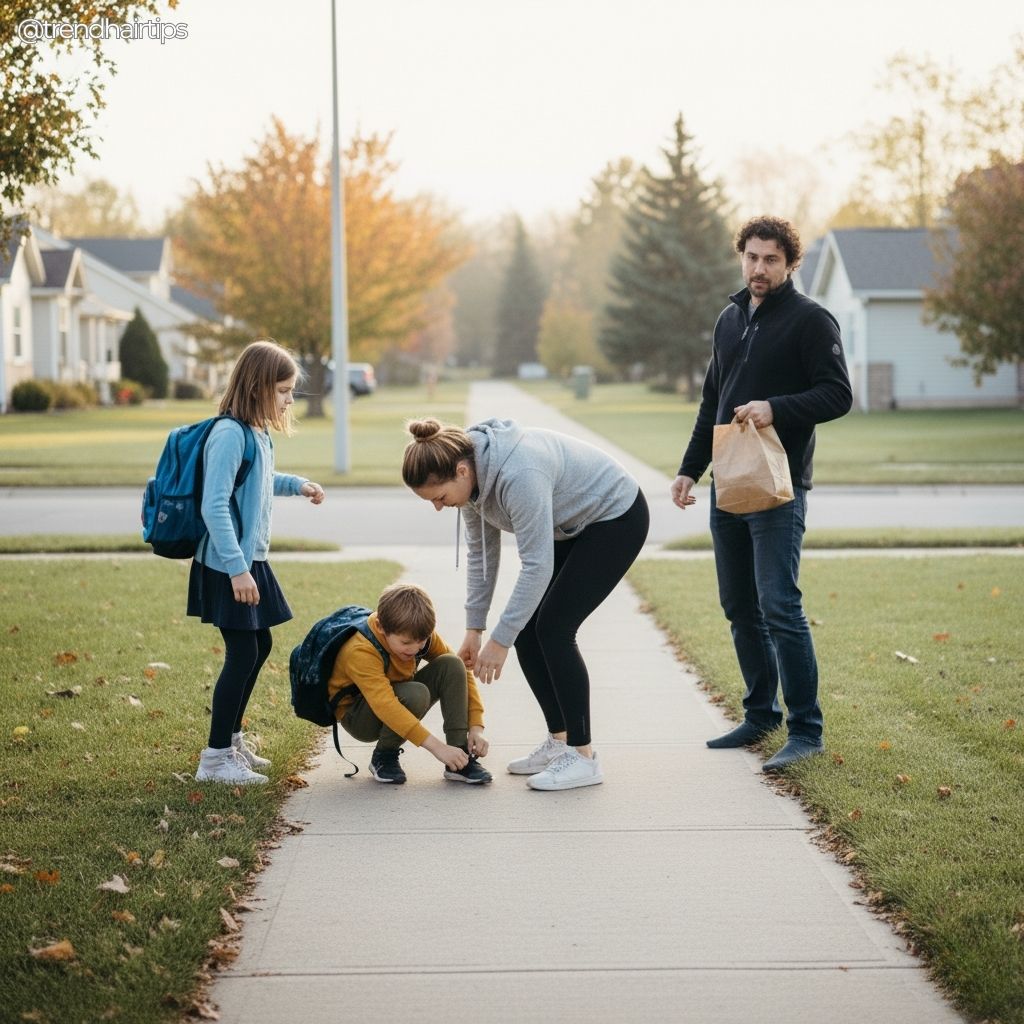
Halfway down the sidewalk, Miles announced, “My shoe feels weird.”
I stopped. “What do you mean weird?”
“It’s… wrong,” he said, bending down dramatically like his foot had just betrayed him.
I looked at the street. I looked at the time. I looked at my child, who was now tugging on his shoe like he was defusing a bomb.
The bus stop was close enough that I could see it if I leaned around the corner. That’s what made everything worse, because missing the bus when you’re far away feels like a normal consequence of being late. Missing the bus when you’re almost there feels like a personal attack.
“Okay,” I said, trying to keep my voice neutral. “Fix it fast.”
Miles fixed it slowly, because six-year-olds have no concept of “fast” unless there’s a dessert involved.
We started moving again.
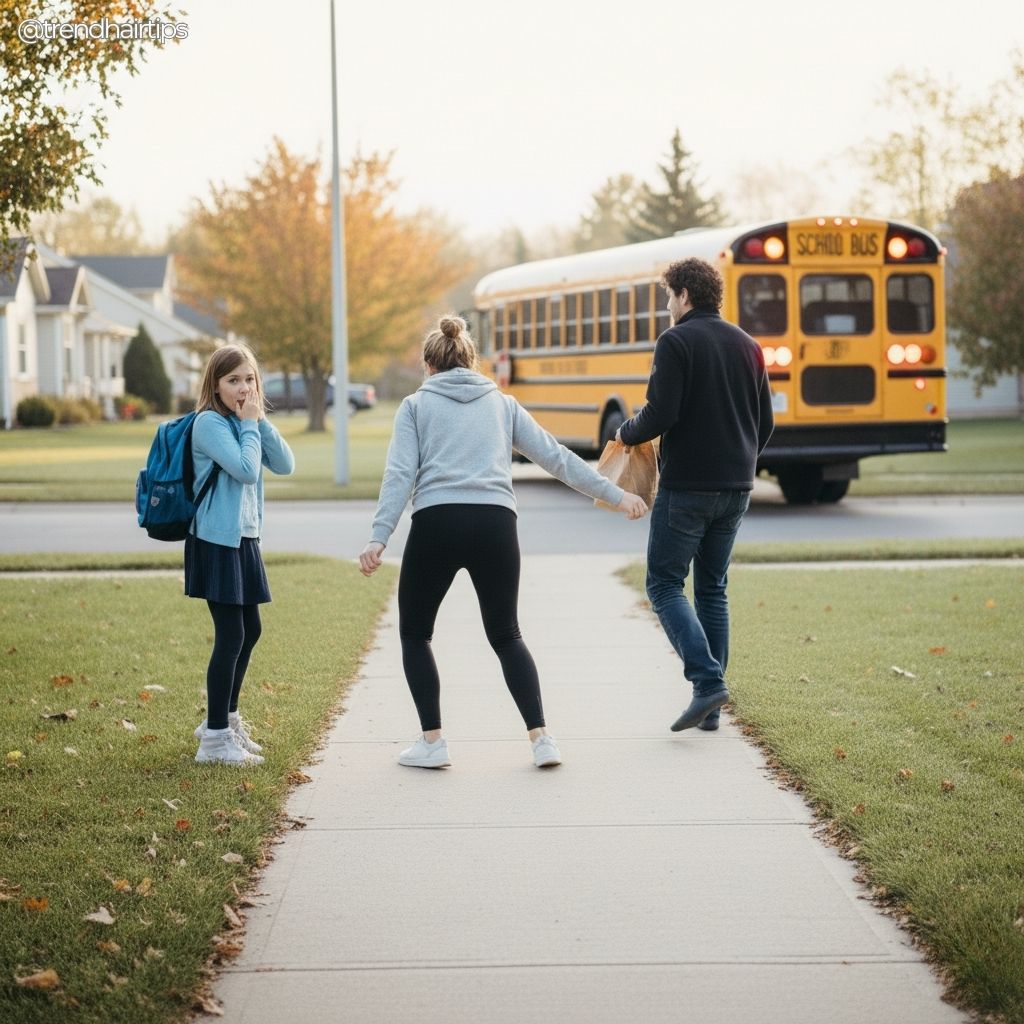
And then, as we rounded the corner, we saw it.
The bus.
Doors closed. Brake lights flicked. That big, indifferent vehicle began to pull away like it had never heard of our family and had no intention of learning.
“Noooo!” Miles shouted, instantly sprinting like his legs had just discovered their purpose.
Nora gasped and ran too, and for a brief, ridiculous moment, we were all chasing the bus like a scene from a comedy where the main characters have not learned to plan.
I waved. I called out. I tried the universal parent plea face.
The bus did not care.
It rolled forward, turned the corner, and disappeared.
The silence after it left was loud.
Nora stopped running and stared at the empty street. Her face tightened, and I knew what her brain was doing. Nora doesn’t just feel disappointment. She predicts catastrophe. Missing the bus wasn’t just missing the bus. It was being late, being embarrassed, being the kid who walks in while everyone looks.
Miles’s whole body shifted into anger, because anger is his preferred way to avoid the panic underneath.
“This is stupid!” he yelled, kicking at the sidewalk. “The bus left without us!”
Chris, who had been a few steps behind because he was holding the lunch bag and trying not to drop it, walked up and said calmly, “Okay. We missed it. Now we make a new plan.”
And that sentence, said in his steady voice, is probably the only reason we didn’t all melt down right there.
Because the truth is, missing the bus is not the problem that breaks you.
It’s the emotional dominoes that follow.
The Pressure Moment: My Old Pattern vs. My New Goal
If this had happened a year earlier, I would have gone straight into problem-solving mode with an edge. I would have spoken too fast. I would have made it about responsibility. I would have let my stress leak into my tone, and my kids would have absorbed it like sponges.
I would have said things like, “This is why we need to move faster,” or “I told you we didn’t have time,” or “If you had just listened,” which are all sentences that might be true but never help in the moment. They just add shame to urgency, and shame makes kids either panic or resist.
Instead, standing there with an empty street and two kids on the verge of spiraling, I tried something I’ve been practicing in small moments.
I treated calm like the priority, not punctuality.
I took one breath, slow enough that my body could hear it. I lowered my voice on purpose, because your voice is the thermostat of a moment like this.
I said, “Okay. We missed the bus. We can still get to school. We’re going to do this calmly.”
Miles shouted, “But I’m mad!”
“I know,” I said. “You can be mad and we can still be calm.”
Nora said quietly, “I’m going to be late.”
“You might be,” I said. “And we’re going to handle it.”
Chris nodded. “Let’s decide. We can drive, or we can call the office, or we can walk faster and see if we can catch a later route.”
Chris loves options. Options are his form of comfort.
For the kids, options also matter, because options tell them the situation isn’t hopeless.
But before we chose, we had to do the first thing, the thing nobody tells you is the real skill.
We had to regulate.
The Three-Minute Reset That Changed Everything
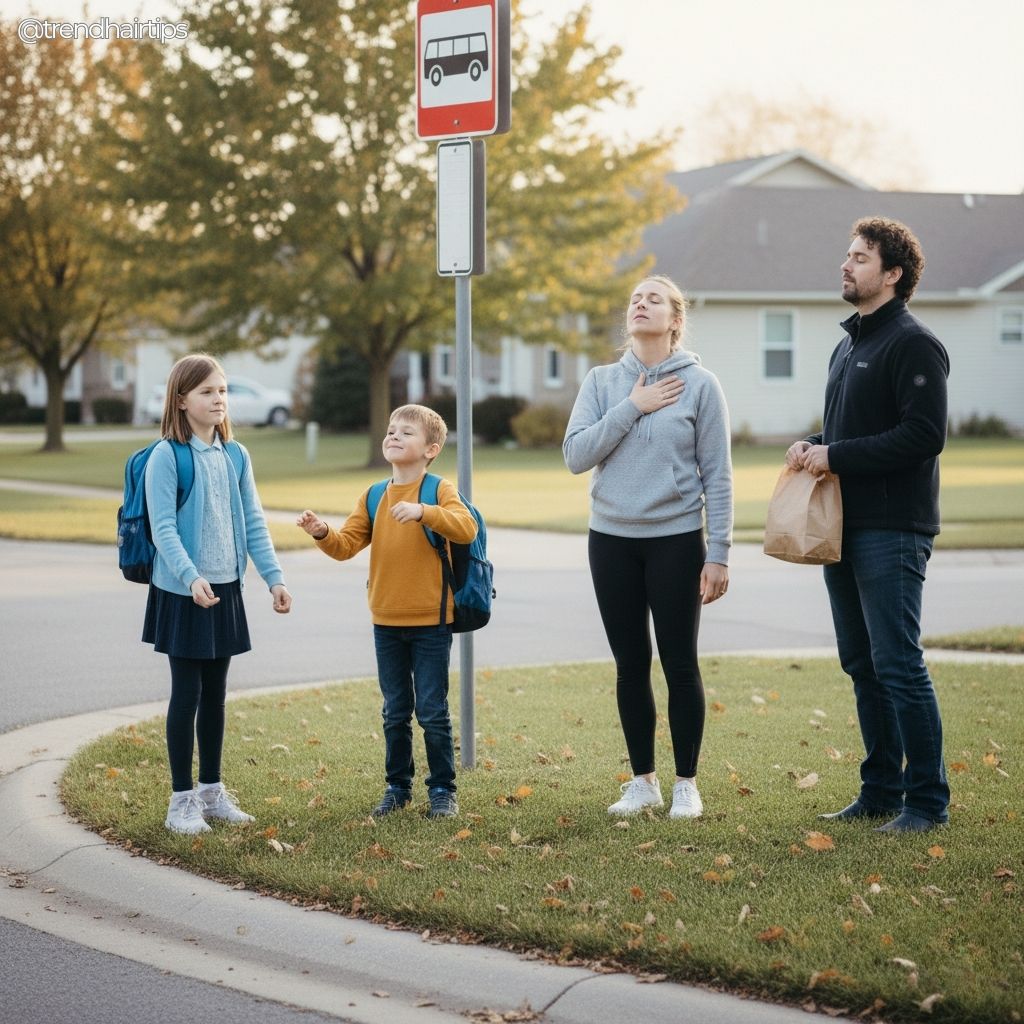
I said, “Okay. Three-minute reset.”
Both kids looked at me like I had invented a new punishment.
Miles asked, “Are we in trouble?”
“No,” I said. “This is to help your bodies calm down so we can think.”
Chris glanced at me, approving, because he loves a system, and this was a system.
Here’s what we did, right there on the sidewalk.
1) Name what’s happening
I said, “Our bodies are stressed because we missed the bus.”
Nora nodded slightly. Naming it helped her. She likes clarity.
Miles said, “My body is mad.”
“That’s part of stress,” I said. “Mad is one kind of stressed.”
2) Do one physical calming thing
We didn’t do anything elaborate. I wasn’t about to lead a meditation session at the bus stop.
I said, “Shake your hands out like you’re shaking off water.”
Miles did it dramatically, like he was auditioning. Nora did it quietly, but she did it.
Then I said, “Take one slow breath. Just one.”
Nora took it. Miles resisted, then copied us with a loud inhale that sounded like a vacuum cleaner.
Chris did it too, because when adults participate, kids don’t feel singled out.
3) Choose the next step
I said, “Okay. Now we choose the next right step.”
That phrase matters. Next right step. Not the whole day. Not the whole future. Not the full chain of consequences.
Just the next step.
Chris said, “I can drive them. It’s faster.”
Nora looked relieved immediately, because the fear of being late is heavy for her.
Miles said, “Can we still catch it?”
Chris said, “Not this one. But we can still get to school.”
Miles stomped once, but smaller, because the emotional peak had passed.
I said, “Okay. We’re driving. Nora, grab your backpack. Miles, hold the lunch bag. We’re going to move quickly and calmly.”
And somehow, we did.
What Happened in the Car: The Real Lesson
The car ride was only ten minutes, but it contained an entire parenting masterclass in miniature.
At first, the kids were quiet, which is what happens when they’re processing the adrenaline drop. Then Nora started talking, because when Nora feels safe, her brain starts explaining.
“I hate being late,” she said. “I feel like everyone will look at me.”
I didn’t say, “Nobody will care,” because that’s not true in a kid’s nervous system. It feels like everyone cares.
Instead I said, “That feeling makes sense. When you walk in late, your body thinks you’re being watched. But even if someone looks, it doesn’t mean you did something wrong. It means you arrived.”
Nora nodded. She stared out the window, calmer.
Miles, in the back, muttered, “The bus was mean.”
Chris said, very seriously, “The bus is not mean. The bus is on a schedule. It has no feelings.”
Miles paused. “So it’s like a robot.”
Chris nodded. “Yes. A large yellow robot.”
Miles laughed, and laughter is an underrated regulation tool. It took the sting out of the story. If the bus is a robot, then missing it isn’t personal.
Then Miles said, quietly, “I thought you were going to yell.”
That sentence hit me, because it showed me the old pattern was still living in his expectations.
I looked at him in the mirror and said, “I used to yell when I got stressed. I’m trying to practice staying calm instead, because yelling doesn’t help your brain. It doesn’t help mine either.”
Miles considered that, then said, “I can try too.”
Nora said, “Me too.”
Chris said, “Team calm.”
And I swear, if we had a family crest, it would now include those words.
The School Drop-Off: Where Calm Became a Choice
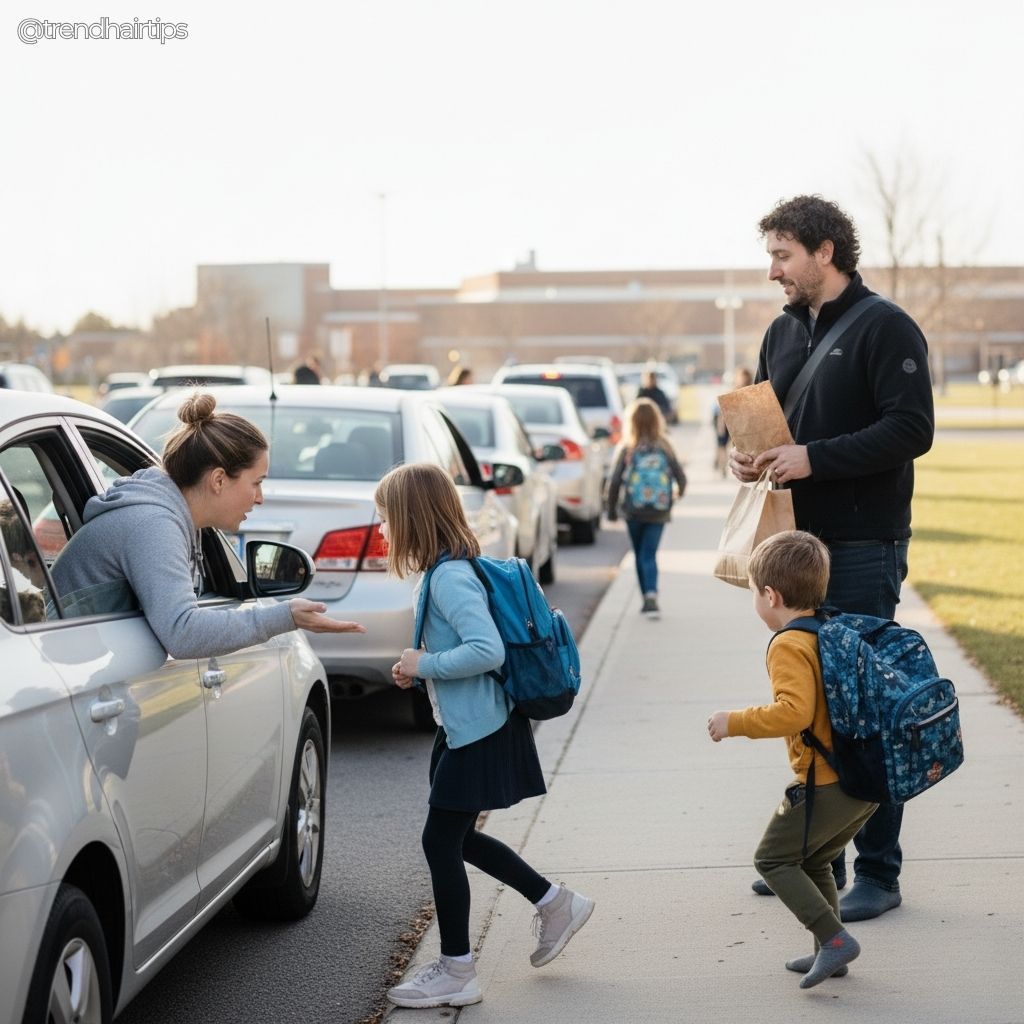
When we arrived, Nora hesitated before getting out of the car. Her anxiety always spikes at the transition point.
I said, “Do you want a plan?”
She nodded.
I said, “If you feel embarrassed, you can look at your teacher and say, ‘We missed the bus.’ That’s it. No long explanation. Then you walk to your seat.”
Nora nodded again, and I could see her shoulders settle.
Miles hopped out like nothing had happened, because six-year-olds are chaotic but resilient. Then, right before he closed the door, he turned back and said, “Next time, I will fix my shoe faster.”
It wasn’t an apology. It wasn’t shame. It was learning.
That’s the sweet spot.
The Positive Value We Took From Missing the Bus
We didn’t become a perfectly calm family after that day. We still have rushed mornings. We still have lost shoes. We still have moments where someone is crying because the wrong spoon exists.
But missing the bus gave us something real to practice, because it forced us into a high-pressure moment and gave us a chance to choose a different response.
Here’s what we learned, in a way that actually stuck:
Calm is not a personality trait, it’s a sequence
Name what’s happening. Do one physical reset. Choose the next step. That’s the sequence. We can do it anywhere, even on a sidewalk.
Kids borrow calm from adults
My tone mattered more than my words. When I lowered my voice, Nora’s anxiety softened. When Chris spoke in his steady fix-it voice, Miles’ anger shrank.
The goal is not zero feelings
Miles was still mad. Nora was still worried. Calm didn’t mean nobody felt anything. Calm meant we didn’t let the feelings drive the car.
Humor helps without dismissing
Calling the bus a “large yellow robot” turned the moment from personal betrayal into a solvable situation, and that small shift saved us.
Here’s the Part I Messed Up, So You Don’t Have To
I almost started lecturing right there on the sidewalk, because lecturing is my default when I’m stressed. I could feel the words rising, the “this is why we need to hurry” speech ready to launch.
But lectures in crisis moments don’t teach responsibility. They teach shame.
If you miss the bus, or spill the milk, or forget the library book, save the lesson for later. In the moment, your job is to regulate and repair. Teaching works better when everyone’s nervous system is back online.
Final Thoughts
We missed the bus, and it was inconvenient, and it still threw our morning off, but it gave us something more valuable than an on-time arrival.
It gave us a shared experience of staying calm under pressure.
Not because we felt calm, but because we practiced calm.
We named the stress. We did a tiny reset. We chose the next step. We used humor to soften the sting. We got to school. We moved on.
And now, when a morning starts to wobble, I can see my kids reach for that same sequence. I hear Nora ask for a plan. I hear Miles say, “I’m mad,” and then breathe anyway. I hear Chris say, “Okay. New plan.”
It turns out calm isn’t something you have.
It’s something you build, one missed bus at a time.