How One Repeated Script Helped My Kids Speak Up Without Yelling
I didn’t set out to teach my kids how to speak calmly. I set out to survive the noise. At some point, without any dramatic announcement, our house entered what I now think of as the yelling phase. Not constant yelling, not aggressive yelling, but reactive yelling. The kind that happens when feelings move faster…
I didn’t set out to teach my kids how to speak calmly. I set out to survive the noise.
At some point, without any dramatic announcement, our house entered what I now think of as the yelling phase. Not constant yelling, not aggressive yelling, but reactive yelling. The kind that happens when feelings move faster than language. The kind where someone feels unheard, panics about it, and turns up the volume as if loudness itself might finally make the message land.
Nora would raise her voice when she felt dismissed or rushed, especially if she had already tried once to explain herself and thought no one was listening. Miles would yell when his body got overwhelmed and his words couldn’t keep up, which happened often because six-year-olds are essentially emotions in sneakers. Chris and I weren’t immune either. We weren’t shouting matches people, but stress has a way of sharpening tone, and sharp tones invite sharp replies.
Nothing about it felt unusual. It felt like family life under pressure.
What bothered me wasn’t the volume itself. It was what the yelling represented. My kids weren’t trying to be rude. They were trying to be heard, and they didn’t yet have a reliable way to do that when emotions spiked.
I didn’t want to tell them to “use their inside voice.” That phrase is useless when a nervous system is flooded. I didn’t want to lecture about respect in the middle of conflict. Lectures don’t survive adrenaline. I wanted something simpler. Something they could reach for when their brains were half offline.
What I ended up with was a single repeated script.
Not a magical phrase. Not a behavioral trick. Just a sentence structure we practiced so often it became familiar enough to show up when things got hard.
And slowly, without fanfare, it changed how my kids spoke up.
The Moment I Realized We Needed a Different Tool
The turning point came during an argument that was so ordinary it almost didn’t register as important.
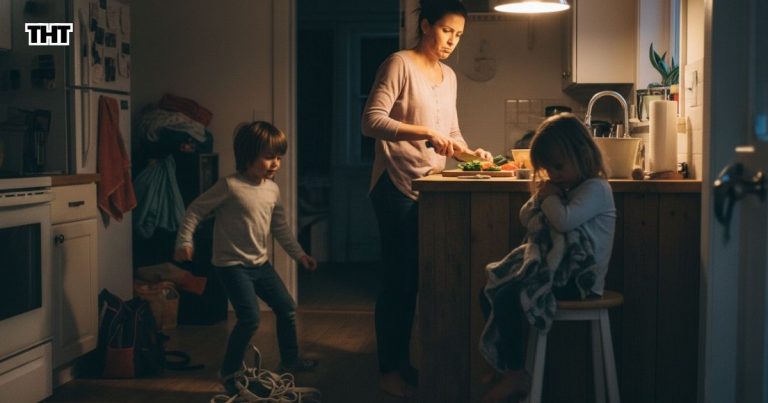
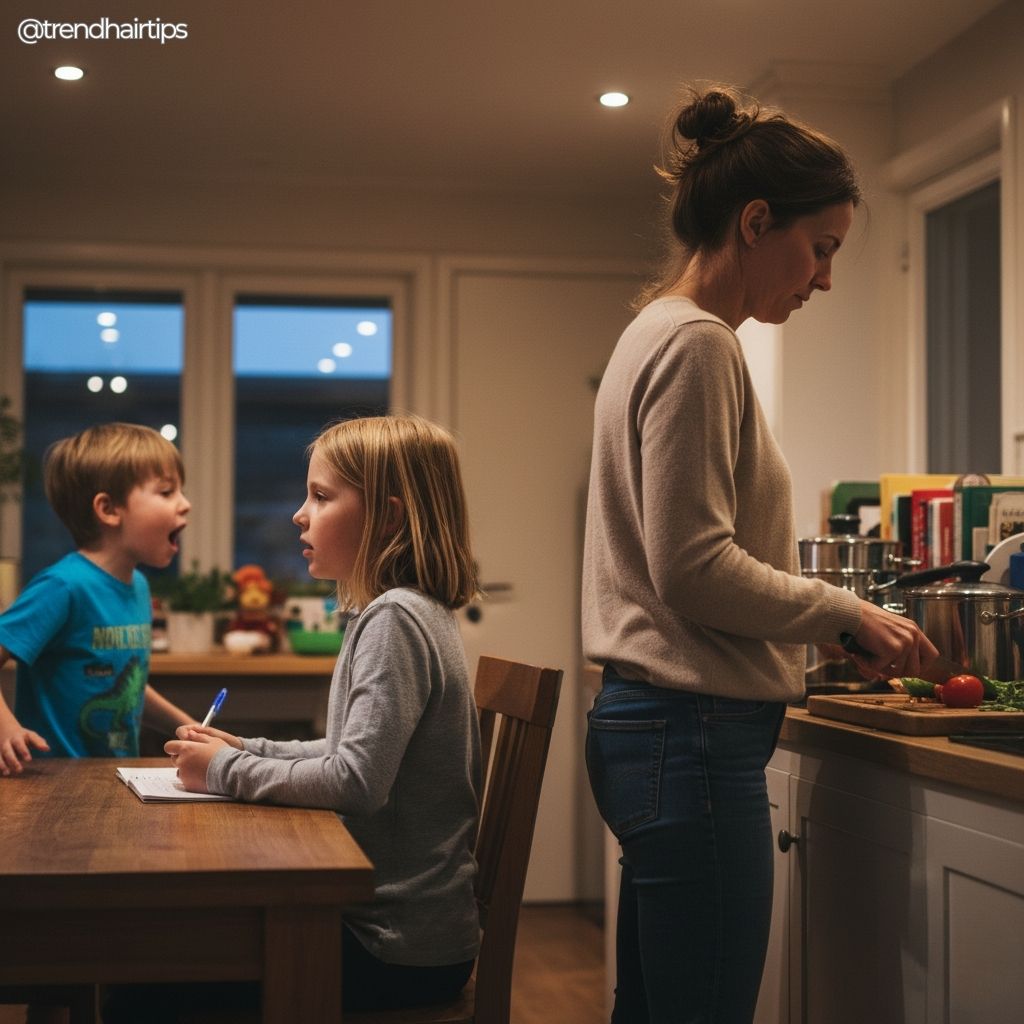
Nora wanted help with homework. Miles wanted attention immediately. I was finishing dinner. Chris was on a work call. Everyone needed something, and everyone needed it now.
Nora asked for help once, quietly. I nodded but didn’t move fast enough for her liking. She asked again, louder. I said, “Just a minute,” in that distracted tone that sounds reasonable to adults and dismissive to kids.
Nora’s voice jumped an octave.
“I SAID I NEED HELP!”
Miles yelled back, because he sensed tension and matched it. The kitchen filled with noise, not because anyone was angry, but because nobody felt secure in being heard.
I remember thinking, This isn’t about manners. This is about fear.
Fear that if you don’t escalate, you’ll disappear.
So instead of saying, “Stop yelling,” which only addresses the symptom, I said something different.
I said, “Okay. Pause. Let’s try that again, but use the words that help people listen.”
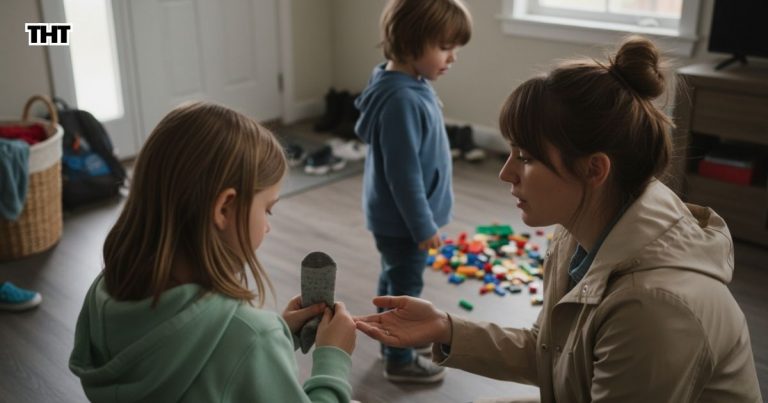
Nora crossed her arms, defensive. Miles looked confused. Chris muted his call and watched quietly.
I asked Nora, “What are you trying to tell me?”
She snapped, “I need help!”
I said, “I know. Try this instead.”
And I gave her the sentence.
The Script We Started Using
Here’s the script. It’s simple, and that’s why it worked.
“I feel ___ when ___ because ___. I need ___.”
That’s it.
No emotional poetry. No blame. No character judgments.
Just four parts that turn noise into information.
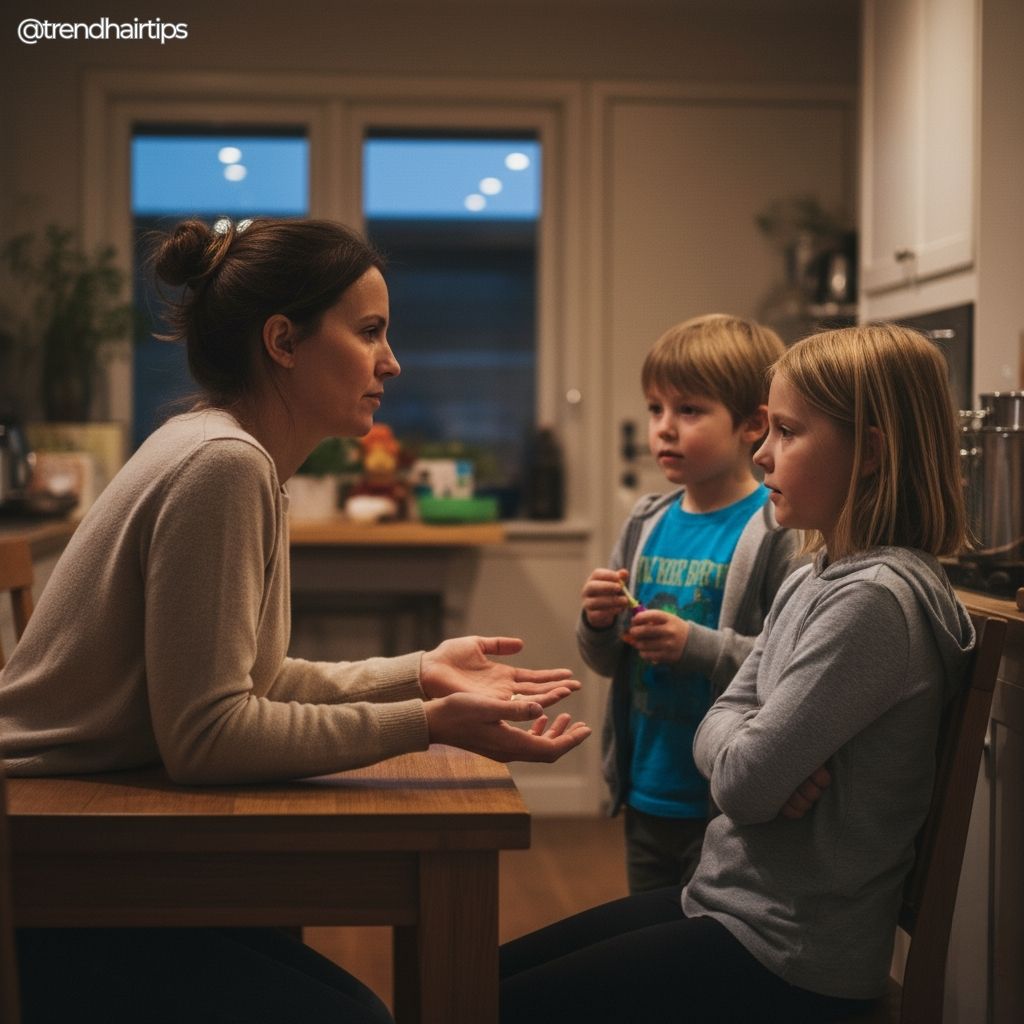
I said it slowly, modeling it for Nora.
“I feel overwhelmed when I ask for help and don’t get it because it makes me think you forgot. I need help with this problem.”
Nora looked at me skeptically, like she wasn’t sure if this was a trick.
“That sounds weird,” she said.
“It does,” I agreed. “But weird is okay. Try it.”
She sighed dramatically, then tried.
“I feel mad when I ask and you don’t come because I don’t know what to do. I need help now.”
Her voice wasn’t perfectly calm. That wasn’t the goal. The goal was clarity.
And something important happened.
I listened differently.
Not because she was quieter, but because she was clearer.
I said, “Okay. Thank you for telling me that. Give me two minutes to finish this, then I’m with you.”
Her shoulders dropped slightly. The urgency eased. The yelling stopped, not because I demanded it, but because the message had landed.
Miles watched the entire exchange like he was studying a new language.

Why the Script Worked When Rules Didn’t
Here’s what I learned quickly: kids yell when they don’t trust that calm words will work.
Telling them to “calm down” without giving them a tool is like telling someone to swim without showing them how to float.
The script worked because it did a few key things at once.
It slowed the moment down without stopping it.
It gave their feelings a container.
It removed guessing from the listener’s job.
It made the need explicit.
Most yelling is vague. It’s loud emotion with no map.
This script turns emotion into something usable.
And crucially, it doesn’t require perfect regulation. It works even when a kid is still upset.
The Repetition Part That Actually Mattered
The script didn’t work because we used it once. It worked because we repeated it when things were not exploding.
We practiced it during calm moments.
At dinner.
In the car.
While playing games.
While role-playing imaginary arguments that Miles took far too seriously.
We made it a shared language, not a punishment tool.
Sometimes we used it humorously. Sometimes we shortened it. Sometimes we only used part of it. The structure mattered more than perfection.
Chris started using it too, which turned out to be critical.
One night when Miles interrupted him repeatedly, Chris said, calmly, “I feel distracted when I’m talking and get interrupted because I lose my thought. I need to finish this sentence.”
Miles froze.
Then he said, “Oh.”
And waited.
That moment did more teaching than any lecture ever could.
When Miles Made It His Own
Miles struggled the most at first, because his feelings move fast and his language lags behind.
But repetition builds muscle memory.
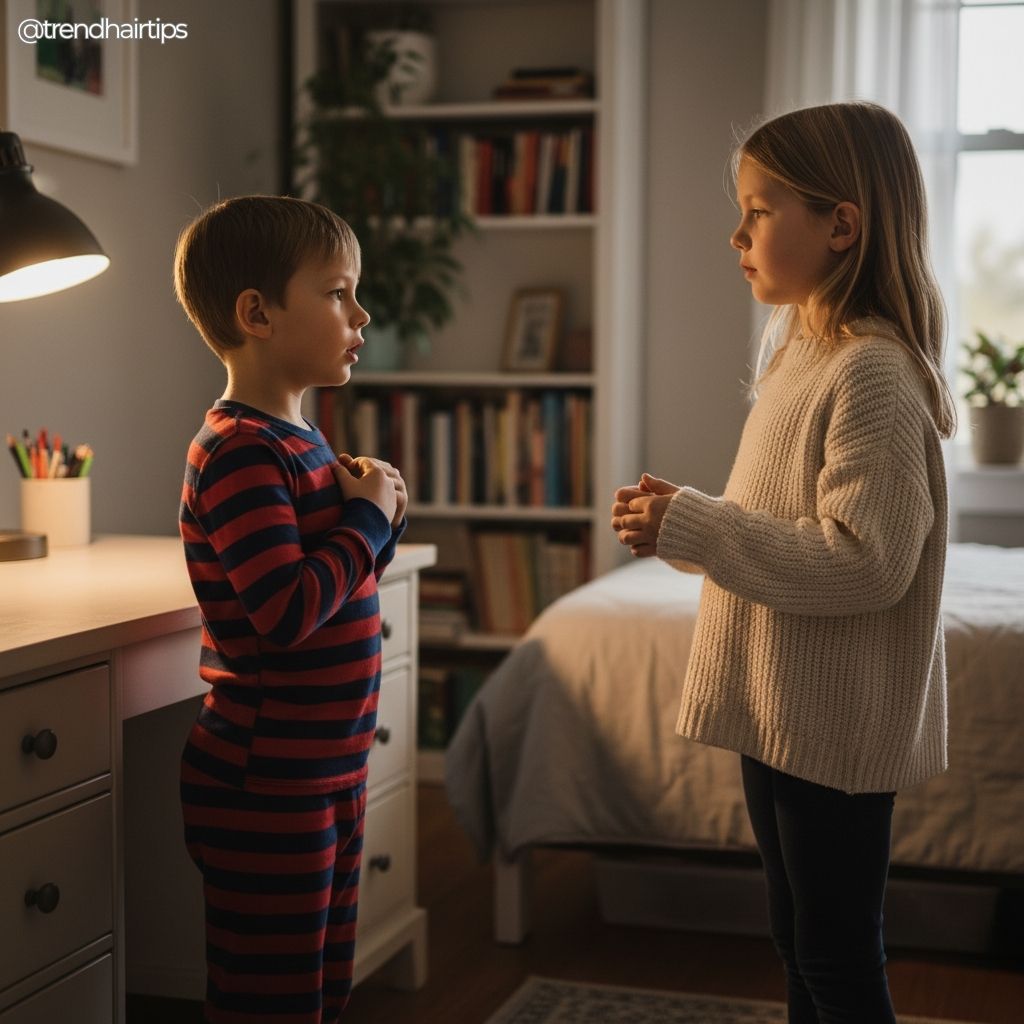
One afternoon, he ran into Nora’s room without knocking and grabbed something off her desk. She yelled. He yelled back. The familiar spiral started.
I was about to step in when I heard Miles stop himself.
He took a breath, very visibly, and said, slowly and carefully:
“I feel mad when you yell at me because I didn’t know I was doing something wrong. I need you to tell me without yelling.”
Was it perfect? No.
Was it huge? Absolutely.
Nora blinked, then said, “Okay. I feel mad when you touch my stuff because it’s important to me. I need you to ask.”
They didn’t hug it out. They didn’t suddenly become conflict-resolution experts.
But they solved the problem without yelling.
That was the win.
What Changed in Our House Over Time
The volume didn’t disappear overnight. Kids are kids. Stress still exists. Mornings still get loud.
But the pattern changed.
Yelling became shorter.
Recovery became faster.
Repair became more natural.
Most importantly, my kids learned something powerful: speaking clearly works.
They learned they didn’t need to escalate to be taken seriously. They learned that naming feelings didn’t make them weak. They learned that needs could be stated without apology.
That lesson will matter far beyond childhood.
The Actionable Part You Can Try
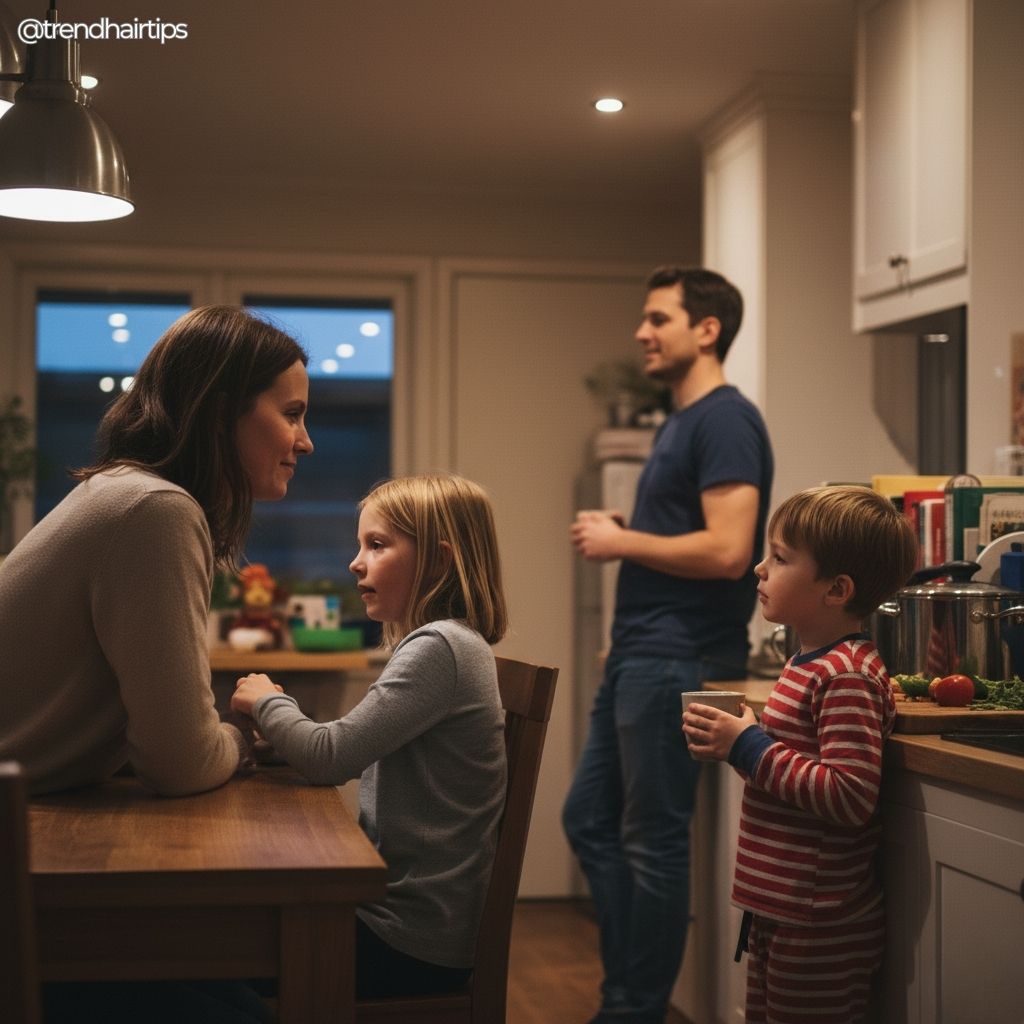
If you want to try this in your own house, here’s what made it work for us, stripped of theory and fluff.
Start by modeling it yourself, especially when you’re frustrated.
Use it during calm moments, not just conflict.
Accept imperfect delivery. Calm comes later.
Respond when your child uses it, even if they’re still upset.
Don’t weaponize it. It’s a tool, not a test.
And one more thing that matters deeply: do not require it in the heat of meltdown.
When a child is fully flooded, their brain cannot access scripts. Calm first. Script second.
The Part I Had to Learn the Hard Way
At first, I corrected delivery too much.
I would interrupt with things like, “Say it nicer,” or “Use the whole sentence,” and all that did was shift the focus back to performance.
What actually worked was listening for effort.
If my child tried to use the structure, I responded. That response reinforced the behavior far more effectively than correction ever could.
Final Thoughts
That one repeated script didn’t make our house silent. It made it clearer.
It gave my kids a way to speak up without fighting for volume. It gave me a way to listen without bracing. It gave all of us a shared framework for moments when emotions threaten to take over.
Most importantly, it taught my kids that their voices matter even when they are calm.
And that’s the kind of lesson that doesn’t just improve family life in the moment. It follows them into classrooms, friendships, relationships, and workplaces long after they’ve outgrown bedtime routines and kitchen arguments.
All from one sentence, practiced enough times to become familiar.
Not perfect.
Just reliable.
And sometimes, reliable is exactly what kids need.