The Messy Craft Project That Taught Patience Better Than Any Talk
If you asked me what my kids would remember most from last month, I’d guess something big, like a school event or a fun weekend plan or the time we let Miles pick dinner and he chose the kind of meal that makes adults stare into the middle distance. What I didn’t expect was that…
If you asked me what my kids would remember most from last month, I’d guess something big, like a school event or a fun weekend plan or the time we let Miles pick dinner and he chose the kind of meal that makes adults stare into the middle distance. What I didn’t expect was that the thing that would stick, the thing that quietly changed the way our house handled frustration for a while, would be a craft project that looked like a glitter factory exploded and left emotional lessons in its wake.
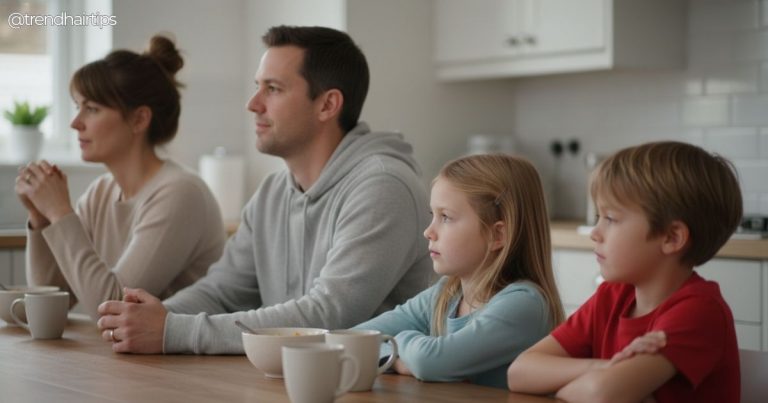
It started on a rainy Saturday that had the exact energy of trouble. The kids had been cooped up too long, the apartment felt small, and the mood was hovering between boredom and irritability. Nora was nine and restless in that thoughtful way where she keeps moving things around but can’t settle. Miles was six and full of kinetic energy, already bouncing off the furniture, already testing the limits of everyone’s patience. Chris was home but half in work mode, the calm, practical presence who will fix anything, including the parts of the day that feel like they’re breaking.
I had been trying to do the responsible thing, which was to keep the day simple and not create a bigger mess than necessary, because parents know that mess has consequences. Mess means cleanup. Mess means complaints. Mess means stepping on something sticky two hours later and wondering why your life is like this.
And yet, for reasons I still can’t fully explain, I heard myself say, “Let’s do a craft.”
Nora’s eyes lit up immediately. Miles shouted, “Yes!” like I had just announced we were going to a theme park. Chris looked at me the way he looks at an idea that is going to require a plan and probably a tarp.
“You sure?” he asked.
I wasn’t sure. I was only sure the day needed a reset.
So I made one decision that ended up being the key to the whole lesson: instead of choosing a tidy craft, I chose a craft that required waiting, drying, and trying again.
We were going to make DIY paper-mâché lanterns, the kind that look magical when finished, but feel like chaos while you’re making them, because paper-mâché is basically patience disguised as glue.
Setting the Stage: The Part That Looks Like Preparation but Is Actually Parenting
Before we started, I did something I usually forget to do when I’m trying to “make it fun,” which is that I named reality out loud.
“This is going to be messy,” I told them. “It’s going to take time. It won’t look good at first. If you want it to turn out, we have to go slow.”
Nora nodded, serious, because she loves a plan and also secretly loves being warned about the emotional weather ahead. Miles nodded too, but his nod was more like a bounce, the kind that says he heard the word messy and interpreted it as permission to become a tornado.
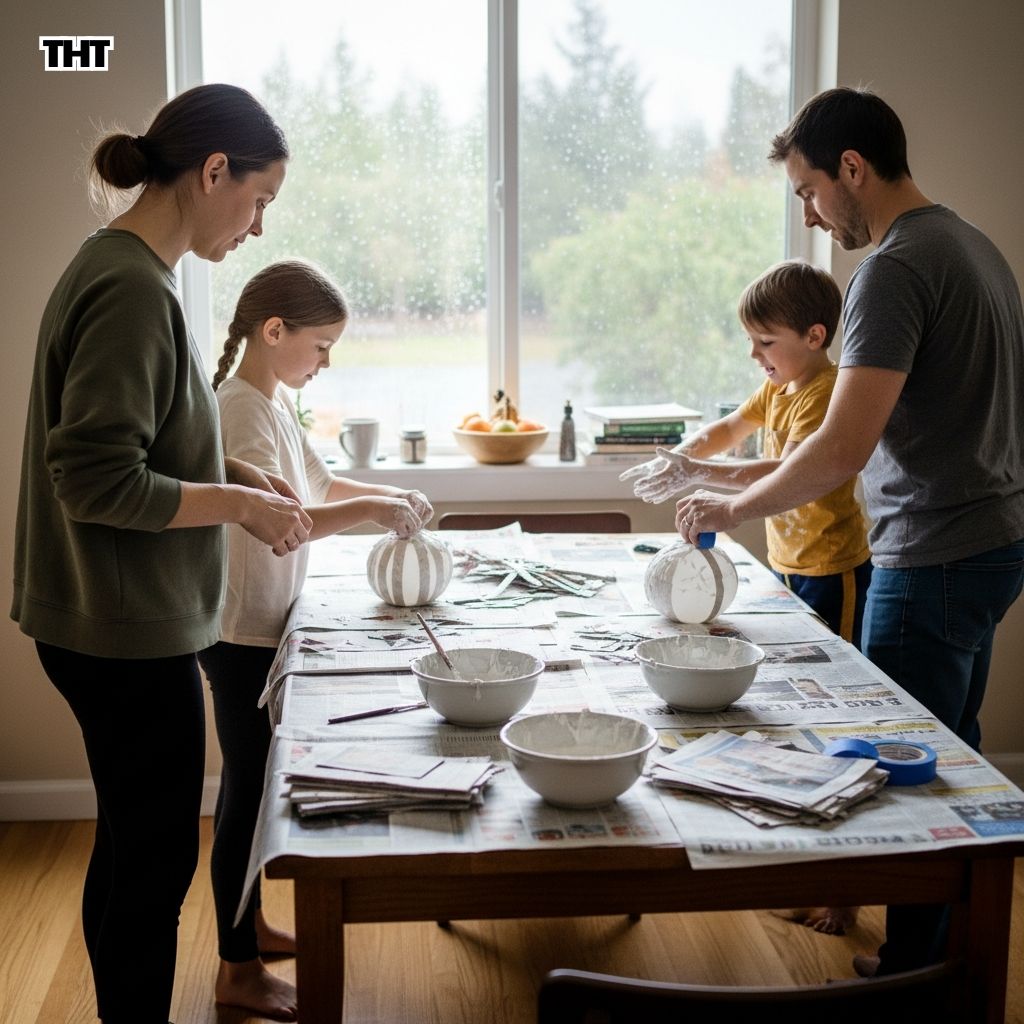
Chris laid out newspapers and grabbed an old sheet like he was preparing for surgery. He taped the edges down, which was his way of saying I love you without saying it.
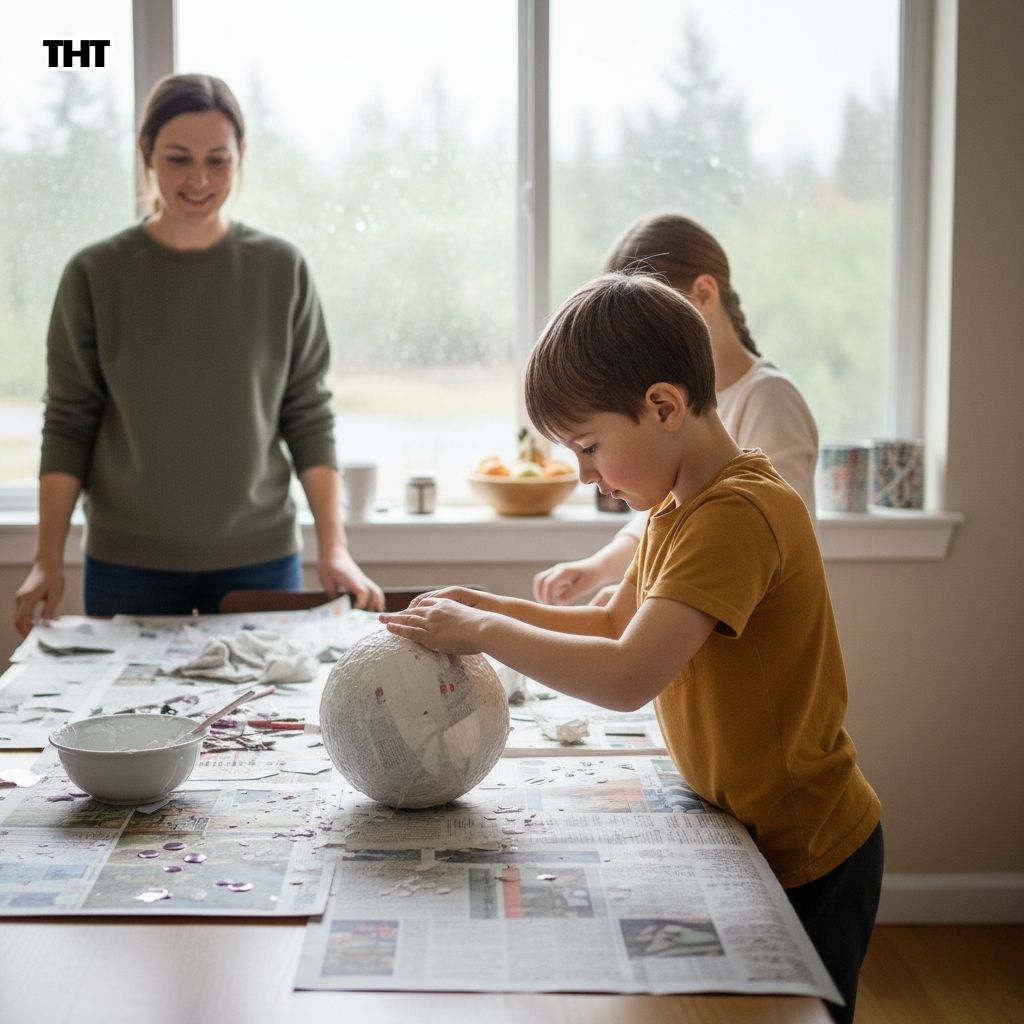
We set up a simple station: bowls, flour and water paste, strips of paper, balloons, and a few brushes. It looked innocent for about thirty seconds.
Then Miles reached into the glue mixture like it was a sensory toy and said, delighted, “It’s slime!”
Nora said, horrified, “Don’t touch it with your whole hand.”
And within two minutes, we were living in a small domestic documentary called Siblings: The Early Years.
I took a deep breath and reminded myself of my goal. This wasn’t a craft meant to be perfect. It was a craft meant to be experienced, and the experience was about to teach all of us something.
The First Lesson in Patience: Waiting Is the Hard Part, Not the Craft
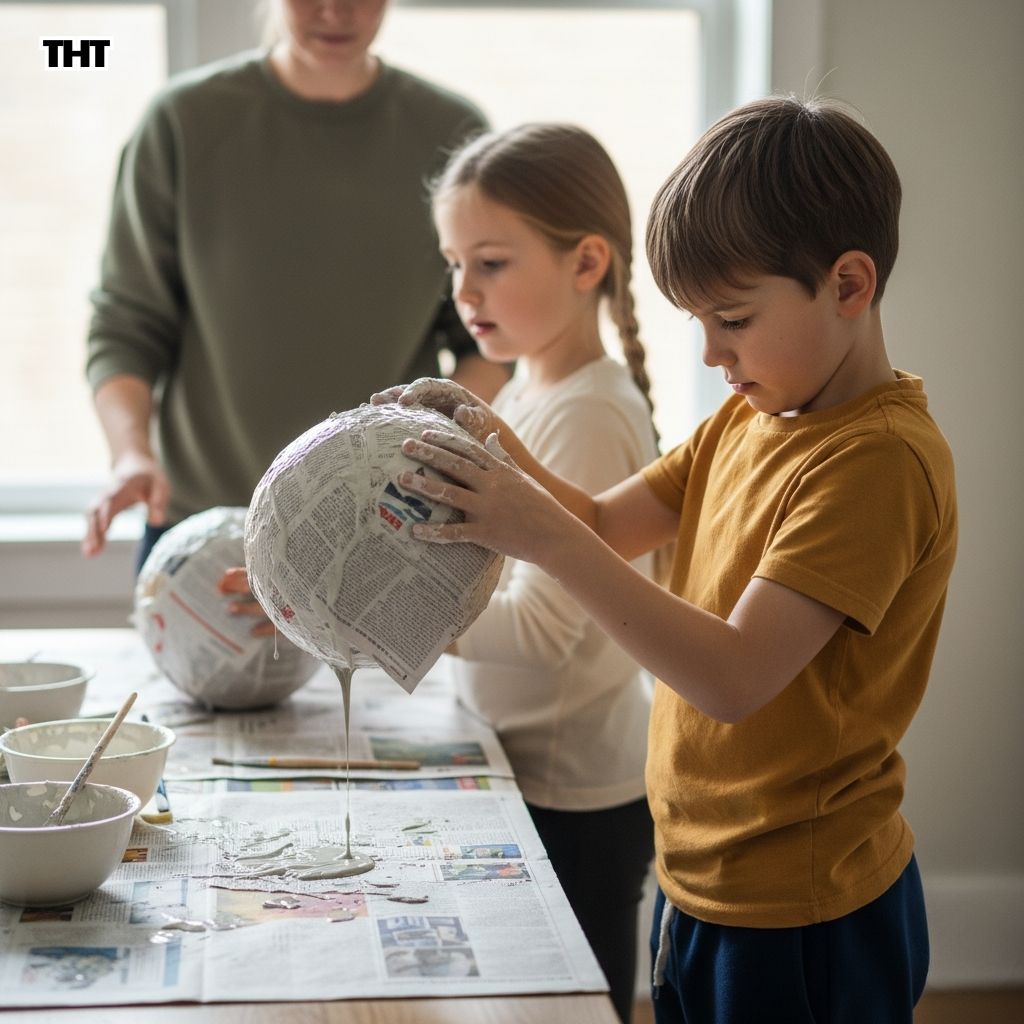
Nora chose a balloon and started carefully layering strips, smoothing them down with focus. She wanted it to look right. She wanted even coverage. She wanted the strips to line up neatly.
Miles, on the other hand, wanted results immediately. He slapped paper on the balloon like he was patching a sinking ship. He used too much paste. He used too little paste. He asked if it was done after three minutes.
“Is it done now?” he asked.
“No,” I said, trying to sound kind and not like a tired person trying to prevent glue from entering the carpet.
“How about now?”
“Still no.”
He made a frustrated noise and said, “This is taking forever.”
Nora, without looking up, said, “That’s how crafts work.”
Miles glared at her. “No it’s not. Crafts are supposed to be fast.”
That statement was the whole problem in kid form. Miles doesn’t just want the craft. He wants the feeling of success. He wants the finish line. He wants the reward without the waiting. A lot of kids do, and honestly, a lot of adults do too.
I said, “This craft is slow on purpose. It’s practice.”
“Practice for what?” he asked, suspicious.
“For your brain,” I said, which made him squint like I was trying to sell him something.
Chris, from the other side of the table, said calmly, “You can do hard things slowly.”
Miles huffed, but he kept going.
The Messy Moment That Almost Ruined Everything
The turning point came when Miles’ lantern started sliding off the balloon because he had used so much paste that the paper strips became heavy. It sagged. It wrinkled. It looked like a sad wet hat instead of a lantern.
Miles stared at it, and I could see his frustration ignite, hot and fast.
“This is stupid,” he snapped, and he shoved the balloon too hard, knocking the bowl of paste.
The bowl tipped.
The paste slid across the table, down the side, and onto the floor in a slow, horrifying pour.
Time slowed down the way it does when you watch a mess happen and your body has that split second of disbelief before reality hits.
Nora gasped and jumped back. “Miles!”
Miles froze, eyes wide, instantly shifting from frustration to fear, because fear is what happens when a kid realizes they’ve crossed the line from “oops” to “uh-oh.”
My own anger rose so quickly I could feel it in my throat, and my first impulse was to say something sharp, because I was picturing the cleanup and the wasted supplies and the fact that this was exactly why I avoided messy crafts.
But then I looked at Miles’ face, and I saw shame starting to form. Shame is the kind of emotion that either turns into a meltdown or turns into hiding, and neither one teaches patience. Neither one teaches repair.
So I did what I’m trying to do more often lately.
I slowed down.
I said, “Okay. Nobody is in trouble. We’re going to fix this.”
Chris was already moving, calm and efficient, grabbing towels. Nora was stiff, upset, still thinking about her balloon and the injustice of glue hitting the floor. Miles looked like he might cry.
I crouched down beside him and said quietly, “Your body got too frustrated, and it moved too fast. That happens. We can still fix it.”
Miles whispered, “I ruined it.”
I said, “You made a mess. That’s different from ruining everything.”
That distinction matters. Kids who believe mistakes ruin everything become kids who avoid trying. Kids who learn mistakes are fixable become kids who keep going.
How We Turned the Mess Into the Lesson
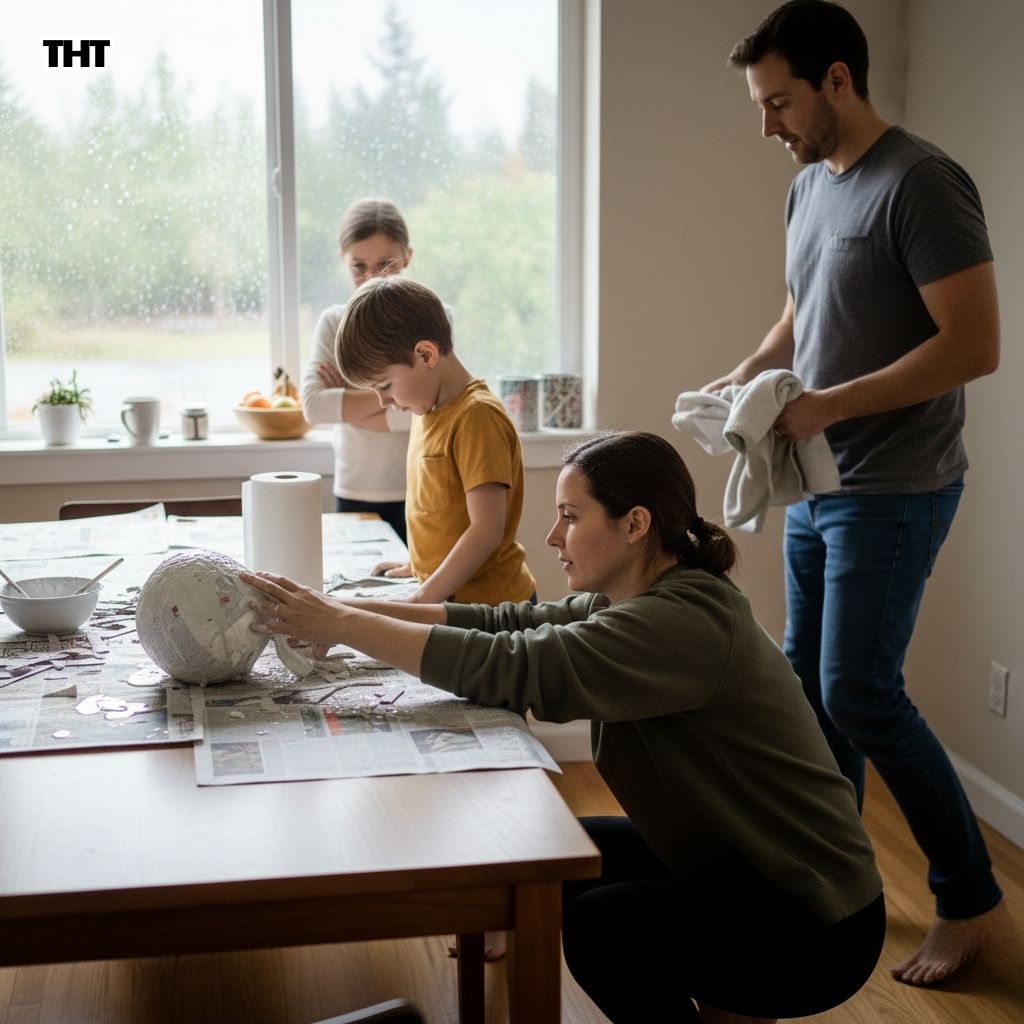
We cleaned together. Not as punishment, but as repair. Chris showed Miles how to blot the paste off the floor instead of smearing it around. Miles listened closely, because Chris has that steady energy that makes even cleaning feel like a solvable problem.
Nora helped too, but she was still upset, and I didn’t rush her out of that feeling. I said, “It makes sense you’re mad. Your project got interrupted, and you didn’t like the mess.”
Nora nodded, eyes shiny.
Then I did something that helped shift the whole mood.
I gave Nora a choice that put control back in her hands without punishing Miles.
“You can take a five-minute break in your room,” I told her, “or you can stay and help us reset. Either way is okay.”
She took the break, which was wise, because it let her nervous system calm down.
Miles stayed with us, and while we cleaned, I said, “After this, you can choose. You can start over, or you can try to fix the lantern you have.”
He sniffed and said, “I want to fix it.”
That sentence was the heart of the lesson.
He didn’t choose quitting. He didn’t choose denial. He chose repair.
When Nora came back, calmer, we explained the plan. Miles would use less paste and smaller strips. He would go slower. Nora offered one tip, carefully, without sounding like a boss: “Press the strips down, not just on.”
Miles listened, surprisingly open. His shame had softened into focus, and focus is where patience lives.
The Waiting Part: The Real Patience Training
After we got the lanterns covered properly, I said, “Now we wait.”
Miles stared at me like I had said something criminal.
“Wait for what?”
“For it to dry,” I said. “That’s part of it.”
He groaned. “But I want to paint it.”
Nora said, “You can’t paint wet paper.”
Miles looked genuinely betrayed by the laws of physics.
This is where I could have filled the time with distraction and let the lesson evaporate. Instead, we stayed in it. We talked about what drying means, how the water has to leave the paper, how rushing breaks the structure. Chris compared it to fixing a cabinet hinge, how you can’t tighten a screw into soft wood and expect it to hold. Nora compared it to homework, how you can’t skip steps and still understand the answer.
Miles didn’t suddenly love waiting, but he did something important. He tolerated it.
He lived through the discomfort of not being done yet.
That is patience.
Not feeling calm. Just staying.
The Moment I Knew It Worked
Two days later, after the lanterns dried and we painted them, I saw the lesson show up somewhere else.
Miles was building a tall block tower, and it fell, which is practically guaranteed when a six-year-old attempts structural engineering with enthusiasm. His face tightened, and I could see the frustration rising, the familiar snap that usually leads to tossing blocks.
He clenched his fists.
Then he paused.
He said, under his breath, “Go slow.”
It wasn’t dramatic. It wasn’t performative. It was almost like he was repeating an instruction he had stored away from the craft day.
He rebuilt the tower, slower, steadier, and when it fell again, he didn’t collapse into rage. He sighed, but he kept trying.
That’s how I knew the messy craft had taught him something my words alone never could.
Not because I gave him a speech.
Because he practiced.
Here’s the Part I Messed Up, So You Don’t Have To
I almost snapped when the paste spilled. I was right there at the edge of making the moment about my frustration, which would have turned the whole thing into a story about consequences and shame instead of a story about patience and repair.
If you want to try a messy craft for the sake of teaching patience, the biggest trick is this: expect the mess. Plan for the mess. Treat the mess like part of the process, not proof you made a bad decision. That mental shift is what lets you stay calm enough for your kid to learn.
Also, pick a craft that naturally requires waiting, because waiting is where the lesson lives. Drying, layering, sanding, second coats, anything that forces the brain to tolerate “not yet.”
Final Thoughts
That craft project didn’t make my children magically patient. Nora still gets frustrated when things aren’t perfect. Miles still has big feelings when results don’t come quickly. I still have moments where I look at a table covered in glue and think, why did I choose this life.
But it gave us something better than a clean afternoon.
It gave us a shared experience where patience wasn’t a moral command I handed down from above. Patience was the thing we practiced with sticky hands, a wobbly balloon, a spilled bowl, and the decision to clean up and try again.
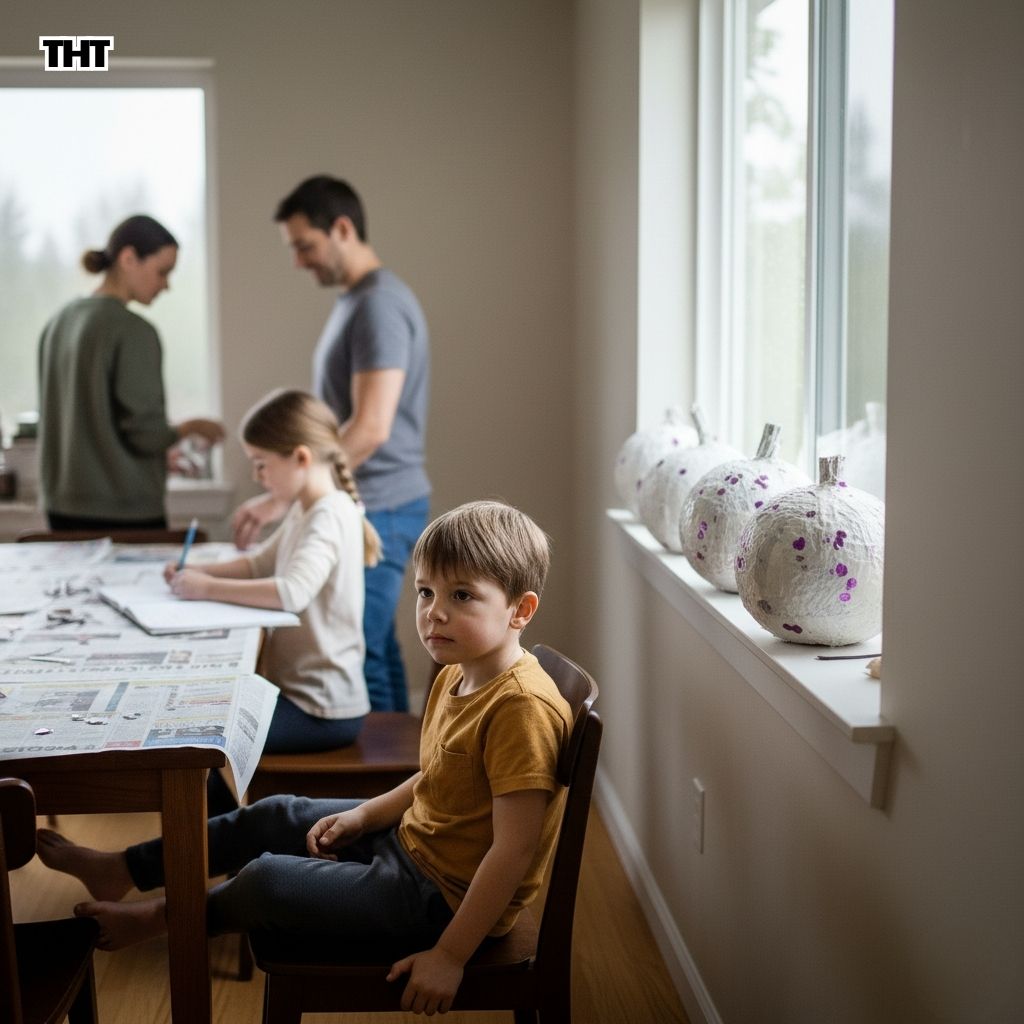
The lanterns are hanging in the hallway now, slightly uneven, a little lumpy, and honestly pretty charming. Every time I see them, I remember that my kids don’t learn patience because I tell them to be patient.
They learn it because we do something together that requires it, we mess it up, we fix it, and we keep going until the waiting turns into progress.