The Sibling Fight That Showed Me Why Picking Sides Wasn’t Helping
If you want to test how fast your nervous system can go from “I’m fine” to “I’m living inside a siren,” all you need is two children, one object they both want, and a quiet moment that feels suspiciously peaceful. Peace in a house with kids is rarely peace. It’s usually the calm right before…
If you want to test how fast your nervous system can go from “I’m fine” to “I’m living inside a siren,” all you need is two children, one object they both want, and a quiet moment that feels suspiciously peaceful. Peace in a house with kids is rarely peace. It’s usually the calm right before someone yells, “HE’S BREATHING ON ME.”
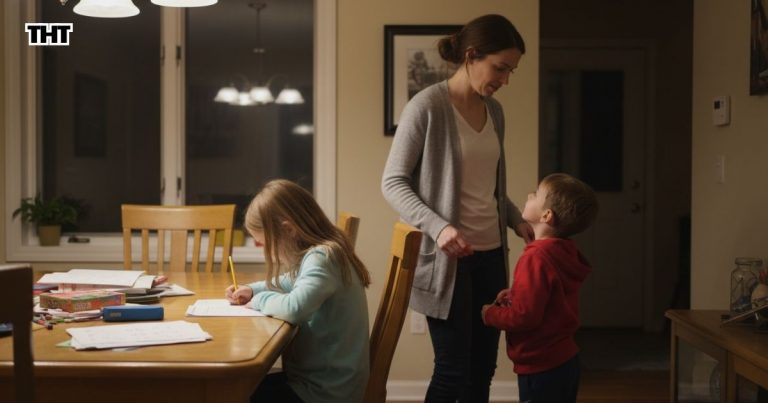
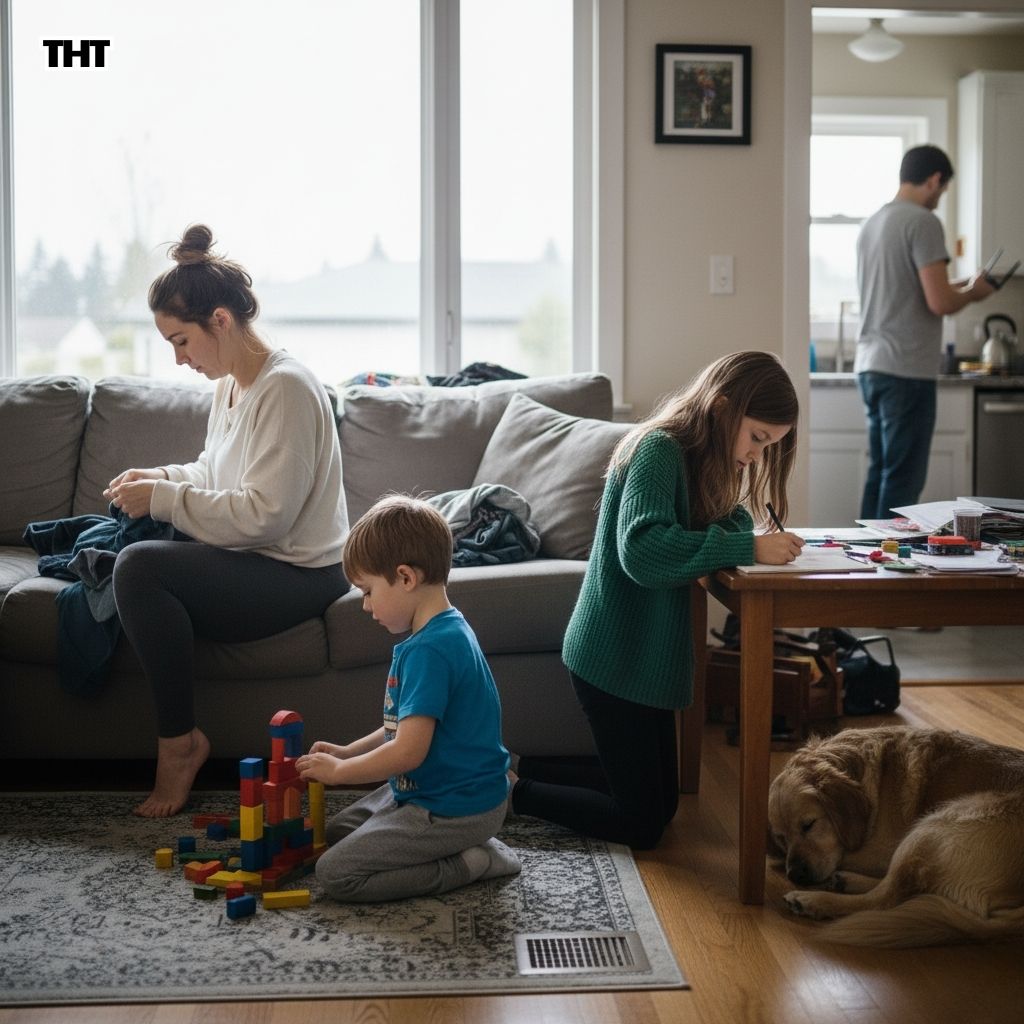
This happened on a Sunday afternoon in our living room, the kind of day where you think, maybe we’ll all be gentle humans today. Portland was doing its classic gray drizzle, Juniper was asleep in her favorite spot like a cozy old rug with opinions, and I was folding laundry while pretending this was a relaxing hobby and not a never-ending lifestyle.
Nora was at the table drawing. When Nora draws, she enters a different universe. You could announce that the roof is missing and she’d say, “One second, I’m shading.” Miles was on the rug building something that was either a spaceship or a “lava truck,” depending on how the story was evolving in his head. Chris was in the kitchen troubleshooting the Wi-Fi, which is basically his way of saying he loves us deeply and also would like to not hear screaming.
The fight started over a red marker.
Of course it did.
Miles wanted it. Nora had it. The marker was the size of my finger and somehow held the emotional weight of a family heirloom.
Miles asked, in the tone that is technically a question but spiritually a demand, “Can I have it?”
Nora didn’t even look up. “In a minute.”
Now, “in a minute” is a perfectly normal answer in adult language. In kid language, it is a direct declaration of war.
Miles’ face tightened like someone had cut his power supply. “I need it now.”
Nora sighed. Not a regular sigh. A sigh with punctuation. A sigh that said, I was here first and you are ruining everything.
“I’m using it,” she snapped.
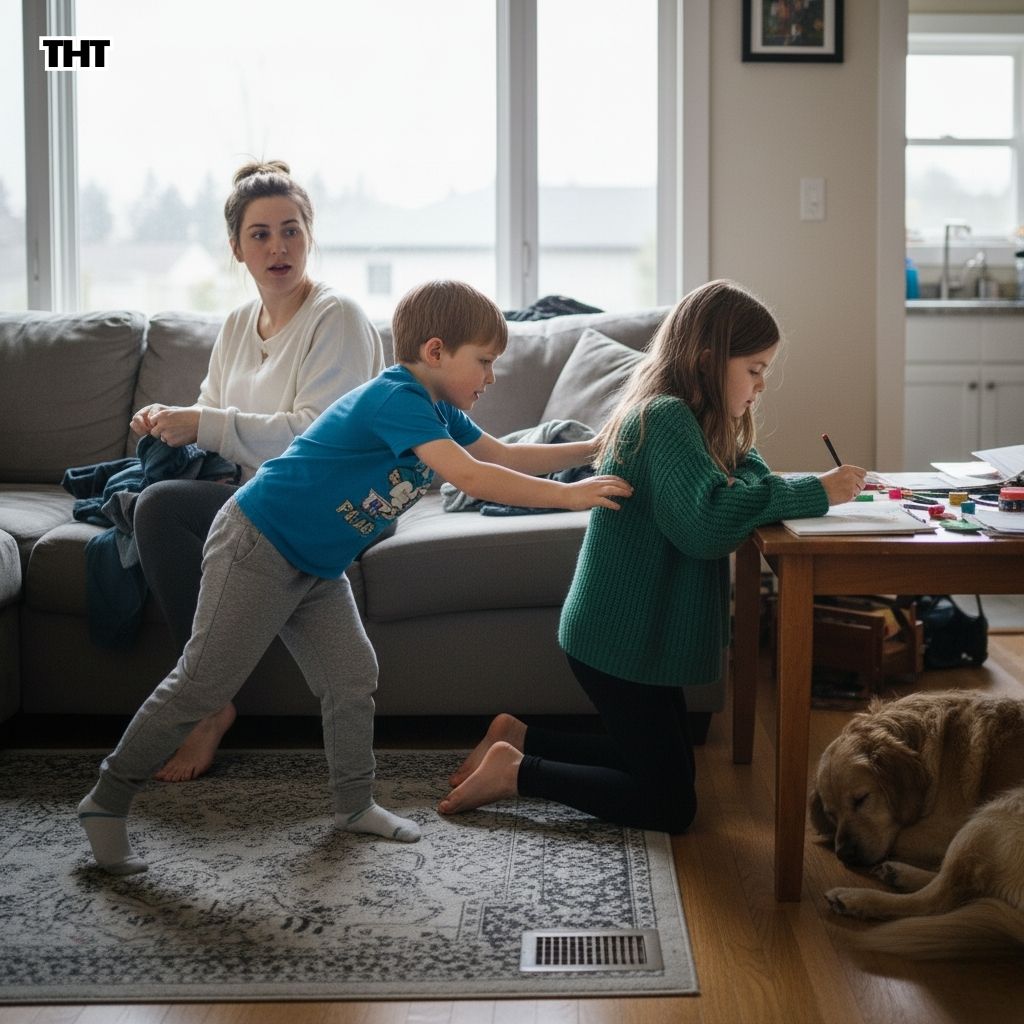
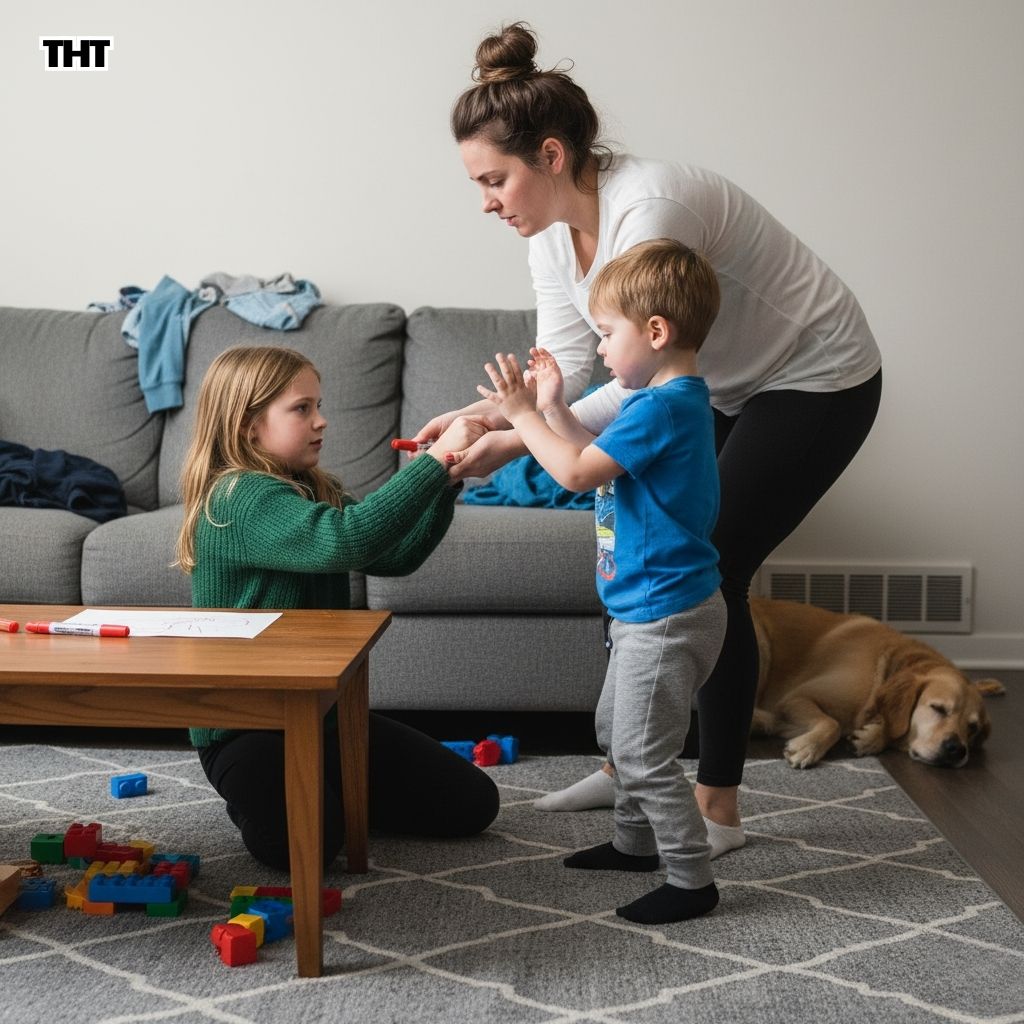
And then came the body-language ballet we all recognize. Miles leaned in. Nora pulled the marker closer. Miles reached. Nora guarded. This is not sibling conflict. This is the opening scene of a very small, very intense documentary called Nature: The Red Marker Wars.
I looked up from the laundry and thought, please. not today. not over a marker.
Then it happened.
Miles grabbed.
Nora yelled, “STOP!”
Miles yelled, “YOU’RE ALWAYS TAKING EVERYTHING!”
Nora yelled back, “IT’S MINE! YOU CAN’T JUST GRAB!”
And suddenly my living room turned into a courtroom, a wrestling match, and a Shakespearean tragedy, all at once.
The Moment I Turned Into a Referee (Again)
This is where I used to pick sides, because side-picking feels like fairness and fairness feels like good parenting and good parenting feels like the only thing keeping society from collapsing into chaos.
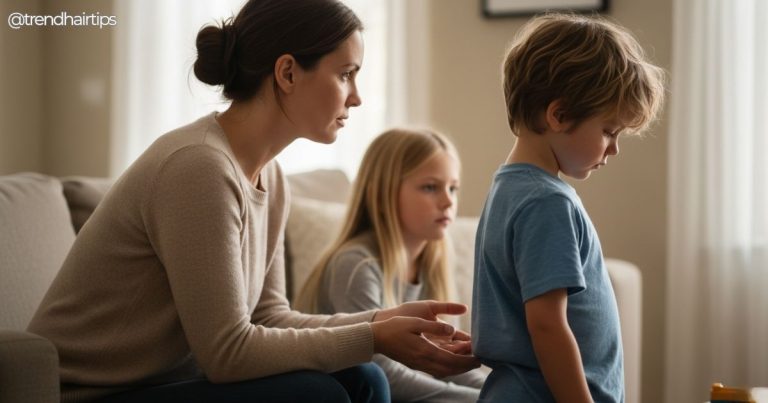
I stood up, marker in my hand like Exhibit A, and said, “Okay! Everyone stop! Miles, you can’t grab. Nora, you need to share.”
Both of them immediately reacted the way kids do when you say something technically reasonable but emotionally unhelpful.
Nora’s face tightened. “I said in a minute!”
Miles pointed at her like he was about to call his lawyer. “She never shares! She always says ‘in a minute’ and then I never get it!”
Nora fired back, “He always ruins my stuff!”
My brain started doing that stressed-parent math. Who started it? Who is more wrong? Who is right? Who will stop screaming first if I declare a verdict?
So I did what I used to do.
I issued a ruling.
“Nora, give him the marker. Miles, apologize for grabbing.”
Nora slammed the marker on the table like she was placing down the crown jewels. “FINE. TAKE IT.”
Miles snatched it and muttered “sorry” in the tone of someone who would like to clarify he is only saying this because the law requires it.
The room went quiet for half a second, and you might think, ah, solved. But it wasn’t solved. It was just… paused. Like when you close your laptop but all the tabs are still open inside it, quietly draining your battery.
Nora crossed her arms and stared at her drawing like the paper had betrayed her personally.
Miles went back to the rug and started coloring aggressively, pressing the marker down like he was trying to win a battle through friction.
I got that sinking feeling, the one where you realize you “handled” the situation but it still feels like everyone is mad and you just created a brand-new resentment bouquet that will bloom again later.
Then Chris walked in and took one look at the scene.
His face said, I came home to my family and also to an active disaster.
“Everything okay?” he asked, carefully, like someone approaching a computer that might crash if you click the wrong button.
Nora snapped, “No.”
Miles snapped, “She’s mean.”
And in that moment, the truth arrived in my brain like a pop-up ad I couldn’t close.
This wasn’t about the marker.
This was about feeling respected and feeling heard.
And my side-picking had accidentally sent both of them terrible messages.
It told Nora, If your brother gets upset enough, your boundary doesn’t matter.
It told Miles, If you escalate loudly enough, you might get what you want.
Neither of those were lessons I wanted to teach.
Here’s the Part I Messed Up, So You Don’t Have To
Here’s the part I messed up, so you don’t have to.
I treated the fight like a problem to stop instead of a skill to teach.
I focused on fairness as the only goal. Fairness matters, yes, but fairness in sibling fights can turn into a trap because it keeps everyone stuck in blame, and blame is basically emotional quicksand.
I also used my “everyone is wrong” voice.
“Miles, you can’t grab. Nora, you need to share.”
That kind of statement makes both kids feel misunderstood, and misunderstood kids do not become cooperative. They become better lawyers.
So I decided to try again.
Not tomorrow. Not later. Right then.
Because the tension was thick enough to spread on toast.
The Reset That Changed Everything
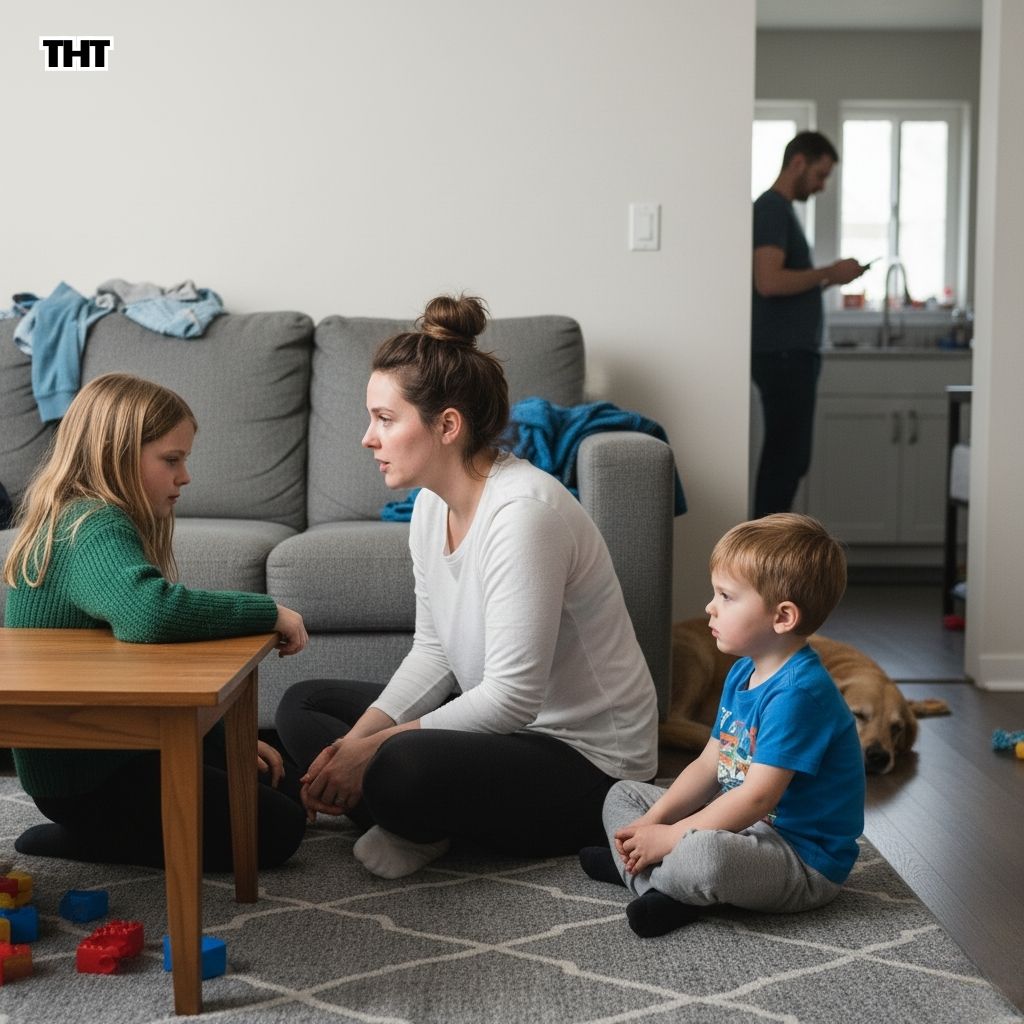
I sat down on the floor between them. This is a powerful move in parenting because it says, I’m not yelling from the doorway like a haunted voice. I’m here. We’re doing this together.
“I think I handled that in a way that didn’t help,” I said. “I’m going to try something different.”
Both kids stared at me, suspiciously. Children do not trust adult “I’m trying something different” energy. It usually means a speech.
I kept it short.
“I’m not going to decide who’s right,” I said. “I’m going to help you solve it together.”
Miles frowned. “But she—”
I held up my hand. “We’re not doing courtrooms.”
That phrase was new, and it worked immediately because kids love a weird phrase.
“No courtrooms,” I repeated. “We’re not here to win a case. We’re here to solve a problem.”
Nora blinked. Miles looked confused. Perfect. Confusion is sometimes the first step to calming down.
The Method That Helped Them Stop Acting Like Rival Politicians
Step 1: Name the shared problem
“The problem is that you both wanted the red marker at the same time,” I said, “and you didn’t know how to handle it without grabbing and yelling.”
Notice how nobody is the villain there. It’s us versus the problem, not Nora versus Miles.
Step 2: Facts first, feelings second
I asked Nora, “What happened, just the facts?”
Nora said, “I was using it. He asked. I said in a minute. He grabbed it.”
Then Miles. “I asked. She said in a minute. She always says that.”
Then I said, “Okay. Now feelings.”
Nora’s came out fast. “I hate when he grabs things. It feels like he doesn’t care about my stuff.”
Miles’ came out slower, but it hit hard. “I feel like she always gets to decide.”
Ah. Control. This was not marker warfare. This was a power struggle in a tiny plastic tube.
Step 3: Reflect what the other person said
This part is annoying for them and magical for me.
“Nora,” I said, “tell Miles what you heard him say.”
Nora sighed like she was being asked to hike uphill. “He feels like I always get to decide and he doesn’t get a turn.”
Miles nodded, surprised.
“Miles,” I said, “tell Nora what you heard her say.”
He said, “She feels mad when I grab because it feels like I don’t care about her stuff.”
Nora nodded and her shoulders dropped slightly. That is the moment I knew we were leaving the courtroom.
Step 4: Make a plan that doesn’t require me to become Supreme Court
“What’s a plan for next time?” I asked.
Nora said, “He can wait.”
Miles said, “She can’t say ‘in a minute’ forever.”
Both valid. Both incomplete. So I suggested a timer.
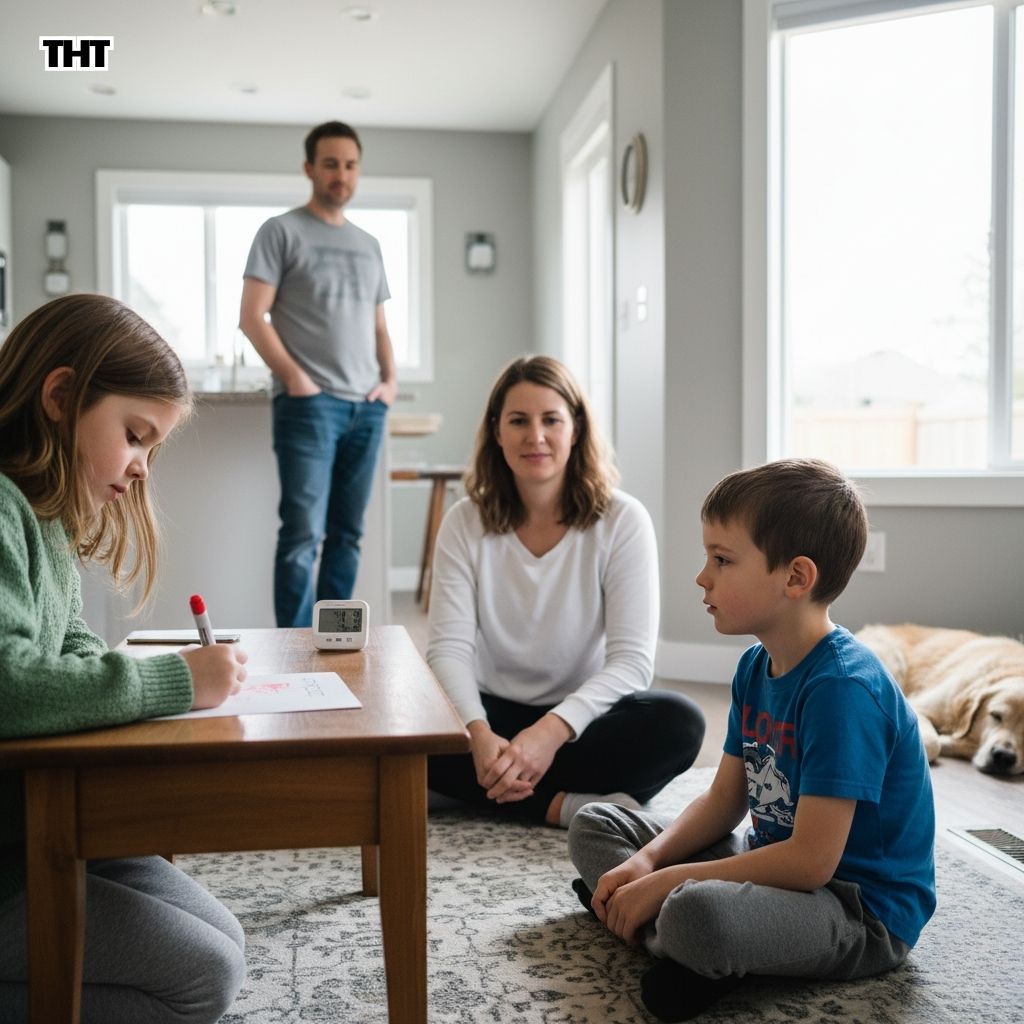
“Nora gets five minutes with the marker,” I said. “Then Miles gets five minutes. If anyone grabs or yells, they lose their turn.”
Miles loves timers because they feel like justice with a beep.
Nora loves timers because they feel like structure with a beep.
They agreed.
Repair Without a Winner
Then came the repair part, which is where kids often act like you asked them to write a handwritten apology letter in cursive.
“Miles,” I said, “what do you need to do to make it right?”
He mumbled, “Sorry.”
“Try again,” I said, “say what you’re sorry for and what you’ll do next time.”
He tried again, louder. “I’m sorry I grabbed. Next time I’ll ask and wait.”
Nora softened, but she was still hurt.
“Nora,” I asked, “anything you want to repair?”
She hesitated, then said, “I’m sorry I yelled. Next time I’ll tell you how long I need instead of just ‘in a minute.’”
And just like that, both kids did the thing that matters most.
They repaired.
Not perfectly, but honestly.
Why Picking Sides Wasn’t Helping
That fight taught me that picking sides feels like control, but it often makes sibling conflict worse in the long run.
It turns kids into opponents instead of teammates.
It teaches them to argue their case harder instead of learning how to negotiate.
It makes them rely on me as the conflict machine, the person who always decides and always fixes.
And it can accidentally reward the loudest behavior, which is not the lesson I’m trying to build into our house unless I want to raise a tiny professional heckler.
When I stopped picking sides, I stopped looking for a winner and started coaching skills.
That changed everything.
Not overnight. Not magically. But steadily, like building muscle.
The Practical Hack We Use Now
Here’s our simple system now.
When things start turning into “He started it” and “She always does this,” I say, “No courtrooms.”
Then I ask three questions.
“What’s the shared problem?”
“What’s each person feeling?”
“What’s the plan for next time?”
If they can’t get to the plan without grabbing, we use a timer or we separate for a short reset and come back. The goal is not silence. The goal is skill-building.
Final Thoughts
That afternoon didn’t end with perfect harmony. It ended with kids being kids, and Juniper still snoring through most of it, because that dog has emotional boundaries I aspire to.
But it did end with something better than a verdict.
It ended with my kids practicing the skill of hearing each other, naming what they felt, and repairing without needing me to declare a winner.
And honestly, it ended with me learning a lesson too.
Sometimes my job is not to pick a side.
Sometimes my job is to step out of the courtroom, sit down on the floor, and teach them how to live with another human without turning a red marker into a full-scale diplomatic crisis.
Because in our house, the marker is never the whole story.
It’s just the practice round.