The Small Habit That Quietly Shaped Our Family Values Over Time
For a long time, I assumed family values were formed through big conversations. I imagined meaningful talks around the table, carefully chosen words about honesty, kindness, responsibility, and respect. I pictured moments where we would clearly name what mattered to us as a family, where the lessons would be obvious and memorable, where the kids…
For a long time, I assumed family values were formed through big conversations.
I imagined meaningful talks around the table, carefully chosen words about honesty, kindness, responsibility, and respect. I pictured moments where we would clearly name what mattered to us as a family, where the lessons would be obvious and memorable, where the kids would nod and absorb it all in a way that would somehow stick for life.
That isn’t what happened.
What actually shaped our family values most deeply was something far less intentional and far less impressive. It didn’t come with a speech or a plan. It didn’t even start as a parenting choice.
It started as a small habit we fell into almost by accident, and then kept repeating because it felt grounding in a house that often felt loud, rushed, and emotionally full.
The habit was this: every evening, before the day ended, we shared one small moment from the day without fixing, correcting, or improving it.
No lessons attached.
No advice offered.
No “next time you should.”
Just a moment, spoken out loud, and received.
At first, I didn’t realize what we were building. I only noticed that something about it slowed us down.
How the Habit Began Without Meaning To
The habit started during a season when everything felt slightly chaotic.
The kids were younger. Bedtime took longer than it should have. Evenings blurred together into a cycle of baths, forgotten pajamas, last-minute questions, and emotions that seemed to grow louder the closer we got to lights out. Chris and I often ended the day tired and overstimulated, relieved when the house finally went quiet but aware that we hadn’t really connected in any meaningful way.
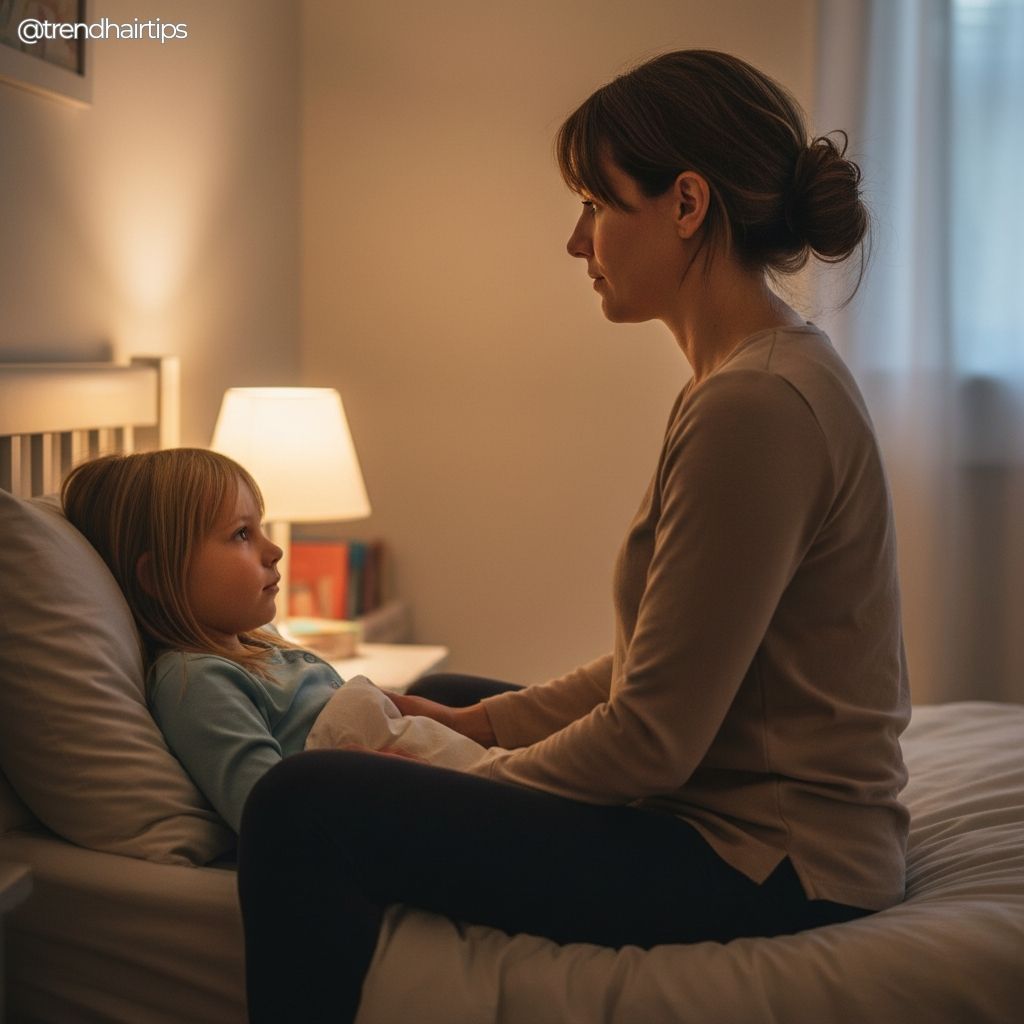
One night, after Nora was tucked in but still wide awake, she asked, “Can I tell you something that happened today?”
It wasn’t a dramatic setup. No warning. Just a question.
I sat on the edge of her bed and said yes.
She told me about a moment at school when she had wanted to answer a question but didn’t raise her hand because she wasn’t sure she was right. She wasn’t upset. She wasn’t looking for reassurance. She was simply narrating something that had stayed with her.
My instinct was to say something helpful. Something encouraging. Something like, “You should always raise your hand,” or “It’s okay to be wrong.”
But instead, I just listened.
When she finished, she looked at me expectantly, waiting for the response she assumed was coming.
I said, “Thank you for telling me.”
She smiled, rolled over, and went to sleep.
That moment stayed with me, not because of what she said, but because of what didn’t happen. I didn’t fix it. I didn’t improve it. I didn’t turn it into a lesson. And somehow, that made it feel complete.
The next night, Miles wanted to share something too. His moment was shorter, louder, and involved frustration over a game that hadn’t gone his way. Again, I listened. Again, I resisted the urge to correct or reframe.
Without planning it, we had done the same thing two nights in a row.
What the Habit Actually Looked Like
Over time, this turned into a loose, gentle rhythm rather than a rule.
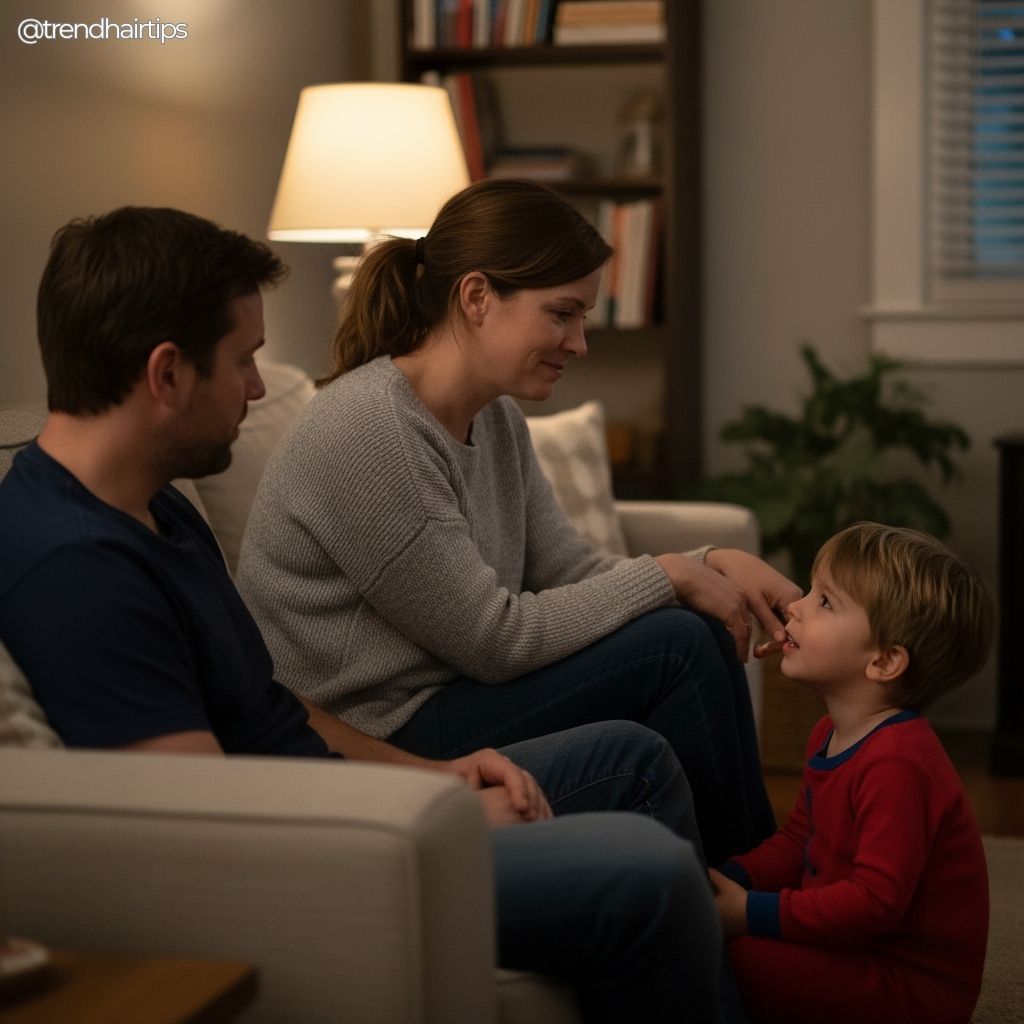
Some nights, it happened in the kids’ rooms before bed. Other nights, it happened while brushing teeth or sitting on the couch after dinner. Sometimes we all shared. Sometimes only one person did.
The only consistency was the tone.
One person spoke.
The rest of us listened.
No one interrupted.
No one fixed.
The moment could be small. It often was.
A laugh with a friend.
A moment of embarrassment.
Something that felt unfair.
Something that felt good but confusing.
What mattered was that it was chosen by the person sharing, not assigned by us.
What I Didn’t Realize We Were Teaching
At first, I thought this habit was about emotional expression. I thought we were helping the kids talk about their days and feel heard.
That was part of it, but it wasn’t the deeper lesson.
The deeper lesson was this: what you notice matters.
By making space every day for one small moment, we were quietly teaching our kids that their internal experiences were worth paying attention to, even when nothing dramatic had happened.
They learned that feelings didn’t need to be justified to be shared.
They learned that reflection didn’t require a crisis.
They learned that their voices didn’t need to compete to be heard.
And perhaps most importantly, they learned that listening was an act of respect, not a pause before responding.
How It Shaped Nora Over Time
For Nora, who is thoughtful and prone to internal pressure, this habit gave her a place to sort through her thoughts without fear of immediate evaluation.
At first, her moments were cautious. She often framed them in ways she thought would sound acceptable. Over time, they became more honest.
She started sharing uncertainty without wrapping it in apology.
She started naming moments that confused her instead of rushing to explain them away.
She became more comfortable sitting with ambiguity, because she didn’t feel pressure to resolve it immediately.
I noticed that she stopped asking, “Was that okay?” after sharing. She trusted that the sharing itself was enough.
That shift didn’t happen overnight. It happened slowly, through repetition, through the quiet reassurance that nothing bad happened when she spoke honestly.
How It Shaped Miles in a Different Way
For Miles, who experiences the world loudly and physically, the habit did something unexpected.
It slowed him down.
At first, his moments were short and reactive. He shared what had annoyed him most recently, often with big emotion and little detail. We listened anyway.
Over time, his storytelling changed.
He began to include context.
He started noticing patterns in his own reactions.
He learned that his feelings didn’t disappear when he wasn’t the loudest voice in the room.
One evening, he shared a moment where he didn’t get angry when he usually would have. That kind of self-awareness doesn’t come from correction. It comes from being regularly invited to reflect.
What It Taught Us as Parents
This habit didn’t just shape the kids. It reshaped us.
Chris and I had to practice restraint. We had to learn when to stay quiet, when to respond with curiosity instead of advice, when to trust that not every moment needs to be optimized.
We also had to become more aware of what we shared.
When we participated honestly, not with polished lessons but with real, imperfect moments from our own days, the kids listened differently. They didn’t see us as judges. They saw us as participants.
They learned that adults are still learning too.
The Values That Emerged Without Being Named
We never sat down and said, “These are our family values.”
And yet, over time, certain values became visible in how we interacted.
We valued listening over winning.
We valued reflection over reaction.
We valued honesty without performance.
We valued presence over productivity.
None of these were posted on a wall or explained explicitly. They were reinforced through repetition, through the daily practice of slowing down enough to notice something small and give it space.
Why Small Habits Are More Powerful Than Big Rules
Big rules tend to invite resistance. They require enforcement. They often focus on behavior instead of understanding.
Small habits work differently.
They shape attention.
They influence tone.
They quietly recalibrate what feels normal.
This habit didn’t tell our kids how to behave. It showed them what mattered by how we spent our time and attention.
Over months and years, those small signals add up.
How You Might Try This Without Forcing It
If you’re interested in something like this, the most important thing to know is that it cannot be rushed or formalized too much.
It works best when it feels optional and safe.
You don’t need to do it every day.
You don’t need everyone to participate.
You don’t need to respond perfectly.
What matters is consistency over time and a genuine willingness to listen without agenda.
If you can do that even a few times a week, you’ll likely notice a shift in how conversations unfold in your home.
The Part I Had to Unlearn
The hardest part for me was letting go of the idea that good parenting always looks like teaching.
Sometimes good parenting looks like witnessing.
Witnessing a child’s experience without reshaping it. Witnessing a moment without assigning meaning. Witnessing growth without rushing it.
That felt uncomfortable at first, because it required trust.
Trust that the process mattered even when the outcome wasn’t obvious.
Final Thoughts
The small habit that quietly shaped our family values wasn’t impressive from the outside. It didn’t make our evenings calmer or our kids instantly more emotionally skilled. It didn’t prevent conflict or eliminate stress.
What it did was create a steady undercurrent of connection.
It gave our kids a place to practice reflection.
It gave us insight into their inner worlds.
It gave our family a shared rhythm that reinforced what mattered most without ever having to say it out loud.
Looking back, I’m grateful we didn’t try to turn it into something bigger.
Because sometimes the habits that matter most don’t announce themselves.
They simply repeat, night after night, shaping who we become together in ways we only recognize much later, when we realize that listening, patience, and presence have quietly taken root and grown into something lasting.