The Volunteer Day That Changed How My Kids Talk About Other People
If you ask my kids what “volunteering” means, they’ll tell you two things now. Nora will say it’s helping people without getting anything back, and she’ll say it in that thoughtful, careful way she has, like she’s protecting the meaning from being watered down. Miles will say it’s when you work for free and also…
If you ask my kids what “volunteering” means, they’ll tell you two things now.
Nora will say it’s helping people without getting anything back, and she’ll say it in that thoughtful, careful way she has, like she’s protecting the meaning from being watered down.
Miles will say it’s when you work for free and also sometimes there are donuts, because he believes every major life event should include a snack table.
Both answers are true, in their own way. But neither one captures what actually changed for us that day, which was not our schedule, not our perspective in a grand dramatic way, but the way my kids started speaking about other people when we got back home.
It was the first time I realized how easily kids absorb the invisible messages around them, not just the words we teach them, but the tone we use when we talk about strangers, the assumptions we make in passing, the little comments we toss out while folding laundry or driving past a tent under an overpass.
I didn’t go into that volunteer day thinking it would be a life lesson. I went into it because it was a Saturday, we had no plans, I was feeling like we were too wrapped up in our own little world, and I wanted to do something that felt real.
Also, if I’m being honest, I wanted my kids to stop complaining that our lives were “boring.” Sometimes a parent chooses volunteerism for the soul. Sometimes a parent chooses volunteerism because she is one complaint away from moving into the woods.
The Setup: Me Trying to Do a Good Thing Without Making It Weird
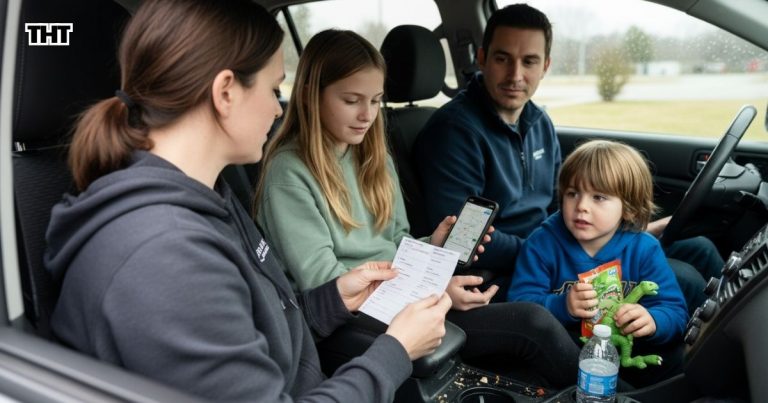
The idea started during one of our car check-ins, the little five-minute “family meetings” we do after school pickup because our dining table is basically a conflict arena disguised as furniture.
I said, “What’s something we could do this month that helps someone else?”
Nora immediately had ideas. She always has ideas. She suggested donating old toys, making cards for seniors, and helping clean up a park.
Miles said, “Can we help by buying people pizza?”
Which was generous, but also clearly influenced by his love language, which is food.
Chris said, “We could do something local and simple. Like packing food boxes.”
That’s the thing about Chris. He doesn’t romanticize. He finds the practical path.
So we signed up for a family volunteer shift at a local food pantry. Nothing big, nothing dramatic. Two hours. Sort donations. Pack boxes. Hand out bags. Go home.
I told myself it would be good for the kids. It would teach gratitude. It would build character. It would be a nice thing to do.
I did not predict the part that would actually matter, which was the conversation in the car afterward.
The Awkward Beginning: When Kids Don’t Know How to Act Around “Different”
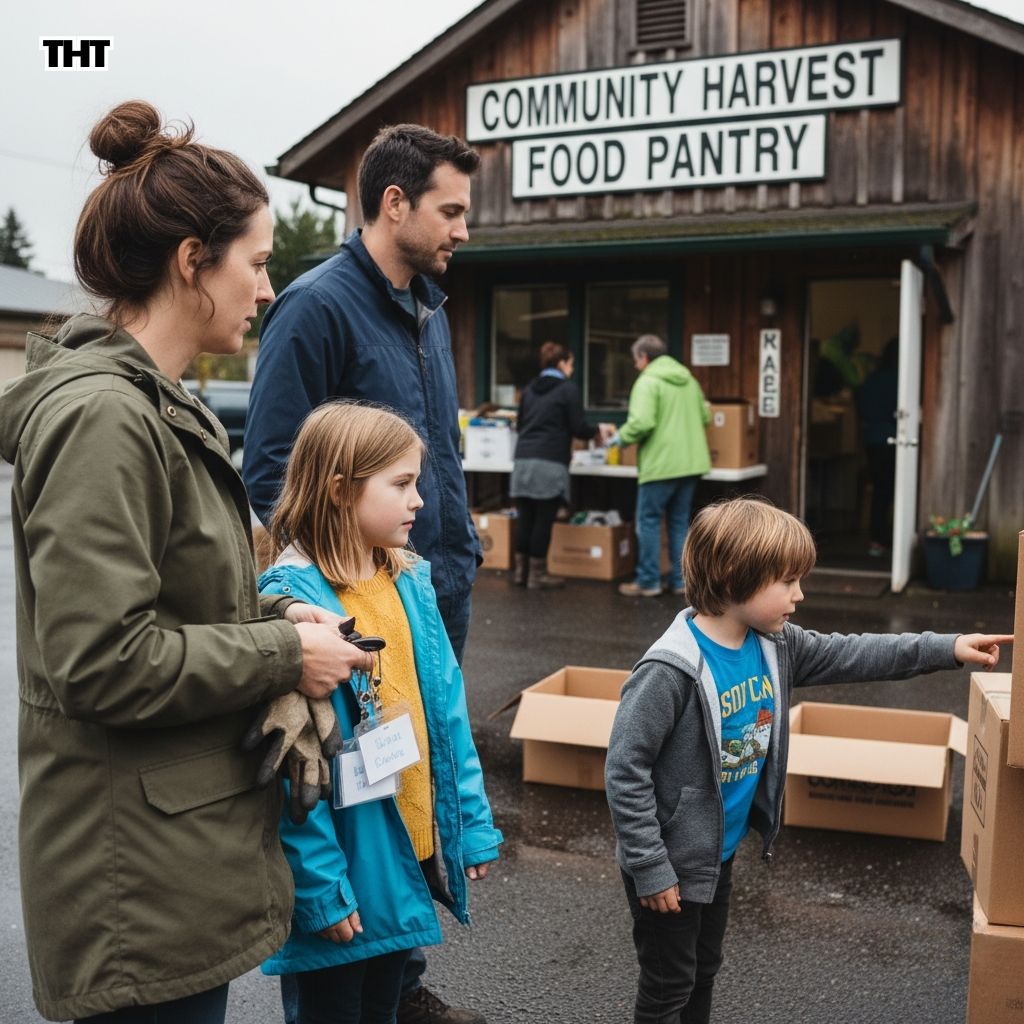
We arrived at the pantry on a chilly morning that smelled like wet leaves and coffee. The building was simple, not sad, not fancy, just functional. Volunteers were already moving around like they knew the flow. Someone handed us name tags and gloves, and I immediately felt that small internal panic I always feel in new places.
The panic of, I hope we’re not in the way.
Nora stuck close to me. She was polite, quiet, observant. When Nora is unsure, she gets quieter, like she’s trying to gather data before she moves.
Miles started asking questions immediately, because Miles does not gather data quietly. He gathers it out loud.
“Why are there so many boxes?”
“Do people come here every day?”
“Is this where the food lives?”
Juniper wasn’t with us, but if she had been, she would have been sniffing around like she was ready to volunteer too.
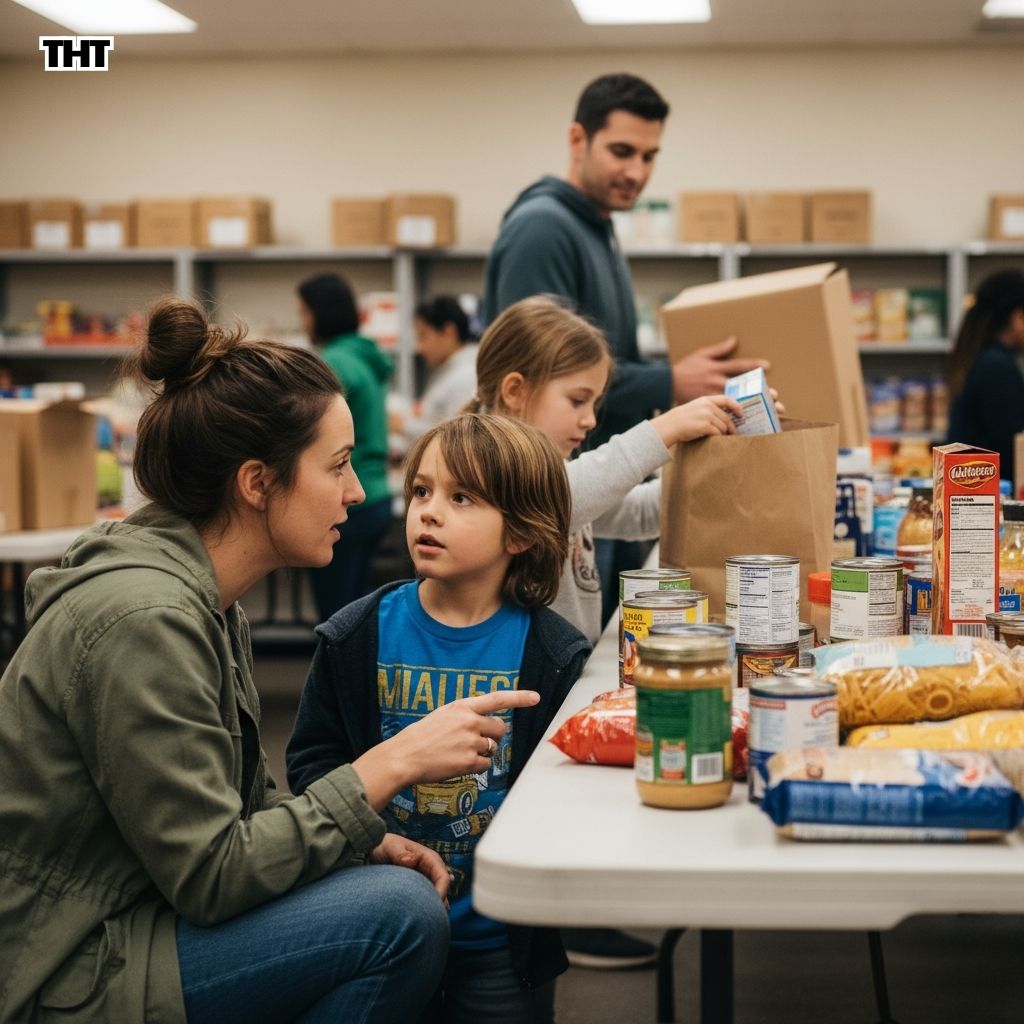
We were assigned to a table where we would pack bags with pantry staples: rice, canned vegetables, peanut butter, pasta, cereal. The volunteer coordinator was friendly and calm. She explained the system in a way that made me exhale. Kids can do this. We can do this.
Miles loved the physical part. He carried cans like they were precious treasure, and he took his role very seriously for about five minutes, until he discovered that stacking boxes is also fun, and then we had to redirect.
Nora focused like it was a school project. She lined things up neatly. She checked lists. She made sure bags were evenly filled. She asked questions when she wasn’t sure. She wanted to do it right, which I appreciated, and also I watched carefully for the moment her perfectionism might turn into pressure.
Chris was in his element. He treated it like a process improvement situation and immediately found a rhythm. He made it efficient without making it cold, which is his gift.
I was mostly trying to keep the kids from accidentally creating a domino effect of canned goods, while also paying attention to the people coming through.
That’s where my own discomfort showed up.
Because I realized I didn’t know how to talk about the people we were helping without accidentally making them into a category.
The “needy.” The “homeless.” The “poor.” The “less fortunate.”
I hate those labels, even when people mean well, because they flatten human beings into a single story. But I also didn’t know what else to say, and that’s the honest truth.
Kids can sense that kind of adult uncertainty. They can sense when we get careful with our language, like we’re walking on thin ice. And when kids sense that, they sometimes fill the gaps with assumptions they’ve picked up elsewhere.
That’s what happened.
Miles whispered, “Are these people… bad?”
It wasn’t malicious. It was curiosity mixed with confusion. It was a six-year-old trying to categorize something unfamiliar.
Nora snapped, “Miles! That’s rude.”
Miles’ face fell, because he wasn’t trying to be rude. He was trying to understand.
And I felt my stomach tighten, because this was the moment. The moment where my response would become a lesson, not because I gave a lecture, but because it would show my kids what to do with their questions about people who are different from them.
The Moment That Changed Everything
I didn’t answer quickly. I took a breath, because I didn’t want to shame Miles, and I didn’t want to dodge the question. I also didn’t want to turn it into a big speech, because speeches make kids stop listening.
I crouched down beside him and said quietly, “No, buddy. People who come here aren’t bad. They’re people who need food right now.”
Miles frowned. “But why?”
I looked around. I saw an older man with tired eyes picking up a bag. I saw a mom with two kids waiting in line, her posture tense the way mine gets tense when I’m trying to hold things together. I saw volunteers chatting gently, not pitying, just helping.
And I said the most truthful thing I could say.
“Because life can get hard,” I told him. “Sometimes people lose jobs. Sometimes they get sick. Sometimes their rent goes up. Sometimes there’s an emergency and the money doesn’t stretch. Needing help doesn’t mean you did something wrong.”
Nora was listening closely, her face serious. Miles was still trying to map it in his brain.
“So they’re not lazy?” he asked.
That word hit me like a pebble in my shoe. Not because Miles said it, but because it’s a word kids hear, and it sticks, and it becomes a shortcut in their minds.
I said, “Some people are working really hard and still can’t afford everything. Some people are looking for work. Some people are caring for family. You can’t know someone’s story just by seeing them here.”
Then I added something I didn’t plan, but I’m glad I said.
“We’re not here to judge. We’re here to help.”
And that was the turning point. Not because it was poetic, but because it gave them a rule that was easy to remember.
Not judge. Help.
The Quiet Lesson Nora Picked Up
Nora surprised me during that shift.
At one point, she noticed that some of the boxes were heavy and awkward to carry. She looked at a volunteer older than her carrying a bag and said, “Do you want me to take the lighter ones so it’s easier?”
The volunteer smiled and said yes.
It was such a small thing. It wasn’t dramatic kindness. It was practical kindness. It was the kind of kindness that says, I see you, and I can make this easier.
That’s Nora at her best. When she stops worrying about doing it perfectly and starts thinking about how other people feel, she becomes deeply considerate.
Later, she whispered to me, “They look like they’re trying really hard.”
And I knew she had seen something important. She had seen effort. She had seen humanity, not a category.
The Part I Messed Up, So You Don’t Have To
Here’s the part I messed up, so you don’t have to.
At first, I almost corrected Miles too quickly. I almost snapped, “Don’t say that,” because my instinct is to protect people from rude comments. But I’ve learned that kids’ questions are often clumsy, not cruel, and if you shut them down with shame, you don’t eliminate the belief, you just push it underground.
If I had shamed Miles, he would have learned, This topic is dangerous. I’m not allowed to ask. I’ll just think it quietly.
Instead, I tried to treat the question like an opening.
I answered honestly. I kept my tone calm. I gave him a framework. And we moved forward.
That choice mattered more than perfect wording.
The Car Conversation That Made Me Realize We Were Different
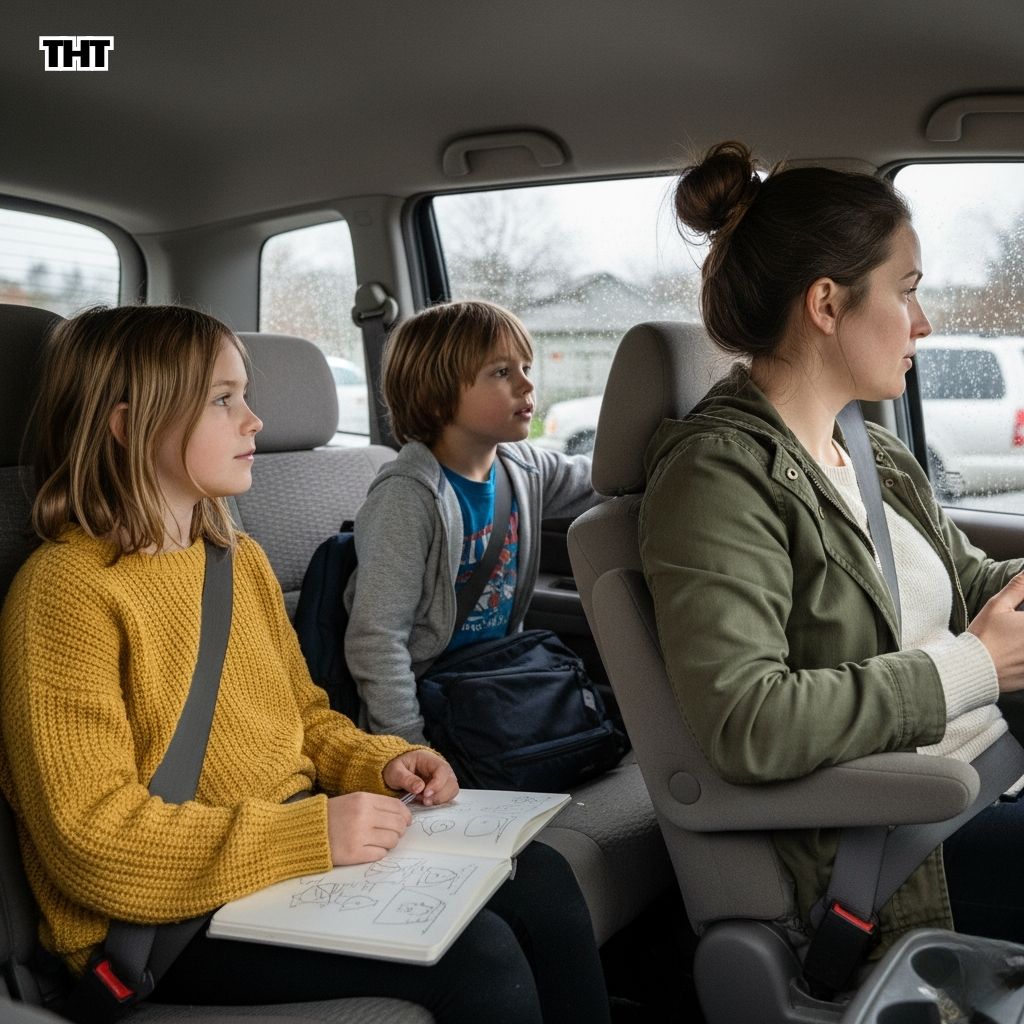
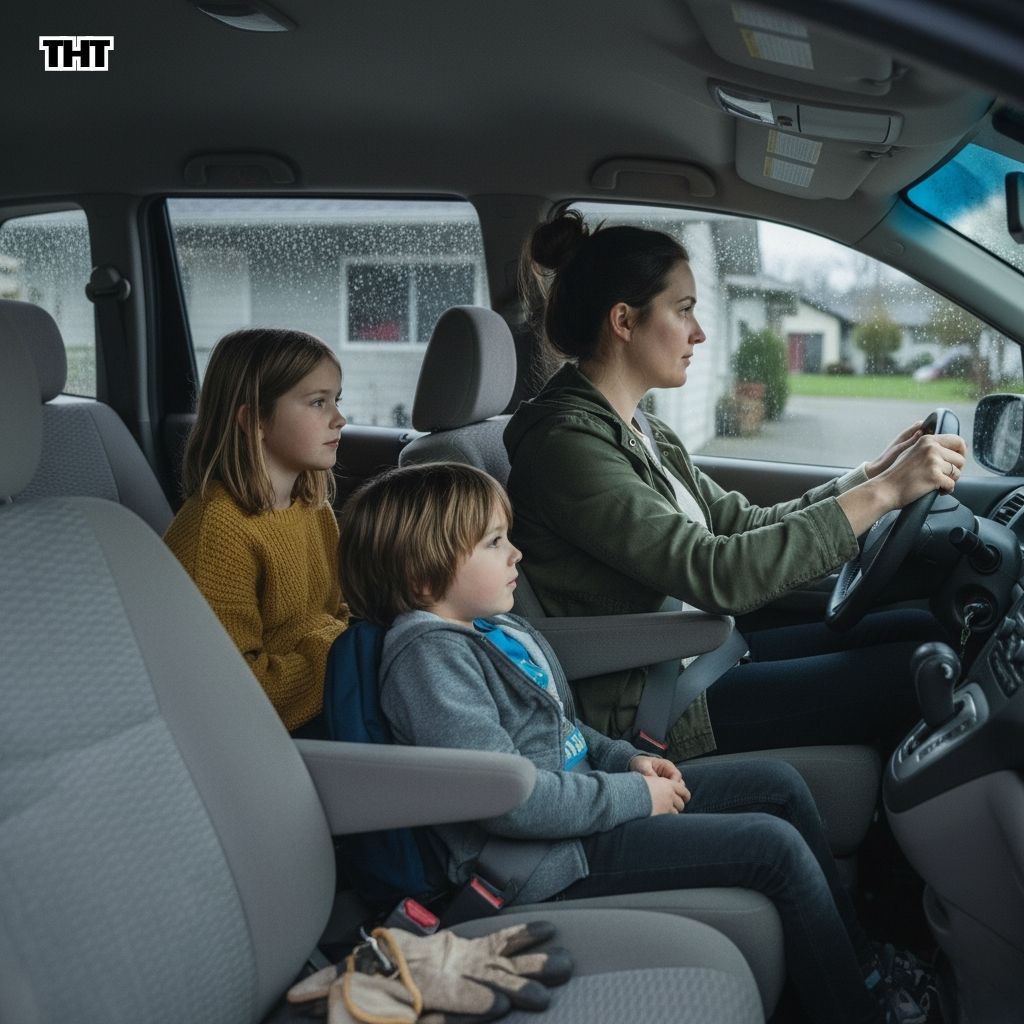
On the drive home, the kids were quiet in that post-volunteer way. Not bored quiet. Processing quiet. Even Miles was calm, which is how you know something real happened.
Then Nora said, “I didn’t like how I thought about it before.”
I glanced in the rearview mirror. “What do you mean?”
She said, “I used to think people who needed help just didn’t try hard enough. But… they looked like normal people. Like us.”
That sentence landed heavy in the car, in the best way. Because it wasn’t a rehearsed lesson. It was her own realization, and those are the ones that last.
Miles added, “They just need food.”
Then he paused, and because he is Miles, he asked the exact question that takes your breath away.
“Could that happen to us?”
That was when I felt the urge to reassure him too quickly, to say, “No, we’re fine,” and move on. But I didn’t want to lie. Life is unpredictable. Pretending otherwise doesn’t make kids feel safe. It makes them feel like you’re hiding something.
So I told the truth in a way a child can hold.
“I work hard to keep us safe,” I said. “Chris works hard too. And we have people who would help us if we needed it. That’s why communities matter. That’s why we help other people, because someday we might need help, too.”
Nora nodded slowly. Miles leaned back in his seat and said, very softly, “Okay.”
Then he said, “Can we volunteer again?”
And I almost cried, because I had expected resistance, and instead he wanted to return to the place that had made him ask a brave question.
What Changed in Their Language After That
The shift showed up in small, everyday moments, which is how you know a lesson has actually taken root.
A few days later, we drove past a man holding a sign near an intersection. Nora used to look away quickly, not because she didn’t care, but because it felt uncomfortable. That day, she looked at him and said quietly, “I hope he gets help.”
Miles asked, “Do you think he has a family?”
And instead of jumping to assumptions, they stayed curious.
Not nosy. Curious in a human way.
Another time, Nora came home upset because a classmate had worn the same sweatshirt two days in a row and someone made a comment. She told me, “Maybe they just don’t have more clothes. I don’t like how people talk.”
That was the change. Not just empathy, but language. The way she talked about someone else shifted from judgment to possibility.
Miles, too, started using a different frame. When he would normally say, “That’s weird,” he started saying, “Maybe they’re having a hard day.”
Not always. He’s six. He still says weird things. But the seed is there.
The Tiny Framework We Use Now
We didn’t turn this into a huge family rule chart, because charts are not our strongest vibe. But we did start using one simple phrase when the kids make a quick judgment about someone.
“We don’t know their story.”
That’s it.
It’s short enough for a kid to remember. It’s true enough to be useful. It doesn’t excuse harmful behavior, but it interrupts the lazy mental shortcut that turns people into stereotypes.
If Miles says, “That person is scary,” I can say, “Maybe. Or maybe we don’t know their story. What makes you feel nervous?”
If Nora says, “She’s annoying,” I can say, “Maybe she is. Or maybe we don’t know her story. What happened?”
It doesn’t stop us from having boundaries. It just stops us from flattening people.
Final Thoughts
I went into that volunteer day thinking I was teaching my kids to be grateful. I left realizing I was teaching them something far more important.
I was teaching them to be human about other humans.
Not in a sentimental, overly polished way, but in a practical way that shows up in their language, in their assumptions, in the little comments they make when they think no one is paying attention.
The day changed how they talk about other people because it gave them something real to hold, not just a moral lesson, but an experience. It gave them faces and moments instead of stereotypes. It gave them a new rule for their own minds.
Not judge. Help.
And now, when Miles says volunteering is “working for free and also sometimes there are donuts,” I just smile, because I know what he’s really saying.
He’s saying we did something together that mattered.
And in a family, that’s the kind of tradition worth keeping.