What Cooking for Someone Else Taught My Children About Kindness
The idea didn’t arrive as a glowing moral lesson. It arrived as a problem. The problem was that my kids had started treating kindness like a concept instead of a practice. They knew the words. They knew the rules. They could tell you that being kind meant sharing, helping, saying please, and not slamming doors….
The idea didn’t arrive as a glowing moral lesson. It arrived as a problem.
The problem was that my kids had started treating kindness like a concept instead of a practice. They knew the words. They knew the rules. They could tell you that being kind meant sharing, helping, saying please, and not slamming doors. And yet, in the daily friction of real life, kindness often vanished the moment things became inconvenient, boring, or slow.
Kindness, it turned out, was easy to agree with and harder to live inside.
I didn’t want to lecture them about it. I’ve learned the hard way that lectures slide right off children, especially when the lesson sounds like something they’ve already heard. I wanted them to feel kindness in their bodies, the way you feel tired legs after a long walk or sticky fingers after a messy project. I wanted it to cost them something small but real.
So one afternoon, standing in our kitchen with the fridge open and no real plan, I said, “Let’s cook dinner for someone else.”
Miles immediately asked, “Do we still get dinner?”
Nora asked, “What if we mess it up?”
Chris, practical as ever, said, “Okay, who, and how hot is this going to be when we carry it?”
Those three responses told me everything. Hunger, fear of failure, logistics. Kindness was already being negotiated before we’d even chosen a recipe.
The person we were cooking for was our neighbor, Mrs. Alvarez, who had just come home from the hospital. She wasn’t dramatic about it. She didn’t ask for help. She just moved more slowly now, and her daughter had been visiting often, carrying grocery bags that looked heavier than they should. I didn’t know her story in detail, and that mattered too. Kindness doesn’t always come with a full explanation.
Sometimes it just comes with noticing.
Choosing the Meal: Where Kindness Becomes Specific
We didn’t choose something impressive. We chose something forgiving.
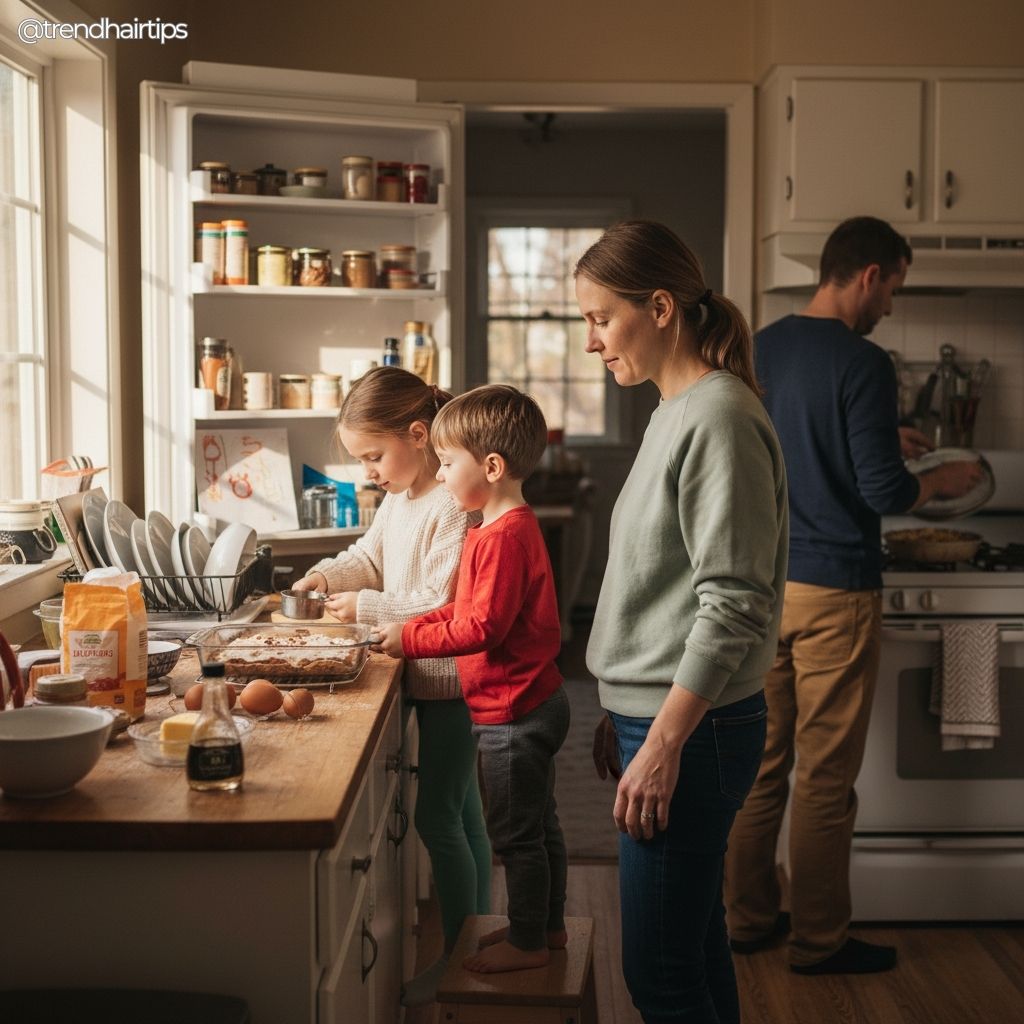
Baked ziti, roasted vegetables, bread. Food that doesn’t punish mistakes. Food that can be reheated without losing its soul. Food that says, “You don’t have to perform. You just have to eat.”
Nora liked that it was measurable. She could follow steps, control portions, know when something was done correctly. Miles liked that it involved stirring and sprinkling, which are universally satisfying tasks. Chris liked that it required a dish with a lid.
Before we started, I said something out loud that I usually keep inside.
“This isn’t about doing it perfectly. This is about doing it carefully.”
Nora nodded. Miles half-listened. Chris smiled in that quiet way that says, yes, that’s the right framing.
We washed hands. We laid out ingredients. The kitchen filled with the low-level chaos that always shows up when children are invited into adult spaces. A spoon clattered. Someone asked where the cheese went even though it was directly in front of them. Miles dipped a finger into the sauce and declared it “pretty good for not being done.”
And in the middle of that ordinary mess, kindness began to take shape as effort.
The First Friction: When Kindness Takes Too Long
Five minutes in, Miles asked, “Is it ready?”
“No,” I said.
Ten minutes in, he asked again.
“No,” I said again, trying to sound patient and not like someone who deeply understands why drive-throughs exist.
“This is taking forever,” he groaned, leaning against the counter.
Nora, stirring carefully, said, “Cooking takes time.”
Miles rolled his eyes. “Then why are we doing it?”
That question landed harder than I expected, because it was honest. Why choose something slow when you could choose something easy? Why choose effort when convenience exists?
I answered simply. “Because someone else needs it.”
Miles frowned. “But we could just give her snacks.”
Chris jumped in, not correcting, just expanding. “We could. But a meal means she doesn’t have to think about dinner tonight. Thinking takes energy too.”
Miles considered that, because thinking about thinking is exactly the kind of loop kids get stuck in.
“So this is like helping her brain rest,” he said.
“Yes,” I said, surprised and pleased. “Exactly like that.”
He still didn’t love the waiting, but he stayed. And staying is the first real act of kindness.
The Moment Where Kindness Almost Fell Apart
It happened halfway through, the way most meaningful lessons almost fall apart halfway through.
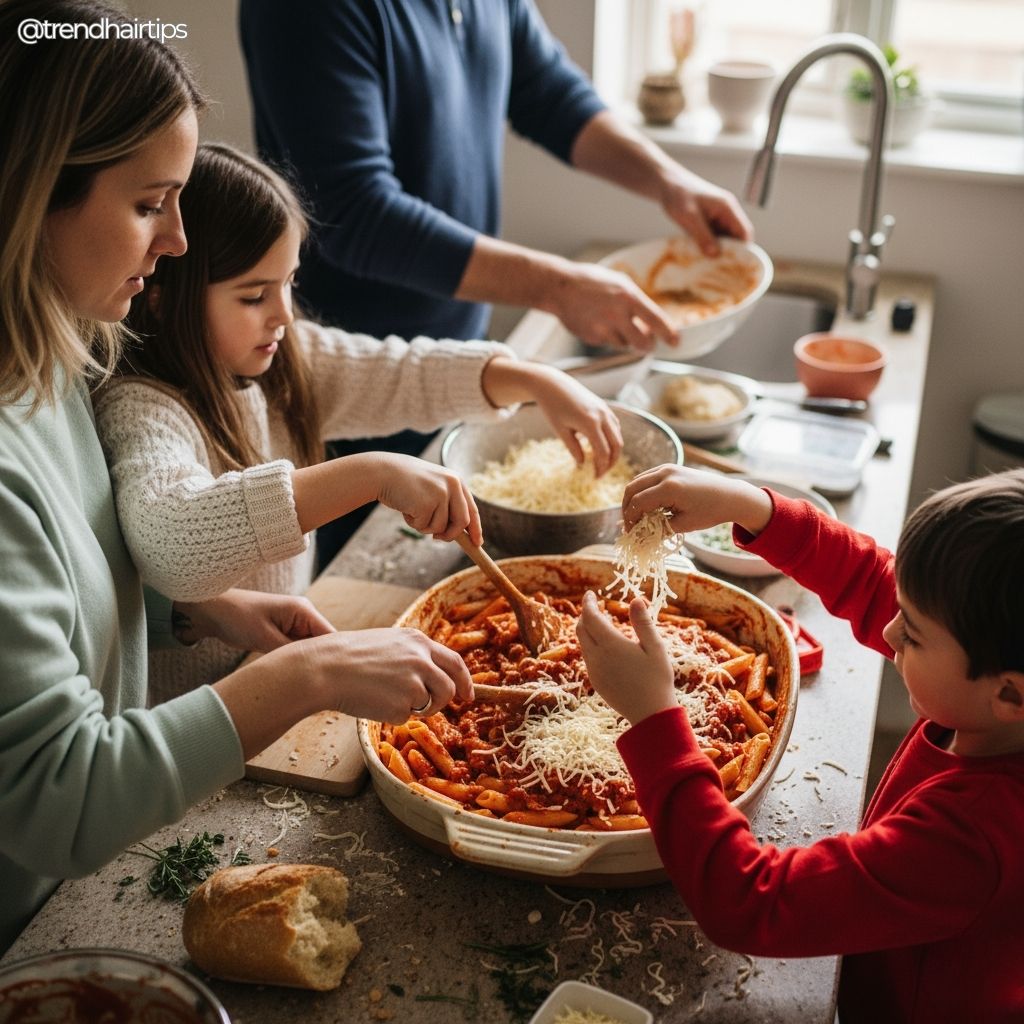
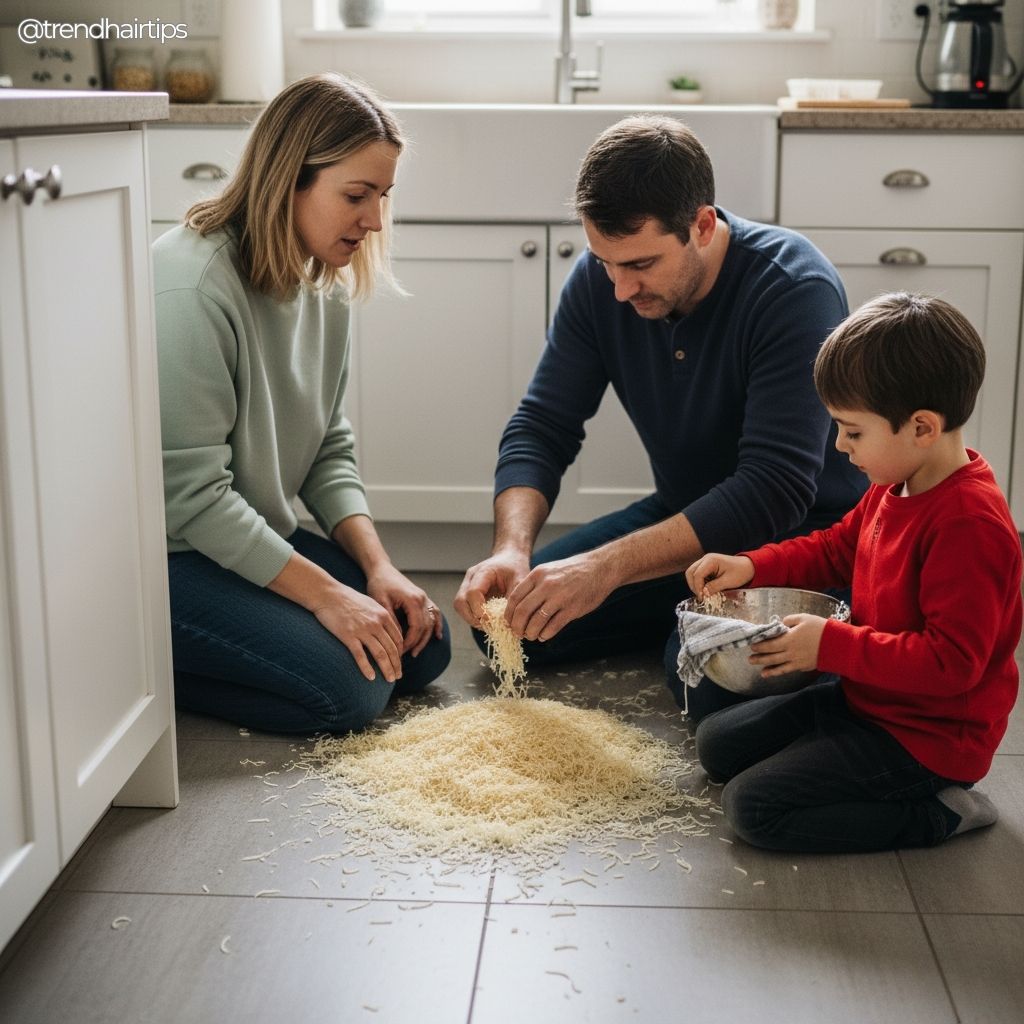
Miles was sprinkling cheese with enthusiasm that bordered on recklessness. The bowl tipped. The cheese scattered. He tried to fix it too quickly, knocked the bowl again, and suddenly shredded mozzarella was everywhere, on the counter, on the floor, dangerously close to the dog’s imaginary territory.
Nora gasped. “Miles!”
Miles froze, eyes wide, panic flooding in. “I didn’t mean to!”
I felt irritation surge, sharp and immediate, because mess plus time plus responsibility is a dangerous combination for adult patience. I could feel myself about to snap, about to turn the whole thing into a lesson about listening and rules and being careful.
Instead, I stopped.
Not gracefully. Not serenely. I just stopped moving.
I said, “Okay. Pause.”
Chris was already grabbing a towel. Nora stood stiffly, torn between frustration and wanting things to be right. Miles looked like he was waiting for the moment to collapse into shame.
And that was the real test of kindness.
Not whether we could cook for someone else, but whether we could be kind to each other when the process got messy.
“We clean it,” I said. “Together.”
Miles dropped to his knees immediately, too fast, desperate to fix it. Chris slowed him down, showed him how to scoop instead of smear. Nora helped, still tense, but participating.
Nobody yelled. Nobody blamed. The kindness didn’t disappear just because it became inconvenient.
Later, I realized that was the lesson hiding inside the mess.
The Quiet Shift: When the Kids Started Thinking About Someone Else
Once the kitchen was reset, something changed in the energy.
Nora started asking questions that weren’t about correctness anymore. “Will this be easy for her to eat?” “Should we cut the vegetables smaller?” Her perfectionism had shifted into care.
Miles asked, “Can we save some cheese for the top so it looks nice for her?”
“For her,” not “for us.”
I caught Chris’s eye, and he gave me a small nod. He saw it too.
This is how kindness grows in kids. Not in grand declarations, but in these tiny reframes where the focus moves outward.
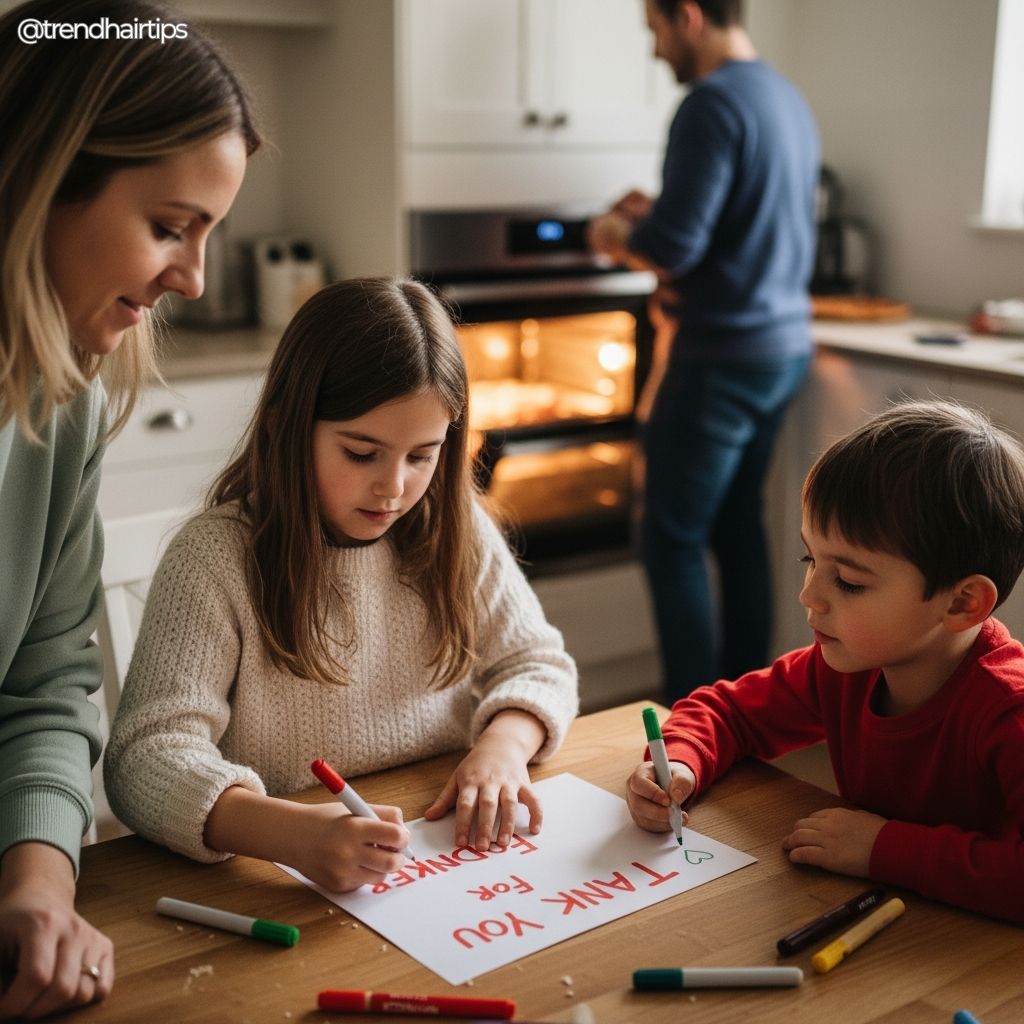
We wrote a note while the ziti baked. Nora wrote neatly. Miles insisted on adding a heart and a drawing of our family that looked vaguely like a group of excited sticks.
“What should it say?” Nora asked.
I said, “Whatever you want her to know.”
She thought for a moment, then wrote, “We hope this makes your day easier.”
That sentence stopped me cold, because it was exactly the truth.
The Delivery: Where Kindness Becomes Vulnerable
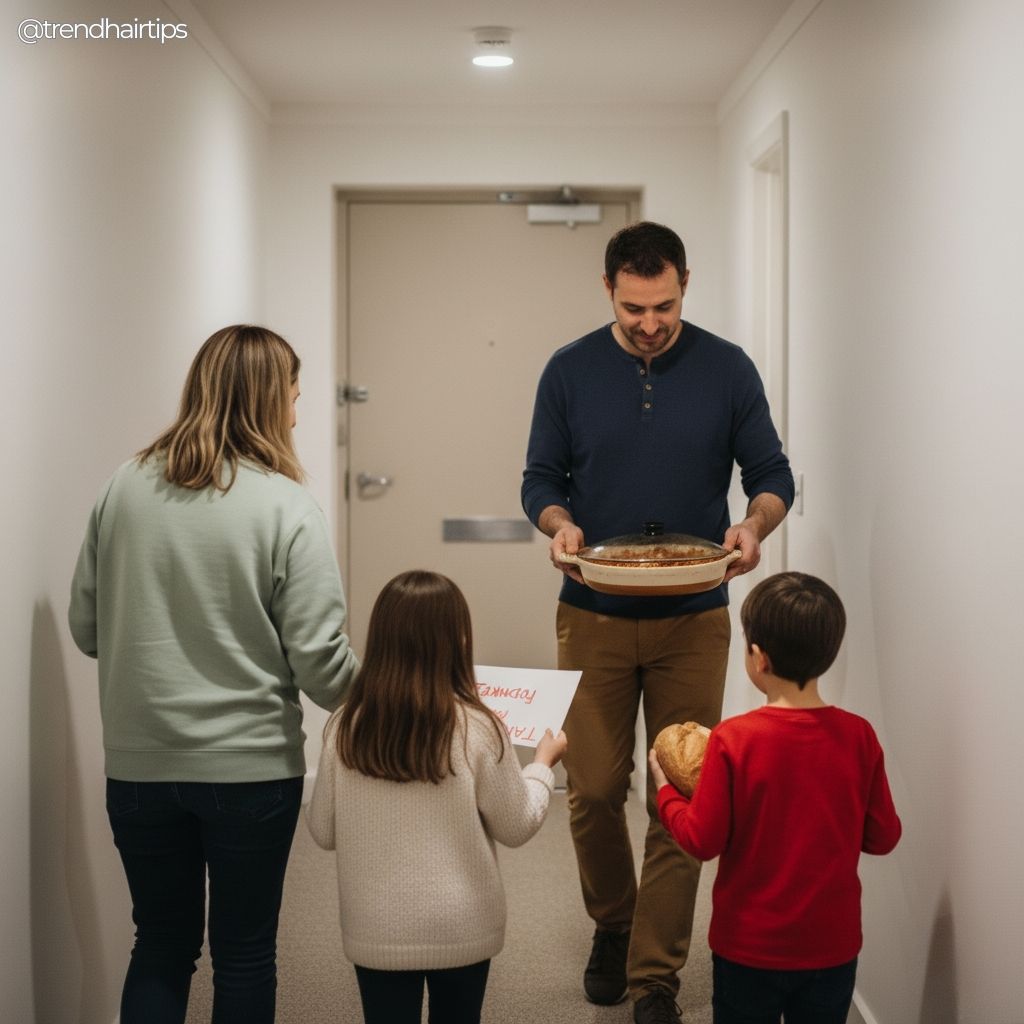
Walking down the hall to Mrs. Alvarez’s door, the kids grew quiet.
Nora clutched the note. Miles held the bread carefully, as if it might escape. Chris carried the dish like it was precious cargo.
“This feels weird,” Nora whispered.
“Yes,” I said softly. “Kindness often does.”
Miles asked, “What if she doesn’t like it?”
Chris said gently, “Then she’ll still know we cared.”
We knocked.
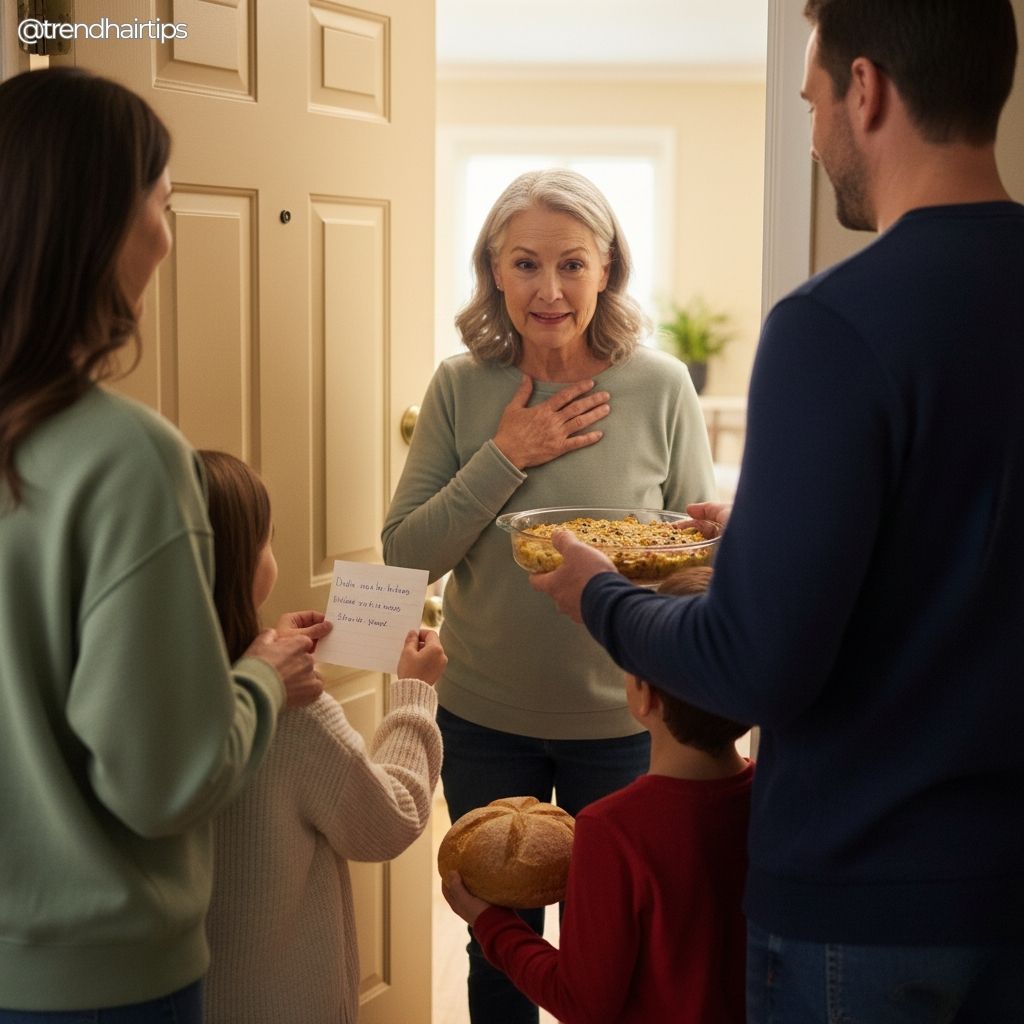
Mrs. Alvarez opened the door slowly, leaning on the frame. When she saw the kids, her face changed immediately, the way faces do when something unexpected and tender arrives.
Nora handed her the note. “We made you dinner.”
Miles added, “I did the cheese.”
Mrs. Alvarez laughed, then pressed her hand to her chest. Her eyes filled, and she said, “This means more than you know.”
And in that moment, my kids saw something rare.
They saw effort turn into relief.
They saw kindness land.
What Stayed After the Food Was Gone
On the walk back, the kids talked about her smile, her voice, the way she said thank you like she really meant it.
“How did it feel?” I asked.
Nora said, “It felt… important.”
Miles said, “It felt like when someone helps me when I’m sick.”
Neither of them used the word “kindness,” and that felt right.
In the days that followed, I noticed small shifts.
Nora started offering help without being asked, not dramatically, but quietly. Miles started noticing when someone was struggling and naming it out loud. “He looks tired.” “She might need help.”
Kindness hadn’t become a rule. It had become a lens.
The Positive Value We Took Forward
What this experience taught me, as much as it taught my kids, is that kindness is best learned as a shared experience, not a moral obligation.
It works when kids have roles.
It works when it costs a little time.
It works when they can see the impact.
And it works best when adults resist the urge to turn it into a performance.
If you want to try something similar, keep it simple. Choose a task that requires care, not perfection. Let the mess happen. Let the waiting happen. Let the awkwardness happen.
That’s where the lesson lives.
Final Thoughts
Cooking for someone else didn’t make my children kinder overnight. They still argue. They still get selfish. They still complain when things take too long.
But it gave them a memory.
A memory of choosing effort over ease.
A memory of seeing their work matter.
A memory of kindness as something you do with your hands, not just your words.
And I’ve learned that memories like that don’t fade easily.
They show up later, quietly, when a child pauses before walking past someone who needs help, when they offer without being asked, when they understand that kindness is not about being good.
It’s about being present.
And sometimes, it starts with a pan of baked ziti and the decision to carry it down the hall while it’s still warm.