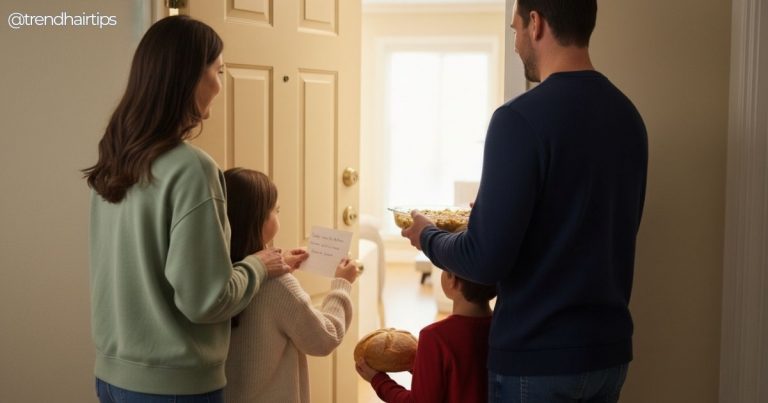
What Happened When We Let the Kids Decide How to Fix a Mistake
The mistake itself was small in the way so many family mistakes are small, meaning it didn’t break anything expensive and nobody needed stitches, but it did have the power to change the entire mood of the house if we handled it poorly. It started with a spilled drink, a rushed reaction, and the familiar…
The mistake itself was small in the way so many family mistakes are small, meaning it didn’t break anything expensive and nobody needed stitches, but it did have the power to change the entire mood of the house if we handled it poorly. It started with a spilled drink, a rushed reaction, and the familiar temptation to turn into the kind of adult who announces consequences before anyone has even fully processed what just happened.
It was late afternoon, that limbo time when the day has already taken energy from everyone and dinner still feels far away. Nora was at the table drawing, quietly focused, and Miles was doing what he loves most, which is building something with the intensity of a tiny engineer who cannot be interrupted. Chris was in the kitchen, calm and practical as always, trying to fix a cabinet hinge that had decided it no longer believed in staying attached, and I was moving between rooms picking up the small trail of life that kids leave behind, shoes by the couch, a backpack on the floor, a snack wrapper that apparently could not travel the extra three feet to the trash.
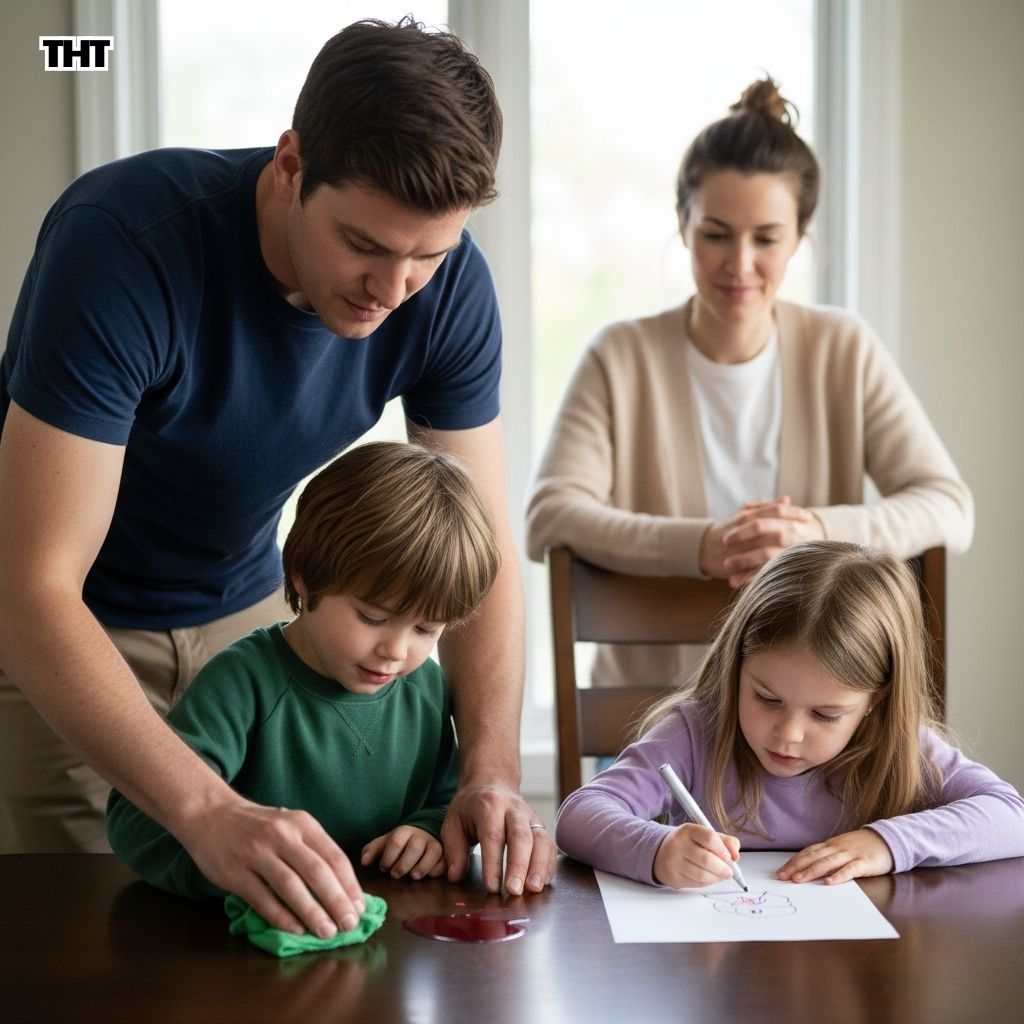
Miles had an open cup of juice on the edge of the table, which is already a questionable choice in our house, and I saw it and had the thought, that’s going to spill, but I didn’t move it because I was distracted, which is how half of parenting mistakes happen. Two minutes later, his elbow caught the cup, and the juice went over in a bright, dramatic wave right onto Nora’s drawing.
Nora’s face changed instantly, and if you have a sensitive child, you know that look, the look where they are trying to stay composed but their whole nervous system is already lighting up. She stared at the paper like she couldn’t believe what she was seeing, and then she said, in a voice that was too controlled, “Miles.”
Miles froze and looked at the mess, and for a second I could see two things in his face at once, surprise and fear. He didn’t do it on purpose, but his body knew what was coming, because in a lot of families, and in our family sometimes too, an accident like that becomes a fast spiral: the kid who was hurt gets angry, the kid who made the mistake gets defensive, the adult gets loud, and everyone ends up feeling worse than the original problem deserved.
Nora’s eyes filled up, and she grabbed the paper, trying to lift it before the juice could soak in deeper, which is a hopeless thing to try but also exactly what you do when you’re nine and you’ve worked hard on something. Miles started saying, “I didn’t mean to,” over and over, louder each time, like volume could prove innocence. Chris walked in, saw the scene in one glance, and instinctively reached for a towel, already in fix-it mode.
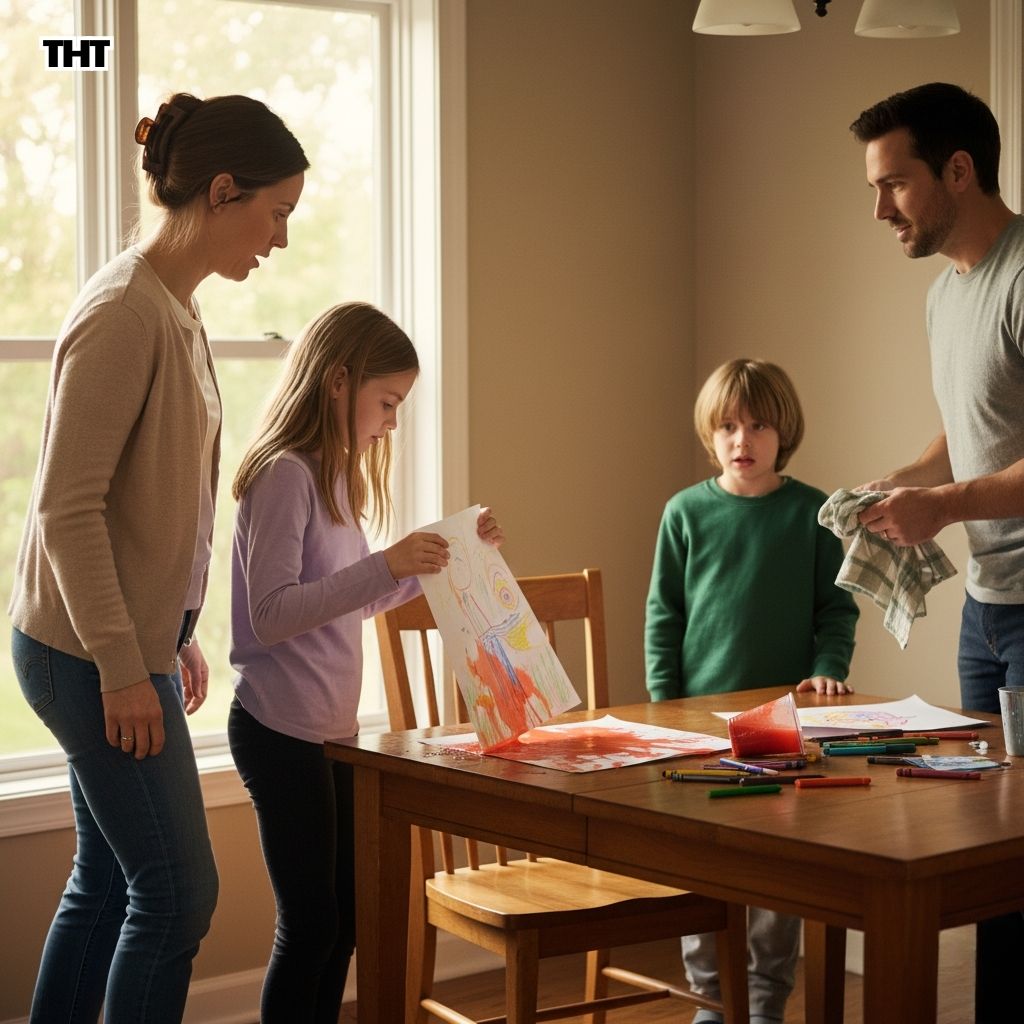
And I felt that familiar rush in my chest, that hot parent urgency.
Tell Miles to apologize. Tell Nora to calm down. Clean it up. Move on.
That’s what my brain wanted. Efficiency. Resolution. Silence.
But I’d been thinking lately about something I didn’t love about how we handle mistakes in families. Adults often decide the fix immediately, and kids learn one of two scripts: either deny and defend, or apologize quickly and hope the discomfort ends. Neither script teaches them what repair actually is. Repair is a skill, and like any skill, kids learn it by practicing it, not by watching adults do it for them.
So I did something that felt risky in the moment, mostly because it meant slowing down when my body wanted speed.
I said, “Okay. Pause. Nobody is in trouble right now.”
That sentence alone changed the air, because it told everyone we weren’t about to escalate. Nora didn’t relax, but she stopped looking like she might explode. Miles’ shoulders dropped slightly, because his fear of immediate punishment eased. Chris stayed still, towel in hand, watching me, because he knows I don’t say “pause” unless I’m trying something intentional.
Then I said, “We’re going to clean this up, but first we’re going to decide how we fix it, and you two are going to help decide.”
Nora blinked at me like she wasn’t sure she heard correctly. Miles looked hopeful, because he loves being asked questions, even when he’s the one who messed up. The question gave him a way back into the situation besides panic.
The First Surprise: Kids Are More Fair Than We Expect When They Feel Safe
I turned to Nora first, because she was the one who got hurt by the mistake, and I wanted her feelings to be centered without turning Miles into a villain.
“Nora,” I said, “tell us what happened for you.”
She held up the wet paper, her voice shaky. “I was almost done. I worked really hard on it. It got ruined.”
I nodded, letting it land. “That makes sense. That feels awful.”
Then I turned to Miles. “Miles, tell us what happened for you.”
His eyes were wide and wet too now, because guilt hits him hard when he’s not defensive. “I didn’t mean to. My elbow hit it. I was building. I’m sorry.”
I didn’t rush him through the apology. I just said, “Okay. So it was an accident, but it still caused harm. That means we repair.”
Then I asked the question that changed the whole dynamic.
“How do you think we should fix this?”
At first, there was silence, because kids are used to adults telling them the fix. They’re used to the solution being handed down like a verdict. When you give them responsibility for repair, they have to think in a different way, and thinking is slower than reacting.
Nora said, quietly, “He should make me a new one.”
Miles immediately protested, because the idea of re-creating Nora’s detailed drawing was terrifying. “I can’t draw like that!”
Nora glared at him, and I could feel the conflict trying to flare again, so I stepped in, not to decide for them, but to guide the process.
“Okay,” I said. “We need a fix that helps Nora feel better and helps Miles learn how to repair. The fix has to be doable and fair.”
Chris nodded, still holding the towel, looking relieved that the conversation had structure, because structure is his favorite language.
Miles thought hard, and this is where I saw the first real learning. When kids are not being shamed, their brains can do problem-solving. When they are being blamed, their brains get stuck in defense.
Miles said, “I can help you make a new one. Like… I can color the background.”
Nora looked skeptical, because Nora likes things done a certain way, but she also looked like she was considering it, and that was progress. “But you might mess it up.”
Miles looked hurt, and I could see him teetering toward defensiveness again, so I slowed down and helped Nora translate her fear into something more useful.
“You’re worried it won’t look the way you want,” I said to her. “That’s understandable. What would make it feel safer?”
Nora paused, then said, “He could do the parts that don’t matter as much.”
Miles frowned. “It all matters.”
Nora sighed in a very nine-year-old way. “Not like the face. You can do the sky.”
And that was the moment Chris almost laughed, because it was so sibling, so honest, and also oddly fair.
I said, “Okay. So one idea is that Nora makes a new drawing and Miles helps with a part that feels safe for Nora, like the sky, and he takes his time. What else?”
Miles added, “And I can clean it up. Like, for real clean it.”
Chris finally put the towel down and said, “That’s a good part of repairing. Cleaning the mess is not a punishment. It’s part of making things right.”
Nora, still teary, said, “And he can give me his special marker for today.”
That marker was a big deal to Miles, a shiny metallic one he guards like treasure. He looked conflicted, but he didn’t argue. He nodded slowly and said, “Okay. You can use it.”
I watched Nora’s face soften, just a little, because kids understand sacrifice in a way adults sometimes underestimate. That offer meant something. It wasn’t expensive. It was personal.
So the plan became surprisingly balanced, and it came mostly from them.
Miles would clean the spill carefully, including the table and the floor, because restoring the space matters. Nora would remake the drawing on fresh paper, because she wanted the finished version. Miles would help color the background sky slowly, with clear boundaries so Nora felt safe. And he would lend her the metallic marker for the day, because giving something valued is part of repair too.
No yelling. No dramatic consequences. No shame spiral. Just a real repair plan.
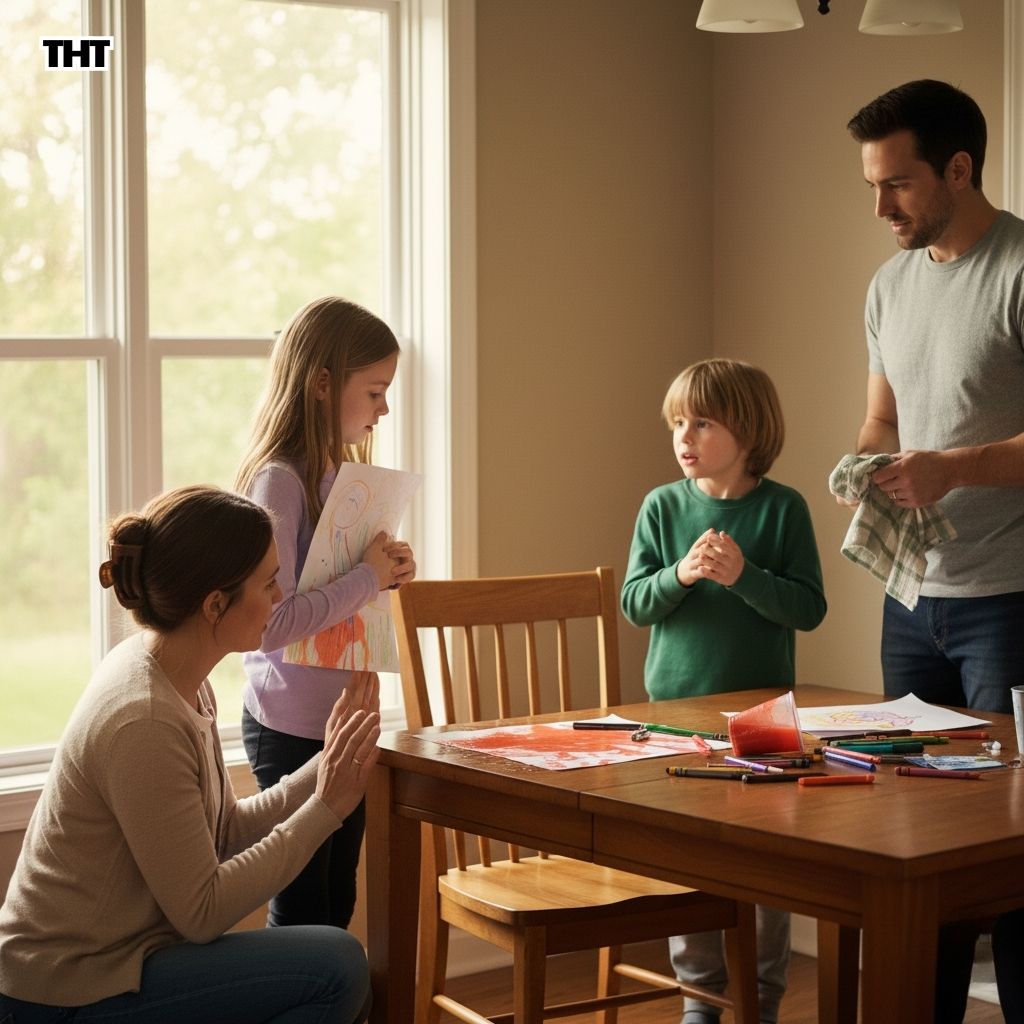
The Repair in Action: Where the Real Teaching Happened
This is the part that matters, because repair isn’t the discussion. Repair is the doing.
Chris stood nearby, not hovering, but present, because he has a calming effect on Miles when guilt is involved. I stayed close to Nora, helping her feel steady, because when she’s upset she tends to get stuck in the loss of what “was supposed to be.”
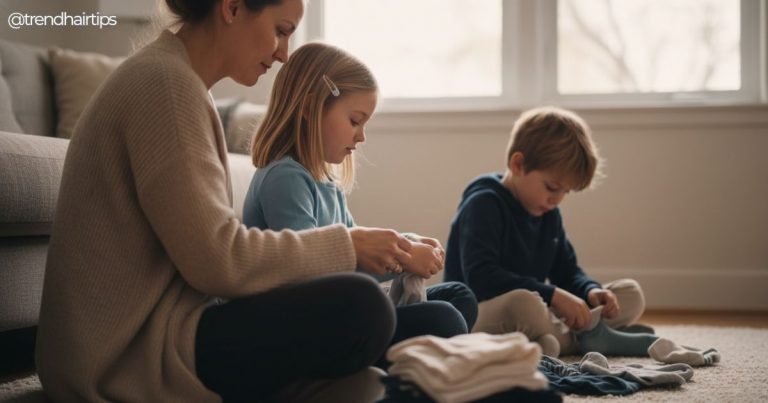
Miles cleaned with surprising care. He didn’t do his usual frantic wipe-and-run. He asked for help getting juice out of the paper fibers on the table, and Chris showed him how to press and blot instead of smearing. Miles repeated the technique like he was learning a trade, and he looked proud when the sticky shine was gone.
Nora started the drawing again, slowly, and I could see the moment where her sadness shifted into focus. Starting over is hard for her, because it feels like losing progress, but it also gives her a chance to practice resilience, especially when she’s not being rushed.
When it was time for Miles to color the sky, he sat beside her very carefully, like he was handling something fragile. He asked, “Is this okay?” before he started, and Nora, who is usually quick to correct, surprised me by saying, “Just go slow.”
He did.
He made one small mark outside the line and froze, eyes wide, expecting anger. Nora inhaled sharply, and I saw the old pattern threatening to return, the blame, the defensiveness, the explosion.
But then Nora did something different, and I will remember it for a long time.
She said, “It’s okay. It’s just a tiny part. You can make it look like a cloud.”
Miles blinked. “Really?”
Nora nodded, still sniffly. “Yeah. Like a cloud.”
Chris looked at me, and I could tell he was impressed. I was impressed too, because Nora had just practiced flexibility in the exact moment her perfectionism would usually take over.
Miles relaxed and kept going, and when they finished, Nora used the metallic marker to add details, and she held it like it was a symbol of something bigger than art supplies.
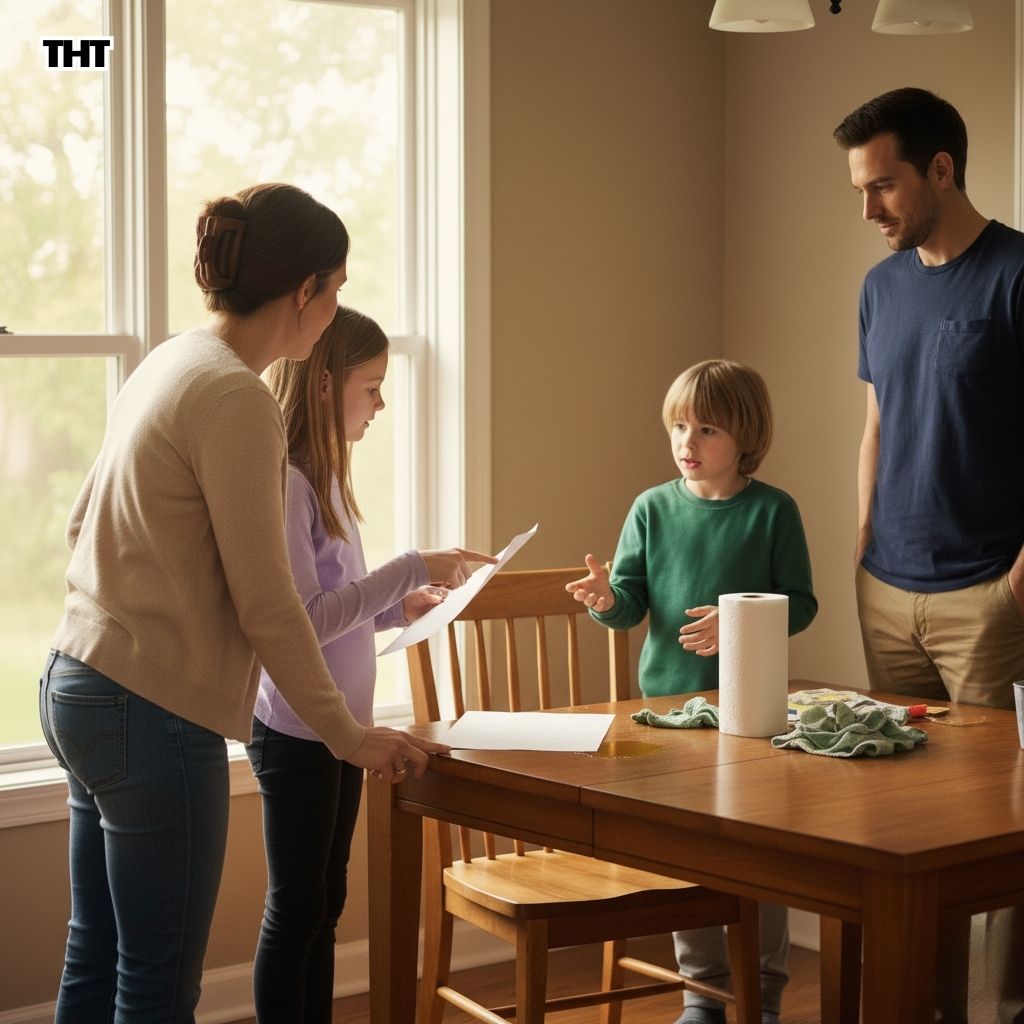
What I Learned Watching Them
I learned that repair works better when kids feel safe enough to be honest, because honesty is the doorway to responsibility. When kids feel blamed, they protect themselves. When they feel safe, they can actually look at what happened and think, what can I do now?
I learned that kids can be remarkably fair when you don’t push them into roles, the guilty one and the victim, because those roles create long-term resentment. When you center impact without shaming intent, kids learn empathy without losing dignity.
I learned that letting kids create a fix gives them ownership of the repair, which means the lesson sticks. Miles didn’t just hear, “Say sorry.” He experienced what it feels like to clean up, to offer something valuable, to show care through action, and to stay present even when the moment is uncomfortable.
And I learned something about Nora too. When she isn’t pressured to “get over it,” she actually moves through her feelings faster, and she’s more able to be generous. Her sensitivity isn’t a problem. It’s a strength when it’s supported.
Here’s the Part I Messed Up, So You Don’t Have To
The mistake I used to make in these situations was rushing straight to consequences or rushing straight to closure. I would have tried to make the crying stop, make the apology happen, make everyone move on, and in doing so I would have skipped the most valuable part, which is teaching kids how to repair in a way that feels real.
If you want to try this, the key is to slow down enough to ask the question, “How can we make it right?” and then to guide your kids toward a solution that is fair, doable, and actually connected to the harm, rather than just a generic punishment.
Final Thoughts
That day didn’t end with perfect harmony. Nora was still disappointed, and Miles was still shaky with guilt for a while, because feelings don’t vanish just because you handled them well. But something important happened in our house that afternoon, something I can see in the way my kids talk about mistakes now.
They don’t immediately jump to blame as often. They don’t spiral into shame as fast. They’re more likely to ask, “How do I fix it?” instead of insisting it wasn’t their fault.
Letting the kids decide how to fix a mistake didn’t make parenting easier in the moment, because it required patience and steadiness when I wanted speed. But it made our family stronger in the long run, because it taught Nora and Miles that mistakes are not the end of connection, and that repair is not something adults do to kids.
Repair is something we practice together, one honest, imperfect, human moment at a time.