What I Learned About Anxiety After My Daughter Cried Over a “Small” Thing
It happened over a sock. Not a lost passport. Not a broken tablet. Not a call from the school nurse. A sock. A normal, clean sock that had done nothing wrong except exist at the wrong moment in the wrong way. It was a weekday morning in our house, which means the clock was moving…
It happened over a sock.
Not a lost passport. Not a broken tablet. Not a call from the school nurse. A sock. A normal, clean sock that had done nothing wrong except exist at the wrong moment in the wrong way.
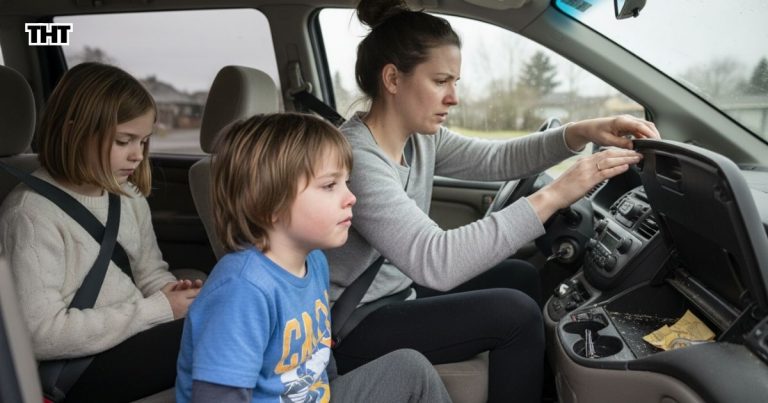
It was a weekday morning in our house, which means the clock was moving faster than physics allows and I was doing that parent thing where you’re simultaneously making breakfast, finding shoes, signing something you didn’t know needed signing, and reminding everyone to use the bathroom because nobody ever believes they’ll need it until we’re already late.
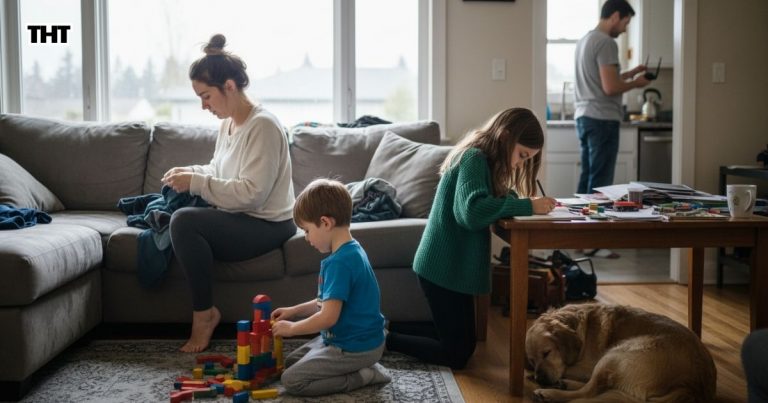
Miles was bouncing around the living room like a pinball, energized and stubborn in that very Miles way. Nora was quiet in her room, getting dressed, the way she always does when she’s trying to hold herself together for the day.
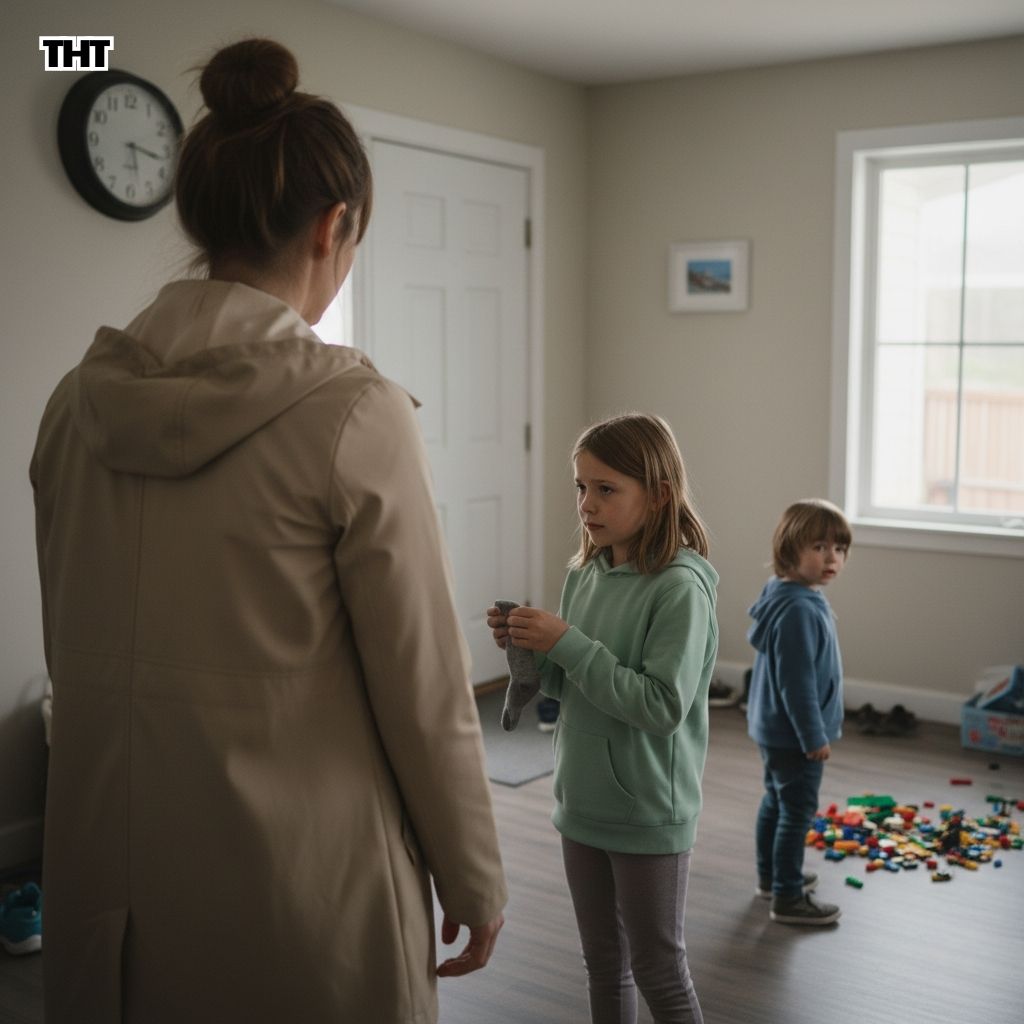
Then she came out holding one sock, not both.
Her face was tight. Her eyes were already shiny. She looked at me like she was trying to ask for help without asking, like she didn’t want to be dramatic but her body was already disagreeing.
“I can’t find the other one,” she said.
I glanced at the time. I glanced at Miles, who was now doing something with a Lego that sounded sharp and suspicious. I glanced at the pile of laundry that still wasn’t put away, because that’s a joke the universe plays on parents.
And I did the thing adults do when we label something “small.”
I said, “It’s just a sock. Grab another pair.”
Nora’s face crumpled instantly, like my words had cut a string holding her together.
She started crying.
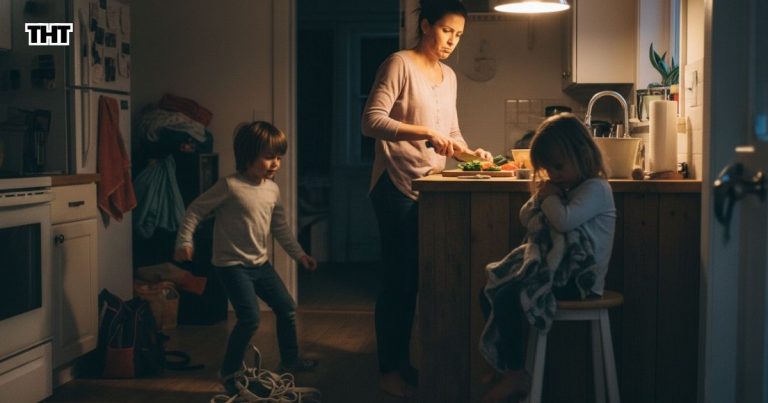
Not a little sniffle. Real crying. The kind that comes from deep in the chest and surprises even the kid who’s doing it. Her shoulders shook. Her breathing got uneven. She tried to wipe her tears fast, like she was embarrassed they were happening.
Miles stopped mid-bounce and stared, because sibling tears are always interesting.
I felt my stomach drop.
Because I realized what I had just done.
I had taken her real feeling and called it small.
And even though I meant “the sock is small,” what she heard was “your feelings are small.”
That morning changed the way I think about anxiety in kids, and it didn’t happen because I read a book. It happened because I watched my daughter’s nervous system overflow in front of me over something that looked tiny from the outside.
The Truth About “Small” Things
If you’ve ever watched your child cry over something that seems minor, you’ve probably had the same thought I had.
What is happening right now?
Why is this such a big deal?
And maybe you’ve even said what I said, because parents are human.
“It’s not that serious.”
“It’s fine.”
“It’s just a sock.”
But here’s what I learned that day.
Anxiety rarely shows up as one big obvious fear.
It shows up as pressure building quietly in the body, like water behind a dam, until one small thing becomes the crack that lets it all out.
The sock wasn’t the whole issue.
The sock was the tipping point.
What Was Really Going On With Nora
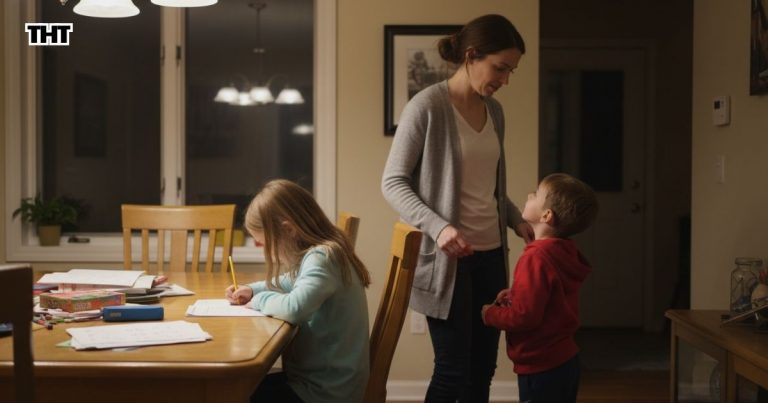
Nora is nine and she’s sensitive in a way that’s beautiful and also challenging. She notices everything. She feels things deeply. She gets stuck in “what if” loops, especially in the mornings when the day is beginning and she can’t control what’s coming.
When she couldn’t find the matching sock, her brain didn’t just think, I can’t find this sock.
Her brain likely thought something like:
If I can’t find it, I’ll be late.
If I’m late, the teacher will notice.
If the teacher notices, it will be embarrassing.
If it’s embarrassing, people might look at me.
If people look at me, something bad might happen.
If something bad happens, I won’t know what to do.
That chain of thought can happen in seconds for anxious kids. They don’t sit down and write it out like a list. It just floods them.
And that’s what I saw in Nora’s face. Not sock frustration. Flooding.
The Moment I Stopped Trying to Fix It and Started Trying to Understand
When Nora cried, my first instinct was to fix it fast.
Find the sock. Stop the crying. Get out the door.
But I’ve learned, slowly, through many mornings and many tears, that fixing the object doesn’t always fix the feeling. Sometimes the feeling needs attention first.
So I took a breath and tried a different approach.
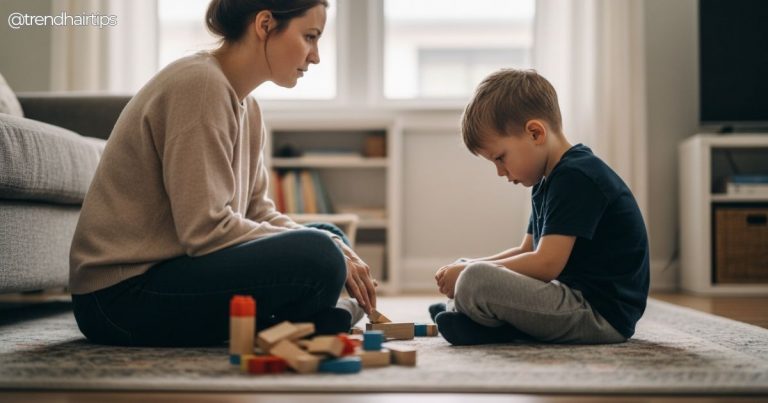
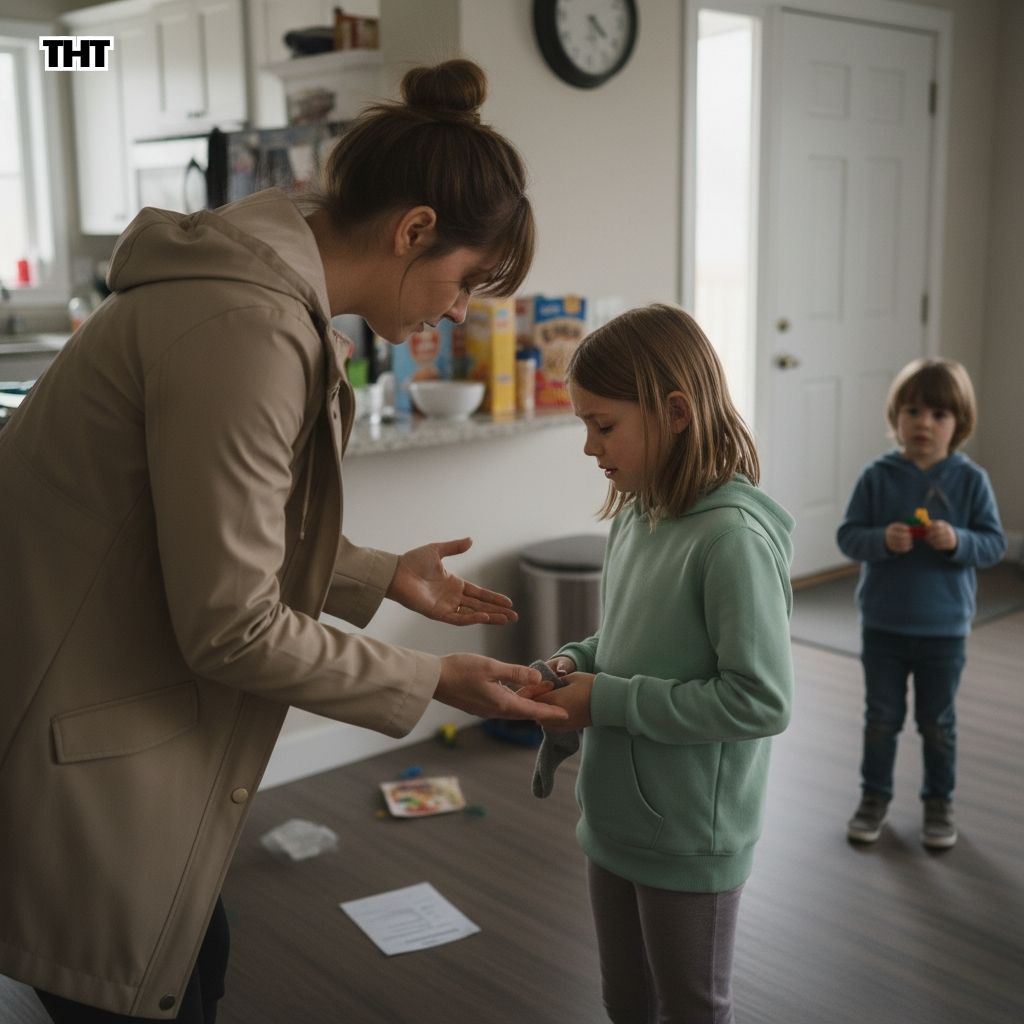
I moved closer and said, “Hey. This feels really big right now, doesn’t it?”
Nora nodded, crying harder, because being understood can make kids cry more at first. It’s like their body says, finally, someone sees it.
I said, “I’m sorry I said ‘just a sock.’ I didn’t mean your feelings were small. I think something else is making this harder.”
Nora whispered, “I don’t want to be late.”
There it was. Not the sock. The fear underneath.
I said, “Okay. We can handle that. Let’s solve it together.”
The Tiny Technique That Helped Her Come Back to Herself
This is not a miracle method, but it worked in that moment, and it’s become something we use a lot now.
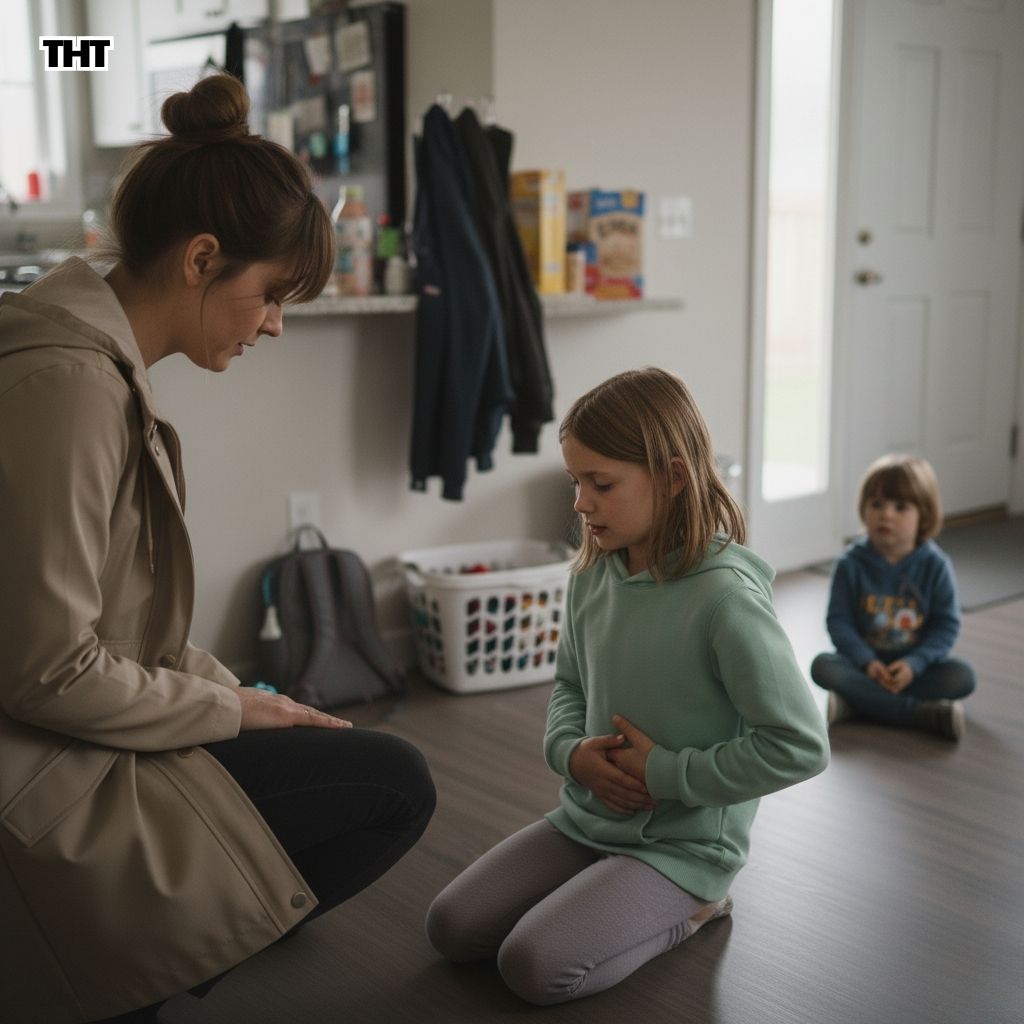
I asked her to do one small physical thing.
“Put your hand on your belly,” I said, “and take a slow breath with me.”
She didn’t want to. Anxious kids rarely want to breathe when they’re flooded. Breathing feels like stopping, and anxiety loves motion.
So I made it easier.
“Just one breath,” I said. “Like you’re smelling hot cocoa.”
Nora took a shaky breath.
Then another.
Her shoulders dropped slightly.
I wasn’t trying to talk her out of her feeling. I was trying to help her body come back down from the ledge so her thinking brain could return.
Then I said, “Okay. Now we’ll do two things. We’ll pick a different pair of socks, and I’ll put the missing one in your backpack so you can switch later if you want.”
Nora blinked. The offer gave her control, which is the antidote to that helpless feeling anxiety creates.
She nodded.
We grabbed a different pair. I found the missing sock ten minutes later under the bed, of course, because socks have their own secret society, but by then it didn’t matter.
The panic had already passed.
The lesson stayed.
Here’s the Part I Messed Up, So You Don’t Have To
Here’s the part I messed up, so you don’t have to.
I said “just” when I meant “the object is small.” It came out like “your feelings are too much.”
That one word can be gasoline for anxious kids, because they already feel like their reactions are inconvenient. They already feel embarrassed about feeling big feelings. When we dismiss the trigger, they don’t calm down. They feel alone inside it.
If I could redo it, I would skip “just” entirely and go straight to:
“I see this feels hard. Let’s figure it out.”
Also, I used to think anxious moments required logic. I used to try to explain why the fear didn’t make sense, and that never helped. Anxiety isn’t cured by explanations in the moment. Anxiety is calmed by safety, connection, and simple steps.
What I Learned About Anxiety in Kids
That sock morning taught me a few things that I now carry with me in other moments, when Nora gets overwhelmed by something that looks small from the outside.
Anxiety attaches to the closest available trigger
The trigger is often not the true cause. It’s the nearest thing her brain can grab onto.
A sock. A pencil. A zipper. A forgotten homework sheet.
The nervous system isn’t choosing the trigger logically. It’s choosing it because it’s right there.
A flooded nervous system can’t “be reasonable”
When Nora is in that state, her thinking brain is offline. If I ask her to “calm down” or “be logical,” it feels impossible to her and she feels worse.
In those moments, I need to help her body feel safe first, then help her brain.
My tone is the medicine
This was a hard one for me to accept because it means I can’t hide behind good intentions.
If I sound rushed, annoyed, or dismissive, it escalates her anxiety.
If I sound steady, she borrows my steadiness.
This is unfair and also true.
The goal isn’t to eliminate anxiety, it’s to teach recovery
I used to want anxiety gone. Now I want Nora to learn that anxiety can show up and she can still come back to herself.
We can’t always stop the waves, but we can teach her how to surf.
What We Do Now When a “Small” Thing Breaks the Day
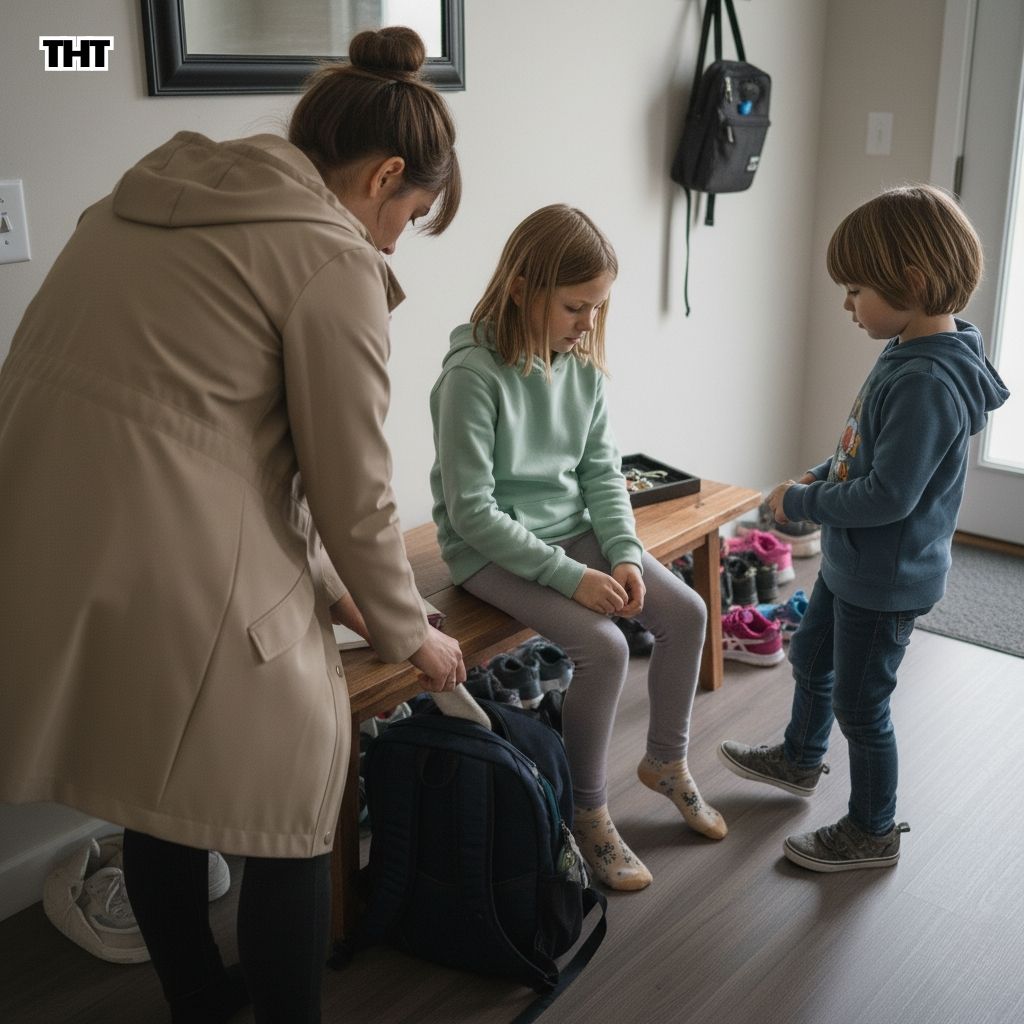
We’ve developed a loose rhythm for these moments, especially in the morning.
First, I name what I see without judgment.
“This feels really big right now.”
Then I make it smaller.
“We’re going to do one step.”
Then I offer a choice, because choices give control.
“Do you want to grab a different pair, or do you want me to look for this one while you brush your hair?”
Then we do a quick body reset if she’s flooded.
“One slow breath with me.”
Then we solve the practical problem.
Not because the sock is the issue, but because solving something concrete helps her feel capable again.
Final Thoughts
I wish I could say that after that morning, Nora never cried over a small thing again.
She has.
And honestly, so have I, in my own adult ways. I’ve cried over a broken dish or a lost charger because it wasn’t really about the dish. It was about the weight of everything else.
That’s what anxiety does. It makes the small thing carry the weight of the whole day.
What changed for me wasn’t that the mornings became perfect. What changed was my understanding.
Now, when Nora cries over something small, I try to remember that she’s not being dramatic. She’s having a nervous system moment. She’s feeling too much at once, and the small thing is the doorway it comes out through.
So I don’t say “just a sock” anymore.
I say, “I’m here. We’ll take one step. We can fix this.”
And when she takes that breath, when her shoulders drop, when she looks back at me like she’s returned from a far place, I can almost see it happening.
Not the sock being solved.
Her learning, slowly, how to come back to herself.
That is the real work.